
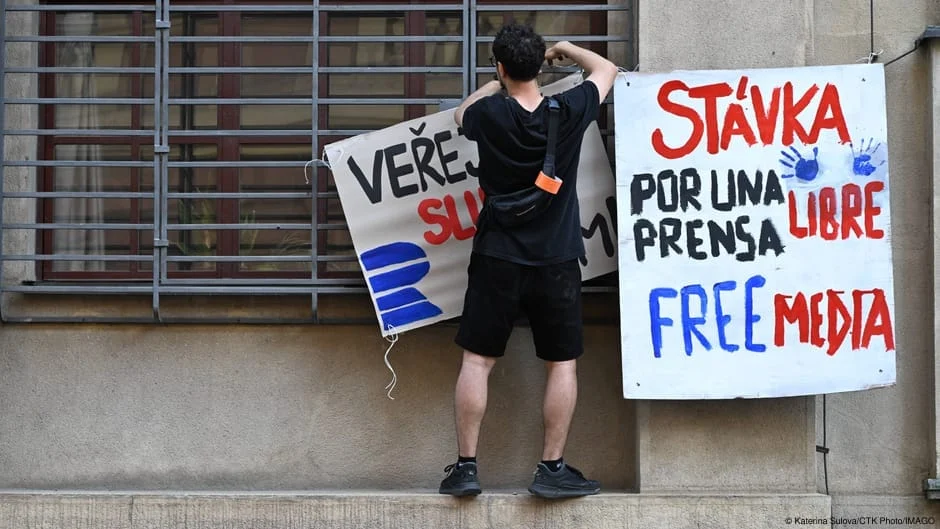
Prague is bracing for a weekend of unprecedented civil unrest as hundreds of thousands of citizens prepare to converge on the capital’s iconic Letna Park. The massive rally, organized by the influential civil society group Million Moments for Democracy, serves as the crescendo of a mounting national outcry against Prime Minister Andrej Babis’s populist coalition and its controversial strategy to overhaul the funding structure of Czech Television (CT) and Czech Radio (CRo). The coalition, comprised of Babis’s centrist ANO party, the far-right SPD, and the radical conservative Motorists, successfully forced the first reading of the contentious legislation through parliament during a surprise, early-morning session on October 24, at 04:36 a.m. This maneuver has triggered a firestorm of criticism, with opponents arguing that the move is not merely a budgetary adjustment, but a calculated attempt to dismantle the independence of institutions that have long served as the bedrock of Czech democratic life.
A Chronology of the Crisis
The current standoff did not emerge in a vacuum; it is the culmination of months of friction between the populist government and the country’s independent media outlets. The conflict can be traced through a distinct timeline of escalation:
- Summer 2026: Initial proposals to scrap the license fee model were leaked, prompting the first wave of public demonstrations. Critics warned then that the move would erode the financial autonomy of public broadcasters.
- October 23-24, 2026: In a move that shocked observers, the coalition fast-tracked the bill. Protesters picketed the parliament building throughout the night as MPs pushed the legislation through its first reading in the pre-dawn hours.
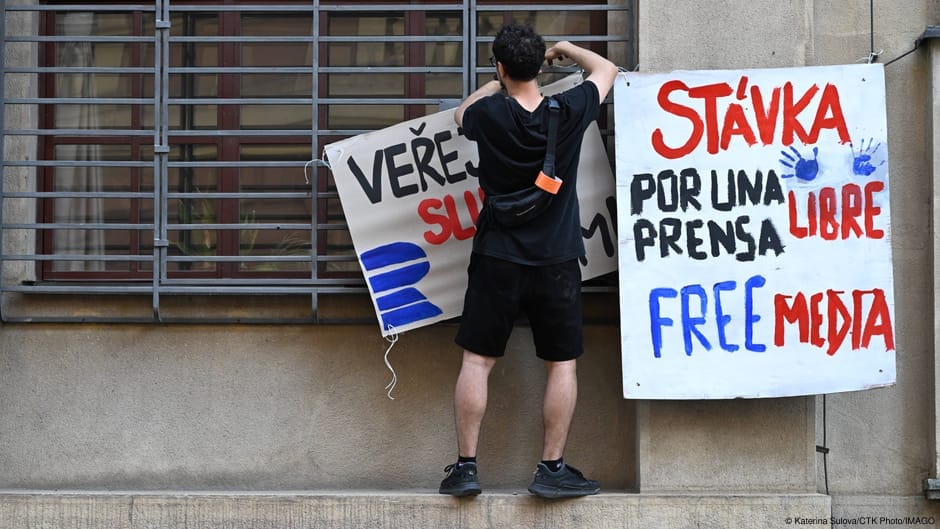
- Early November 2026: Tensions boiled over into organized labor action. Staff at Czech Television and Czech Radio initiated a strike, disrupting broadcast schedules and forcing a national conversation on the necessity of independent, state-funded journalism.
- November 15, 2026: As the country prepares for the anniversary of the 1989 Velvet Revolution, the upcoming Letna Park rally is set to become the largest demonstration in recent Czech history, reflecting a society deeply unsettled by the government’s tactics.
The Mechanism of the Bill: Efficiency or Control?
At the heart of the debate is the shift from a license fee model to direct state budget funding. Under the current system, citizens pay a monthly fee, which creates a buffer between the broadcasters and the state, theoretically insulating the editorial board from political pressure. The government justifies the change by framing the license fee as an "unfair tax" that disproportionately burdens the less affluent segments of their voter base.
Proponents of the bill claim that the new arrangement will foster efficiency, noting that the government expects a 15% reduction in funding for CT and CRo in the first year of implementation. Supporters have pointed to various models in the European Union where state-funded systems exist, arguing that the Czech Republic is simply modernizing its approach.
However, media analysts and international watchdogs, including the European Federation of Journalists, have countered these arguments with a stark warning. Unlike the models in other EU nations, the Czech proposal lacks statutory guarantees for long-term financial stability or editorial independence. Critics argue that by tethering the budget directly to the state, the government gains the power to hold public broadcasters hostage, threatening budget cuts whenever critical reporting inconveniences the political establishment.

Economic and Democratic Implications
The potential for a 15% budget cut has triggered alarm bells across the media landscape. Executives at CT and CRo have explicitly stated that such a reduction would necessitate significant programming cuts and staff layoffs, effectively silencing the investigative journalism that has held the current administration accountable.
Vaclav Stetka, a leading scholar at the European New School of Digital Studies, has characterized the proposal as "cultural vandalism." The broader implication is the degradation of the "fourth estate." In the post-communist context of the Czech Republic, public broadcasters are not viewed merely as news outlets but as fundamental pillars of the democratic transition that began in 1989. The "Czech TV crisis" of 2000-2001, which saw mass protests successfully defend the independence of the national broadcaster, remains a touchstone for the current movement. For many Czechs, the current struggle is a direct continuation of that fight.
Political Fallout and Official Responses
The government, feeling the weight of the public backlash, has attempted to shift its rhetoric. Prime Minister Babis recently floated the idea of a "new proposal" that would ostensibly move funding off-budget while maintaining editorial independence. However, these assurances have been met with profound skepticism. Political analysts note that the lack of concrete, written details in this new offer suggests it may be a stalling tactic rather than a genuine concession.

The opposition, meanwhile, has found unity in this crisis. By attempting to bypass traditional legislative debate, the coalition has inadvertently galvanized a wide coalition of students, labor unions, religious groups, and academics. This broad-based opposition is particularly dangerous for the government because it transcends traditional political divides. As Martin Vokalek of the EUROPEUM Institute for European Policy notes, the media issue has evolved into a "lightning rod" for wider public dissatisfaction, including frustrations over inflation, the cost of living, and a general feeling that the government is increasingly disconnected from the electorate.
The Specter of Stability
The government currently maintains a parliamentary majority capable of overriding potential vetoes from the Senate or President Petr Pavel. Yet, the cost of winning the legislative battle may be the loss of political legitimacy. With the anniversary of the Velvet Revolution approaching—a day of immense symbolic weight in the Czech psyche—the government is clearly nervous. Babis has announced he will skip the commemorative events, citing a desire to "calm the tense situation," an admission of the fragility of his administration’s position.
Despite the intensity of the protests, there is little evidence to suggest the movement will turn violent. The Czech political tradition is rooted in the "large, peaceful, and civic" protest culture that defined the 1989 revolution and the 1993 peaceful dissolution of Czechoslovakia. Analysts observe that the current protesters are disciplined, highly organized, and focused on institutional integrity rather than chaos.

Future Outlook
The outcome of the weekend rally will likely dictate the next phase of the legislative process. If the turnout exceeds the 200,000-300,000 figures seen in previous major protests, the government will be forced to decide whether to double down or retreat. For the coalition, the risk is not just the defeat of a specific bill, but the potential for a cascading loss of support that could mirror the protest movements seen recently in France and Albania, where similar public dissatisfaction over economic and democratic governance led to significant political upheaval.
As the nation looks toward the anniversary of the birth of its modern democracy, the central question remains: will the government successfully subordinate public media to its budgetary agenda, or will the public successfully defend the institutions that keep the government in check? The events in Letna Park this weekend will provide the first major indicator of the answer to that question, serving as a litmus test for the health of Czech democracy in an era of increasing populism and political polarization. The resilience of these public institutions is not just a domestic concern; it is a critical observation point for the European Union, which continues to watch the state of media freedom in Central and Eastern Europe with heightened scrutiny.

