
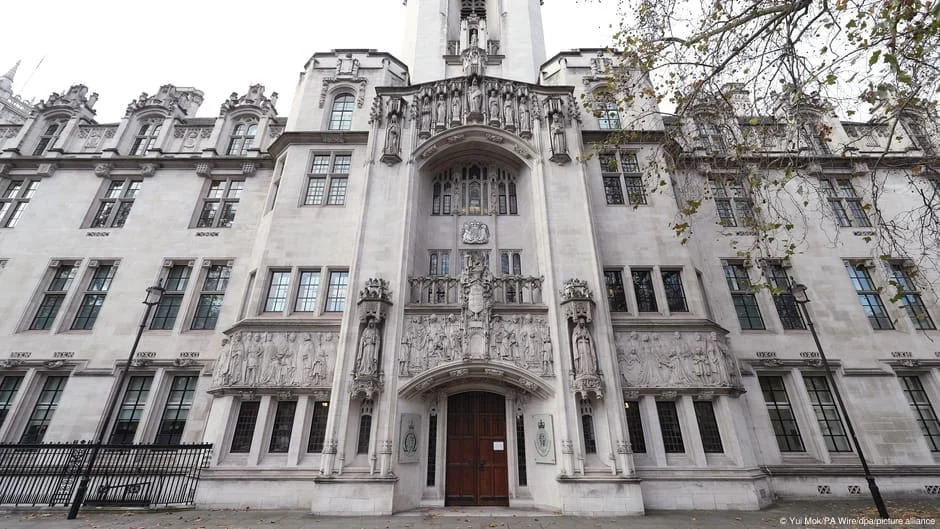
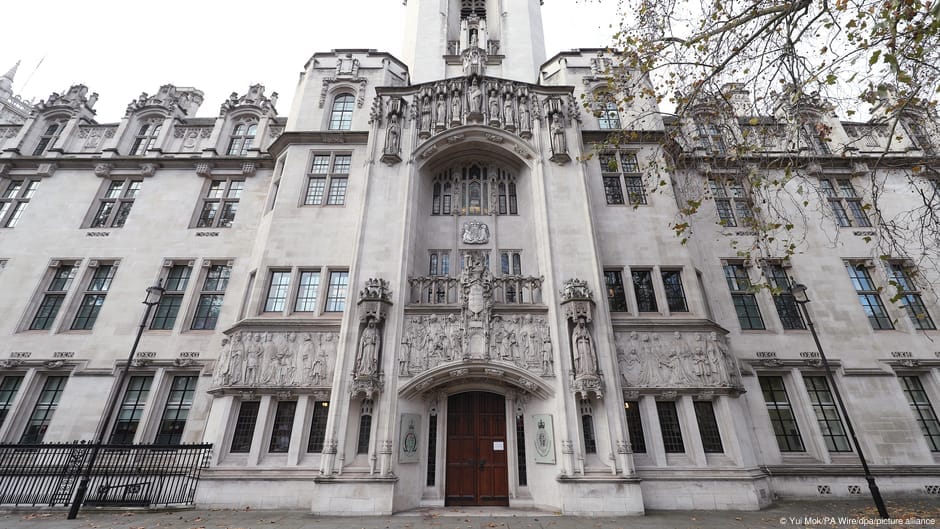
After nearly a decade of protracted litigation, a landmark ruling from the Judicial Committee of the Privy Council in London has brought a definitive end to the criminalization of consensual same-sex relations in Trinidad and Tobago. The unanimous decision by a panel of five judges effectively dismantles the colonial-era Sexual Offences Act, which had long categorized "buggery" and "serious indecency" between consenting adult males as criminal acts punishable by up to five years in prison. The ruling marks a significant shift in the legal landscape of the Caribbean, reinforcing the supremacy of constitutional rights over outdated statutes rooted in the British colonial past.
The appellant in this case, 61-year-old Jason Jones, has been at the center of a grueling legal odyssey since 2017. A Trinidadian national who left his home country in 1996 to escape systemic homophobia and targeted violence, Jones pursued the case not merely for personal vindication, but to challenge the state’s institutionalized discrimination. By the time the case reached the Privy Council—the final court of appeal for several Commonwealth nations—it had become a focal point for international human rights organizations and LGBTQ+ advocacy groups monitoring the status of fundamental freedoms across the Caribbean.
A Chronology of the Legal Battle
The legal challenge to the Sexual Offences Act began in earnest in 2017, when Jason Jones filed a constitutional motion in the Trinidad and Tobago High Court. The trajectory of the case underscores the deep-seated divisions within the country’s judiciary and political establishment:
- 2017: Jason Jones initiates legal proceedings, arguing that the Sexual Offences Act violates his right to privacy and family life as enshrined in the 1976 Constitution of Trinidad and Tobago.
- 2018: The High Court of Trinidad and Tobago rules in favor of Jones, declaring sections of the Act unconstitutional. This decision is met with immediate opposition from the government and various religious organizations.
- 2025: Following years of administrative delays and counter-appeals, a local appeals court partially reverses the 2018 ruling, maintaining that the "existing law" clause protects the legislation from constitutional challenge.
- 2026: The Privy Council in London hears the final appeal. The court unanimously overturns the local appellate decision, dismissing the Attorney General’s counter-appeal and declaring the criminalization of same-sex intimacy to be in violation of fundamental human rights.
The Judicial Reasoning
The core of the Privy Council’s judgment centered on the interpretation of "existing law." The government of Trinidad and Tobago had contended that because the 1986 laws were passed with a super-majority and predated the modern constitutional framework, they were shielded from the scrutiny applied to newer legislation.
However, Judge Philip Sales, delivering the judgment, dismissed this argument. He emphasized that the constitution’s proviso—which allows for certain colonial-era laws to persist—is contingent upon those laws being "reasonably justifiable in a society that has proper respect for the rights and freedoms of the individual." The court found that modern standards of human rights, which protect the core of human identity and the right to private life, rendered the criminalization of same-sex acts unjustifiable.
"The rights and interests of Mr. Jones which are at stake involve a particularly important facet of his existence and identity," the ruling stated. The court underscored that the ability to form intimate, loving relationships is an essential component of human dignity, and that state interference in such private matters cannot be supported in a democratic society.
Sociopolitical Context and Official Responses
The case has highlighted a widening gap between judicial interpretation and the positions held by the executive branch and religious leaders in Trinidad and Tobago. Throughout the proceedings, the state—supported by the Council of Evangelical Churches and the Sanatan Dharm Maha Sabha—argued that the laws were necessary to preserve public morality.
Anand Ramlogan, a former Attorney General of Trinidad and Tobago and lead counsel for Jones, framed the victory as a safeguard for all citizens. "Constitutional rights exist precisely because majorities are not always right," Ramlogan noted. "They ensure that the dignity and equality of every citizen are not left to the changing tides of public opinion."
For Jones, the victory provides a sense of closure. "Society has treated me worse than a criminal," he remarked following the verdict. "There is a real sense of vindication with this judgment." Jones, who cited the late Nina Simone as a primary influence in his decision to leave the island and later fight for his rights, has become a symbol of resilience for the LGBTQ+ community in the region.
Broader Implications for the Caribbean
The Privy Council’s ruling serves as a bellwether for other Caribbean nations grappling with similar colonial-era legislation. While the Bahamas moved to decriminalize homosexuality in 1991, and the UK intervened to repeal such laws in its overseas territories in 2001, several sovereign states have remained resistant to change.
The legal landscape in the region is currently fragmented. Recent judicial interventions have struck down anti-sodomy laws in Barbados, Dominica, St. Lucia, and Antigua and Barbuda. Conversely, Grenada, Jamaica, and St. Vincent and the Grenadines maintain statutes that criminalize same-sex activity. Legal analysts suggest that the Privy Council’s latest judgment sets a powerful precedent that will make it increasingly difficult for these remaining jurisdictions to defend such laws in their own courts.
Data on Decriminalization
The global trend toward the decriminalization of consensual same-sex relations has accelerated in the 21st century, though progress remains uneven. According to international human rights monitors, over 60 countries still criminalize same-sex relations, with a significant concentration in the Commonwealth.
- 1967: The United Kingdom, the former colonial power, decriminalizes gay sex, marking a shift in the legal tradition that had previously exported "buggery" laws across its empire.
- The Turing Precedent: The posthumous pardon of Alan Turing in the UK served as a symbolic acknowledgment of the historical injustice of these laws, highlighting how codebreakers and citizens were once persecuted for their sexual orientation.
- Regional Variance: The Caribbean remains one of the most volatile regions regarding LGBTQ+ rights, with a mix of progressive judicial activism and conservative legislative resistance.
Analysis: Beyond the Statute Books
While the Privy Council’s ruling is a definitive legal victory, human rights experts caution that the struggle for social equality extends far beyond the removal of a law from the books. Although the statutes in Trinidad and Tobago were rarely enforced in recent years, their presence served as a "chilling effect," providing a legal veneer for social discrimination, harassment, and violence.
The removal of these laws is expected to embolden local activists to press for broader protections, including anti-discrimination legislation in housing and employment. However, the influence of conservative religious institutions remains a significant factor in the nation’s political discourse. The challenge for the government now lies in reconciling the court’s mandate for human rights with the traditionalist values held by segments of the population.
Ultimately, the ruling represents a triumph of individual rights over collective prejudice. By asserting that the state has no place in the bedroom of its citizens, the Privy Council has affirmed that constitutional protections are not subject to the approval of the majority. For Jason Jones, the battle that began as a personal quest for dignity has transformed into a transformative moment for the legal and social framework of his home nation, signaling a future where the right to love is no longer a criminal offense.

