
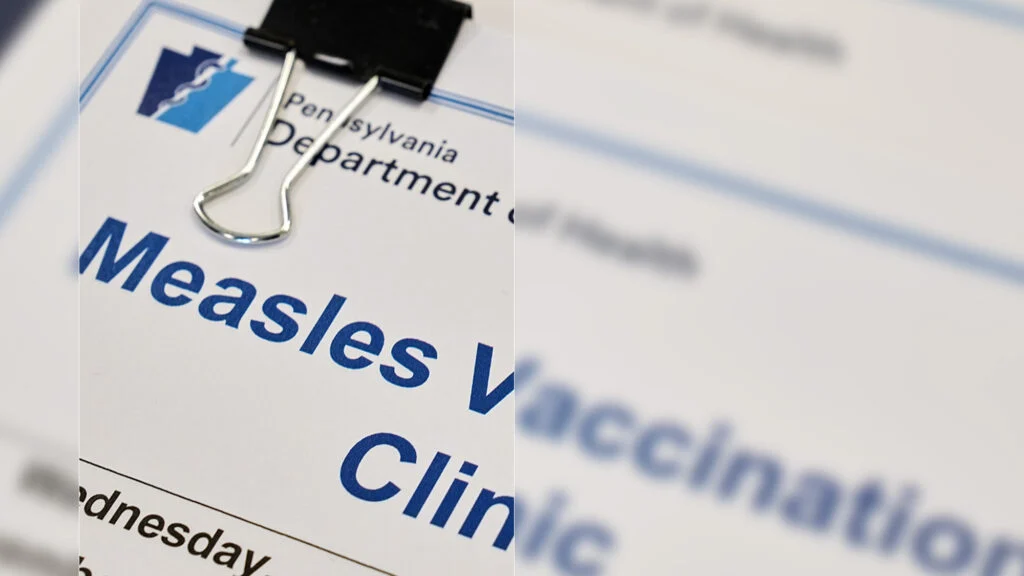
The Pan American Health Organization (PAHO) issued a historic and sobering announcement this Tuesday, confirming that the United States has officially lost its measles elimination status. This designation, which the nation held for 26 years, served as a benchmark for public health success. The loss of this status is not merely a bureaucratic reclassification; it is a clinical acknowledgment that the measles virus has established sustained, person-to-person transmission within the country for over a year. The reversal represents a catastrophic erosion of decades of immunization progress, leaving vulnerable populations—including infants too young for vaccination and the immunocompromised—at unprecedented risk.
A Timeline of Rapid Decline
The collapse of domestic measles control did not occur overnight, but rather followed a trajectory of steadily declining vaccination rates and localized outbreaks that went uncontained.
In January 2025, as the current administration took office, the United States had not recorded a single measles-related death in nearly ten years. This streak of success was shattered just one month later in February 2025, when an unvaccinated child succumbed to the virus during a significant outbreak in West Texas. By late 2025, public health experts were already sounding the alarm; researchers writing in The Lancet warned that the Texas outbreak was a canary in the coal mine, signaling that gaps in immunization coverage were creating a fragile landscape ripe for sustained transmission.
The situation deteriorated significantly throughout 2026. By November, a series of tragic deaths were reported across several states, marking the most severe measles mortality in decades. New York officials confirmed the death of a child in Lewis County, the state’s first such fatality in over 30 years. Concurrently, Wisconsin recorded its first measles death since 1990—an infant—followed by the death of a second child just eight days later. Pennsylvania has been hit particularly hard, reporting eight deaths this year alone, including the death of an unvaccinated resident of Clinton County reported the day after the PAHO announcement.
Data Discrepancies and Under-Reporting
As of November 13, the Centers for Disease Control and Prevention (CDC) had documented over 5,400 confirmed cases of measles, a figure that has already doubled the total case count for the entirety of 2025. However, experts caution that this number is likely a significant undercount.
There is a notable discrepancy between state-level reporting and the CDC’s provisional national tally, which currently stands at six deaths. This gap stems from differences in reporting methodologies. While state health departments often identify fatalities through active outbreak investigations, the CDC relies on national death certificate data, a process that inherently carries a time lag. The discrepancy highlights a critical need for a unified federal definition and a more agile data-sharing infrastructure between state and national health authorities to ensure that the scale of the crisis is accurately understood by the public and policymakers.
The Erosion of Herd Immunity
The fundamental cause of this resurgence is a decline in the uptake of the measles, mumps, and rubella (MMR) vaccine. Two doses of the MMR vaccine provide approximately 97% protection against the virus. To maintain herd immunity—the threshold necessary to prevent sustained transmission—a population typically requires a vaccination rate of 95%.

Recent data from the CDC reveals a troubling downward trend. Vaccination coverage among U.S. kindergartners plummeted from 95.2% during the 2019–2020 school year to 92.4% in the 2025–2026 academic cycle. This 2.8% decline leaves an estimated 280,000 children across the country without the protection of the full two-dose series. These pockets of unvaccinated individuals serve as reservoirs for the virus, allowing it to move rapidly through schools and communities even in states where the overall average vaccination rate remains relatively high.
Addressing the Trust Deficit
The challenge of re-establishing measles elimination is as much about social psychology as it is about clinical logistics. A survey presented at the IDWeek 2026 conference found that while public confidence in the accuracy of CDC vaccine information remains above 50%, only 30% of respondents identified the agency as their most trusted source when conflicting information arises.
The data suggests that the public places significantly higher trust in personal health care providers. For parents hesitant about vaccinations, the role of the pediatrician or primary care physician is paramount. These clinicians are uniquely positioned to address medical history, explain the evidence behind vaccine recommendations, and navigate the nuances of side effects. To facilitate this, health care workers require more time with patients and reliable access to scientific evidence, ensuring they can provide clear, empathetic, and accurate information.
A Path Toward Re-Elimination
Regaining elimination status requires a rigorous 12-month period of zero sustained transmission, backed by robust surveillance data. Achieving this goal necessitates a coordinated effort from Congress, the Department of Health and Human Services (HHS), and local health departments.
Proposed strategies for the upcoming legislative session include:
- Strengthening the Vaccines for Children Program: Protecting and expanding funding for this critical initiative is essential to remove financial barriers to immunization.
- Targeted Community Engagement: Funding should be directed toward hiring staff capable of conducting outreach to families with overdue vaccinations, providing localized, accessible pop-up clinics, and offering flexible scheduling, such as after-school or weekend appointments.
- Public Accountability: Congress should mandate that the CDC provide quarterly public reports on MMR coverage in communities with the largest immunization gaps, detailing specific challenges and progress in outbreak containment.
- HHS Transparency: The incoming House and Senate health committees should conduct public hearings requiring HHS leadership to explain the evidence base for vaccine policy changes. This would help restore institutional credibility by ensuring that policy decisions are clearly communicated and justified.
- Infrastructure Investment: Health departments require consistent, year-round funding to maintain laboratory capacity, after-hours response teams, and rapid-contact tracing capabilities.
Broader Implications
The loss of elimination status is a stark reminder of the vulnerability of public health systems. The current situation in the United States mirrors global trends where vaccine hesitancy, compounded by pandemic-era disruptions to routine pediatric care, has allowed once-controlled diseases to re-emerge.
The economic and human costs of this outbreak are mounting. Beyond the tragic loss of life, the financial burden on state health systems—which must mobilize massive resources for contact tracing, testing, and emergency vaccination drives—is unsustainable. Preventing future outbreaks through sustained, proactive investment is significantly more cost-effective than the reactive measures required once a disease has regained a foothold.
As the nation looks toward the next legislative cycle, the mandate for the new Congress is clear: the re-establishment of measles elimination must be a top-tier public health priority. By formalizing a roadmap with clear responsibilities, deadlines, and a commitment to transparency, the United States can hope to recover its status. However, until the gaps in vaccination coverage are closed at the school-district and neighborhood levels, the nation will remain at risk of preventable, recurring outbreaks. Every month of delay in implementing these measures leaves more families exposed to a disease that, decades ago, the country was on the verge of eradicating permanently.

