
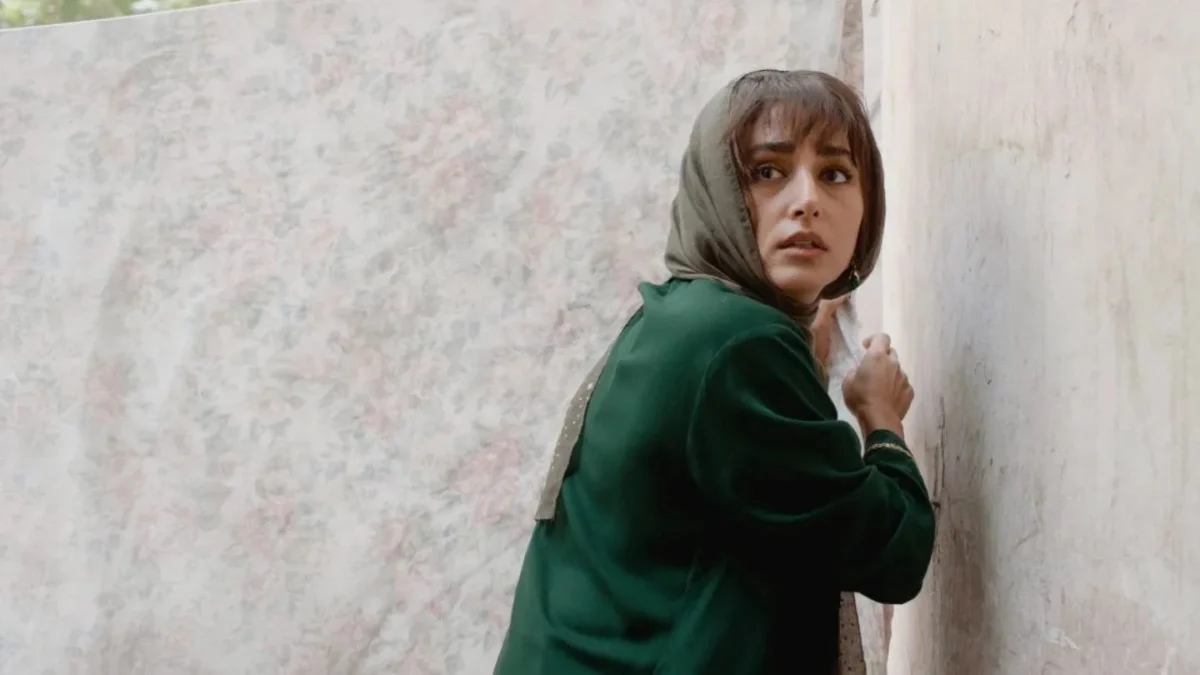
International cinema often serves as a mirror reflecting the darkest corners of human history and contemporary geopolitical crises. At the 30th edition of the prestigious Tallinn Black Nights Film Festival (PÖFF) in Estonia, actress Golshifteh Farahani brought global attention to one such harrowing reality. Starring in writer-director Chabname Zariab’s feature debut, When She Hears the Bells (Les Clochettes de Kaboul), Farahani delivers a gripping performance as Leila, a widowed woman attempting to forge a safe haven in the heart of Afghanistan’s capital. However, the film transcends standard dramatic fiction, operating simultaneously as a taut psychological thriller and a profound exploration of human rights abuses, set against the volatile backdrop of Kabul in 2021 as the Taliban inexorably advanced toward the city.
The movie had its high-profile world premiere during the festival’s First Feature Competition on Wednesday night, capturing the attention of critics and audiences alike. The following day, Farahani sat down for an exclusive interview to discuss the meticulous balancing act of the film’s narrative, the harrowing cultural practices it exposes, and her remarkably sobering worldview regarding the current state of global stability.
The Plot and Historical Context of When She Hears the Bells
Set in the tense months leading up to the fall of Kabul in 2021, When She Hears the Bells thrusts its protagonist into an unimaginable nightmare. Seeking independence and a fresh start, Leila secures employment in what she initially believes is a standard domestic kitchen. She soon uncovers a far darker and deeply systemic atrocity: the kitchen operates as a front for a bacha bazi house.
Bacha bazi, which translates roughly to "boy play," is an illegal yet historically entrenched practice in parts of South and Central Asia where young boys and adolescents are forced to dress in women’s clothing, wear makeup, and dance to entertain older, often powerful men. These gatherings frequently culminate in severe physical and sexual exploitation. By weaving this taboo and horrific practice into the narrative, Zariab exposes a systemic form of child abuse that has long persisted in the shadows of Afghan society, shielded by corruption, fear, and social complicity.
As the narrative unfolds, the external threat mirrors the internal horror. The Taliban’s rapid territorial gains across Afghanistan in the summer of 2021 bring the frontline directly to the doorstep of Kabul. Leila finds herself fighting not only to escape the immediate domestic prison of the bacha bazi house but also racing against time to help a group of vulnerable boys flee the city before the inevitable regime collapse. Co-starring Sayed Hashimi—known for his work in 13 Days, 13 Nights—the thriller utilizes authentic visual elements, including footage actually shot within Afghanistan, lending an undeniable layer of gritty realism to the production. International sales for the feature are being managed by Le Pacte.
The Genesis of the Project and Casting Decisions
For Farahani, committing to When She Hears the Bells was not an immediate decision. Despite Zariab’s persistent efforts to cast her, the acclaimed France-based Iranian actress initially resisted reading the script. Having previously starred in The Patience Stone, a critically acclaimed drama also set against the backdrop of a war-torn Afghanistan, Farahani felt a strong sense of artistic conservation, believing that the heavy thematic material was territory best left for other actresses to explore.
However, Zariab’s determination proved unwavering. Refusing to compromise on her vision for Leila, the director made it clear that the project would not move forward without Farahani attached. Yielding to this relentless artistic pursuit, Farahani ultimately agreed to take on the role sight unseen.
Upon finally reading the material, Farahani’s initial hesitation transformed into profound astonishment. She noted that Zariab’s debut script matched the exceptional quality of the final cinematic product, defying the typical learning curve often associated with first-time feature directors.
Navigating Terror Without Alienating the Audience
One of the central artistic triumphs of When She Hears the Bells lies in its delicate equilibrium. The film successfully synthesizes high-stakes thriller mechanics with deep emotional resonance and social commentary. For Farahani, evaluating the success of this tonal balance is rooted in visceral audience reaction. During the premiere in Tallinn, the actress reported experiencing continuous goosebumps, noting that even notoriously distracted viewers remained entirely transfixed, leaning forward in engagement rather than reaching for their mobile devices.
Addressing the overwhelming convergence of dark themes—ranging from bacha bazi and systemic misogyny to the encroaching threat of the Taliban—Farahani emphasizes a grounded approach to character performance. To the outside observer, the circumstances are undeniably horrific and unbearable. Yet, from the perspective of the character trapped within that reality, analytical judgment of the horror is a luxury that does not exist.
"As an audience, you say, ‘This is awful, this is horrible!’ But as a character inside, you cannot say this is horrible. You just act on it," Farahani explained.
This psychological realism allows the film to skirt the dangerous precipice of gratuitous trauma porn. Farahani argues that depicting the raw, explicit violence of such atrocities on screen often backfires when presented to Western or "civilized" audiences. When confronted with direct, unmitigated horror regarding the abuse of children, the human brain frequently responds by emotionally "zapping" out as a defense mechanism, effectively blocking out the empathy the filmmaker intends to cultivate. By leaving the most explicit elements of the horror to the viewer’s imagination, Zariab maintains a delicate psychological threshold, keeping the audience actively engaged, empathetic, and painfully aware of the characters’ plight without inducing total emotional shutdown.
A Fixture at the Tallinn Black Nights Film Festival
Golshifteh Farahani’s presence at the 30th Tallinn Black Nights Film Festival underscores a burgeoning creative partnership between the celebrated actress and the Estonian A-list festival. Marking her third consecutive year attending the event, Farahani expressed deep admiration for the city of Tallinn and the festival’s unwavering dedication to independent cinema.
In an era characterized by shrinking production budgets, escalating global challenges, and institutional uncertainty for regional film festivals, Farahani champions PÖFF as a vital cultural sanctuary. Her recent cinematic footprint at the festival includes standout performances in Reading Lolita in Tehran, Oh, What Happy Days!, and now When She Hears the Bells. For Farahani, the invitation to return to Estonia is an automatic acceptance, driven by an audience she recognizes as genuinely devoted to the cinematic art form.
Broader Implications and a Sobering Global Outlook
While When She Hears the Bells serves as a piercing critique of historical and ongoing human rights abuses in Central Asia, its thematic resonance extends far beyond the borders of Afghanistan. The film functions as an urgent reminder of the fragility of human rights, particularly for women and children under extremist governance, forcing international audiences to confront realities they might otherwise prefer to ignore.
However, when the conversation shifts from past cinematic achievements to future creative endeavors, Farahani’s perspective takes a distinctly somber turn. Eschewing the conventional Hollywood trajectory of lining up successive acting projects, the actress admits that her current headspace is entirely detached from the traditional artistic sphere.
"I’m a bit pessimistic, and I feel there’s a big war coming," Farahani stated, reflecting on the current geopolitical climate. In her view, humanity is hurtling toward a systemic collapse, a fundamental restructuring of global order that will render modern artistic aspirations secondary to sheer survival. She points specifically to Europe—a continent she characterizes as historically insulated and spoiled—as a primary region vulnerable to major geopolitical shocks.
Farahani views the modern world as an interconnected minefield, where localized flashpoints across North America, Europe, Africa, and Asia threaten to detonate simultaneously. Whether discussing regional conflicts in the Middle East, tensions across the Taiwan Strait, or domestic polarization within major global superpowers, her assessment is unyielding: the global architecture is destabilizing at an unprecedented rate.
Conclusion
When She Hears the Bells stands as a testament to the power of cinema to confront the unspeakable. Through Chabname Zariab’s visionary direction and Golshifteh Farahani’s uncompromising performance, the film sheds light on the darkest recesses of human exploitation while honoring the resilience of those caught in the machinery of war. As the film continues its festival run following its triumphant Tallinn premiere, it challenges viewers not to look away, serving as both a gripping narrative thriller and an urgent call to uphold human dignity in an increasingly perilous world.

