
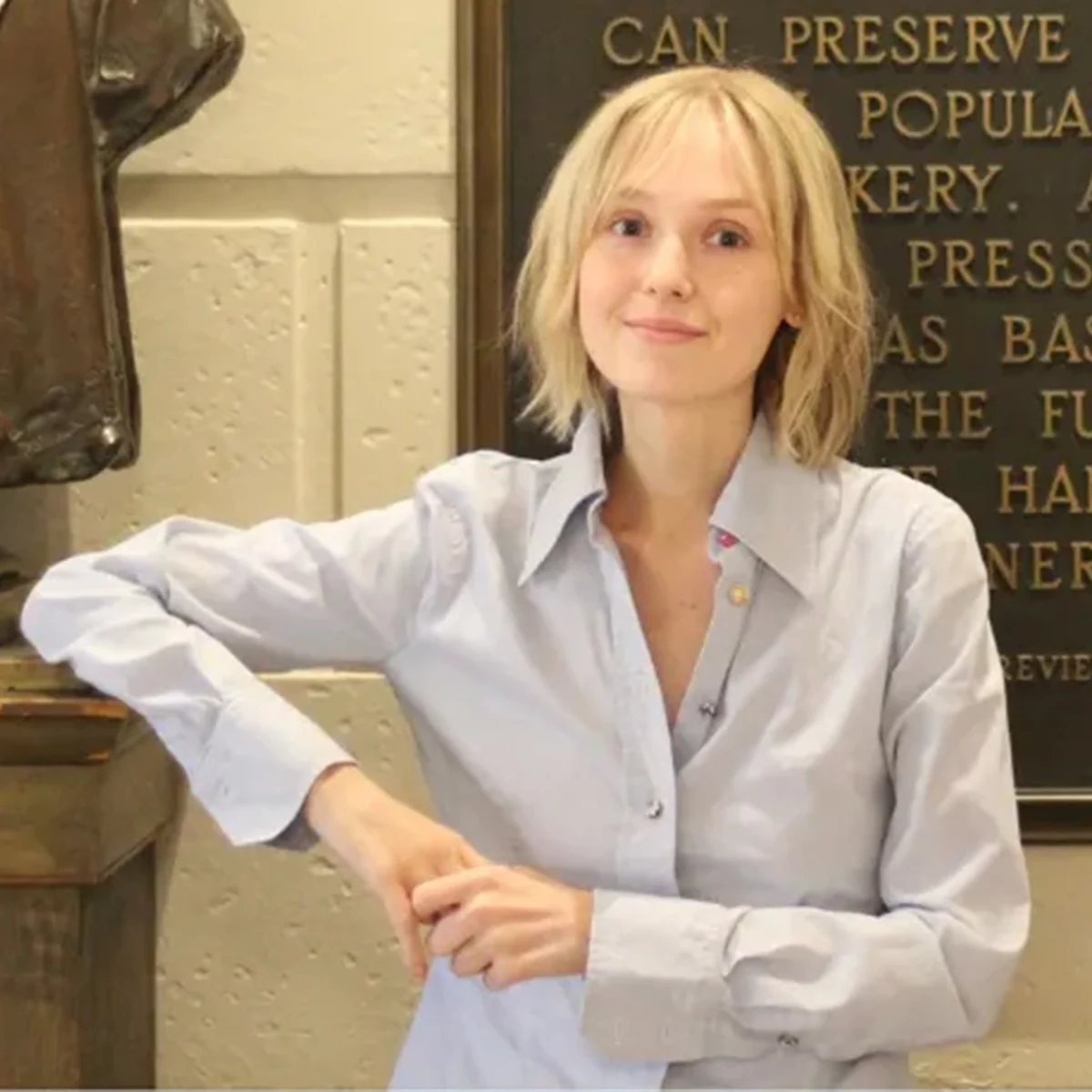
The academic and creative communities are in mourning following the untimely death of Beau Jessup, a 27-year-old graduate student at Columbia University’s prestigious Graduate School of Journalism. Jessup, who was the only child of acclaimed British actress Lisa Maxwell and her husband, Paul Jessup, passed away while pursuing her Master of Science degree in New York City. The announcement of her passing, confirmed by the university on November 9, has sent shockwaves through both the journalism and theatrical circles in which she was quickly making a name for herself. While no cause of death has been disclosed by the family or university officials, the loss of such a promising intellect has prompted an outpouring of tributes from peers, mentors, and the wider arts community.
A Life Dedicated to the Power of Storytelling
Born into a family familiar with the intricacies of public life, Beau Jessup’s trajectory was defined by an intellectual curiosity regarding the mechanics of narrative. Her mother, Lisa Maxwell, is a well-regarded figure in British television, best known for her portrayal of Samantha Nixon on the long-running police procedural The Bill and for her work as a panelist on the popular daytime program Loose Women. Furthermore, Maxwell’s early career included a notable voice role as Kira in the 1982 cult classic The Dark Crystal, directed by Jim Henson and Frank Oz.
Despite this exposure to the world of celebrity, Jessup carved out a distinct academic identity. Before arriving at Columbia, she completed a master’s degree in Writing for Performance at the University of Cambridge. Her work in that program culminated in the creation of her first play, The Sandbag, which reflected her sharp wit and her preoccupation with the intersection of geography and performance. In a final interview with the Columbia News published on the day of the announcement of her passing, she jokingly noted her ambition to host a table reading of the play in the university’s Pulitzer Hall, claiming it would technically qualify as a "Broadway" production—a testament to her humor and her desire to bridge the gap between high-concept art and accessible storytelling.
Chronology of an Aspiring Career
Jessup’s academic journey was marked by a steady progression toward a professional career in media and theater. Having already demonstrated significant talent in the creative arts at Cambridge, she sought to augment her artistic sensibilities with the rigorous, evidence-based training provided by the Columbia Journalism School.
- Early Academic Foundation: Jessup pursued advanced studies in Writing for Performance, establishing a reputation as a playwright capable of navigating complex themes.
- Transition to Columbia: In the fall of 2024, Jessup enrolled in the Master of Science program at Columbia, aiming to formalize her skills in investigative reporting and social commentary.
- Refining the Narrative: Throughout her time at Columbia, she actively sought to understand the "power and responsibility of storytelling," reflecting on how public narratives are constructed and often distorted.
- The Final Interview: On November 9, 2024, the university published a profile on Jessup, highlighting her unique perspective as the daughter of a public figure and her aspirations to report on culture and social issues.
- Notification of Loss: On the same day, the Columbia Journalism School issued a formal statement confirming her death, leaving her cohort and professors to grapple with the sudden absence of a student who was widely viewed as a future leader in the industry.
The Intersection of Celebrity and Journalism
In her final public reflections, Jessup provided a poignant analysis of the relationship between the subject and the storyteller. Having witnessed firsthand how media narratives can shape public perception, she possessed an "unusual awareness" of the distance between a person’s private life and their public image. This awareness served as the primary motivation for her career shift toward journalism.
"I saw how journalism could illuminate someone’s experiences, but also how those experiences could be distorted, simplified, or transformed into a public narrative over which the subject had very little control," she stated in her final interview. This observation is particularly relevant in the modern media landscape, where the velocity of information often outpaces the accuracy of reporting. Jessup’s intent was to bring a level of rigor to the profession that would protect the integrity of the subjects she intended to cover. Her death represents the loss of a voice that sought to interrogate the ethics of modern media from a position of informed empathy.
Institutional and Peer Responses
Columbia University’s response was swift, emphasizing the profound impact Jessup had on her peers during her relatively short time at the school. In their statement, the journalism school noted: "Columbia Journalism School mourns the loss of Beau Jessup, a student in our M.S. program. We extend our deepest condolences to her family, friends, classmates and all who knew and loved her."
The loss has reverberated through her cohort, as classmates and faculty members reflect on a student who was characterized by her intellectual intensity and her collaborative spirit. In the field of journalism, where intense competition is often the norm, peers have described Jessup as a rare talent who prioritized the human element of reporting over the performative aspects of the industry.
Broader Implications for Journalism Education
The passing of a student of Jessup’s caliber brings into focus the evolving nature of journalism education. Modern programs like those at Columbia are increasingly attracting students who come from diverse, non-traditional backgrounds, including the arts, law, and academia. Jessup’s multidisciplinary approach—combining the creative writing skills honed at Cambridge with the forensic research methods taught at Columbia—is indicative of a new generation of journalists who view the profession as an extension of creative expression.
Her interest in "reporting on people, culture, and social questions" aligns with a broader industry trend toward human-centric storytelling. As newsrooms grapple with the rise of artificial intelligence and the decline of traditional gatekeepers, the need for writers who can synthesize complex human experiences into coherent, ethical narratives has never been greater. Jessup’s work, though cut short, serves as a benchmark for the kind of critical inquiry that the next generation of journalists is expected to uphold.
A Legacy of Potential
While the circumstances of Beau Jessup’s death remain private, the impact of her brief career is already being felt. Her transition from the stage to the newsroom was not merely a change in medium, but a deliberate effort to apply the principles of empathy and observation to the service of the public interest.
For her parents, Lisa Maxwell and Paul Jessup, the loss is an unimaginable personal tragedy. For the academic community, it is the loss of a student whose potential to influence the discourse on culture and society was significant. As the community continues to process this news, the emphasis remains on the integrity and curiosity that defined Jessup’s life. Her desire to explore the human condition, both through the medium of theater and the rigors of journalism, remains a guiding principle for her peers.
In the coming weeks, as the university and her family navigate the process of grieving, the focus will undoubtedly remain on celebrating the contributions she made during her time in New York and the lasting impression she left on those who were fortunate enough to witness her pursuit of the truth. Whether through the plays she wrote or the articles she was destined to produce, Beau Jessup’s commitment to "who gets to tell people’s stories" will continue to resonate as a vital question for all those working within the media and the arts.

