
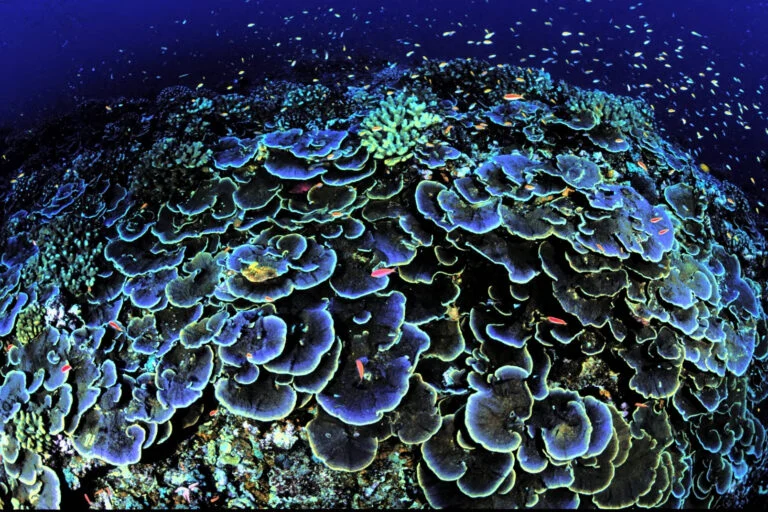
The National Oceanic and Atmospheric Administration’s National Marine Fisheries Service (NOAA Fisheries) has formally published a set of proposed regulations that would authorize commercial fishing activities across a massive expanse of the Pacific Islands Heritage Marine National Monument (PIH). The proposal, released on November 9, 2026, targets the waters surrounding Johnston Atoll, Wake Island, and Jarvis Island. If enacted, these rules would permit commercial operations in an area spanning 1 million square kilometers—a region more than double the size of California—between 50 and 200 nautical miles from these remote islands. While the government maintains that the move is designed to support the "long-term sustainability of U.S. fisheries," the proposal has ignited a fierce debate between federal regulators and conservationists, setting the stage for potential litigation similar to the legal battle that halted a previous attempt in 2025.
The Scope of the Proposal and Geographic Context
The Pacific Islands Heritage Marine National Monument serves as a critical biological repository, encompassing 5,000-year-old coral reef systems and 165 documented seamounts. These underwater mountains function as biodiversity hotspots, providing essential structural habitat for deep-sea corals and attracting an array of pelagic life. Under the current proposal, the "no-take" buffer zone would be restricted to the area within 50 nautical miles of the islands. Beyond this boundary, commercial vessels would be permitted to extract resources in zones that were previously designated for conservation.
The PIH is home to a diverse array of threatened and endangered species, including sea turtles, various species of sharks, rays, and migratory whales. Conservationists argue that the 50-nautical-mile limit is insufficient, as it fails to account for the migratory patterns of these species, which frequently range far beyond the restricted zone to forage and breed. By opening 1 million square kilometers to commercial exploitation, the federal government is effectively rolling back protections that were intended to safeguard these "blue wilderness" areas from industrial-scale fishing pressures.
A Chronology of Policy Shifts and Legal Challenges
The push to open these waters is not a new development but rather the latest installment in a multi-year effort to reorient federal marine policy. The chronology of these events highlights a stark divide between administrative mandates and judicial oversight:
- April 2025: The federal government issues a directive to authorize commercial fishing in the PIH, citing a desire to bolster domestic seafood production.
- Late 2025: Environmental organizations, led by Earthjustice, file a lawsuit challenging the legality of the authorization. A federal court ultimately rules in favor of the plaintiffs, nullifying the agency’s action and maintaining the status quo of the marine monument.
- April 2026: A presidential proclamation is issued, explicitly calling for the "unleashing" of American commercial fishing in the Pacific. This proclamation serves as the legal backbone for the current NOAA proposal.
- November 9, 2026: NOAA Fisheries publishes the proposed rules, initiating a 30-day public comment period.
- December 9, 2026: The deadline for public comments.
The swiftness with which the administration has returned to this issue following the 2025 court defeat suggests a high level of political prioritization for the expansion of commercial access in the Pacific.
Supporting Data and Ecological Implications
The Pacific Islands Heritage Marine National Monument is widely regarded by oceanographers as a "living laboratory." According to data provided by the Pacific Islands Heritage Coalition, the monument’s network of atolls and seamounts is integral to the health of the broader Pacific ecosystem.
Commercial fishing in these areas primarily targets high-value pelagic species like tuna and billfish. However, the incidental catch—or bycatch—of non-target species remains a primary concern for marine biologists. Studies on deep-sea seamounts suggest that these areas are highly vulnerable to localized depletion; unlike coastal fisheries, which may have higher resilience due to current-driven nutrient influx, the isolation of these seamounts means that recovery from overfishing can take decades, if not longer.
NOAA’s own analysis of the proposal acknowledges that the impact on fisheries operations would be "minor," raising questions among critics about the economic necessity of the policy. If the projected economic gain is indeed minor, opponents argue that the ecological risks to one of the world’s few remaining pristine environments far outweigh the benefits to the commercial fleet.

Stakeholder Reactions and Cultural Significance
The proposal has drawn sharp criticism from cultural leaders, particularly those representing Pacific Islander communities who view the monument as an ancestral legacy. William Aila, a Native Hawaiian fisherman and former chair of the Hawaiʻi Department of Land and Natural Resources, emphasized the spiritual and historical dimensions of the debate.
"The ocean has always been a place of connection for Pacific peoples," Aila stated. "These same waters provide threatened and endangered wildlife a rare refuge where they can feed, breed, and recover. Many Pacific Islander descendants have answered the call to protect this special area, and we are hopeful that their comments will allow us to protect this place for generations to come."
The argument presented by Aila and others is that the "unleashing" of commercial fishing ignores the traditional ecological knowledge (TEK) that has managed these resources for centuries. Furthermore, environmental groups argue that the government’s characterization of potential harm as "negligible" is an understatement that ignores the cumulative effects of climate change, ocean acidification, and plastic pollution already impacting the Pacific.
Legal Outlook and Implications
The legal team at Earthjustice has signaled that they are prepared to return to court to block the implementation of these rules. David Henkin, an attorney for the organization, issued a statement following the announcement: "We prevailed in court the last time this happened, and we’ll head back to court again to defend the pristine waters of the Pacific Islands Heritage Marine National Monument."
The legal strategy will likely focus on whether the presidential proclamation and subsequent NOAA rulemaking align with the original statutes used to create the marine monument. Federal marine monuments are generally established to ensure long-term preservation; changing their status to allow industrial activity requires a complex administrative process that must withstand rigorous scrutiny under the Administrative Procedure Act (APA).
Broader Impact and Future Outlook
The outcome of this proposal will have implications far beyond the immediate geography of the PIH. It represents a fundamental shift in how the United States manages its vast Exclusive Economic Zone (EEZ). If the proposal is finalized, it could set a precedent for other protected areas, potentially signaling a trend toward "multiple-use" management in regions previously designated for strict conservation.
Conversely, a successful legal challenge could solidify the status of marine monuments as permanent sanctuaries, immune to the political fluctuations of changing administrations. As the December 9 deadline for public comments approaches, the debate serves as a microcosm of a global tension: the struggle to balance short-term economic output against the long-term imperative of biodiversity preservation.
The scientific community remains largely unified in the view that large, fully protected marine areas are essential to buffering the ocean against the impacts of global climate change. Whether these 1 million square kilometers will remain a sanctuary or become an industrial fishing ground will ultimately be determined by a combination of public pressure, administrative review, and the inevitable return to the federal judiciary. For now, the Pacific Islands Heritage Marine National Monument remains a focal point for a significant clash between federal policy and environmental stewardship.

