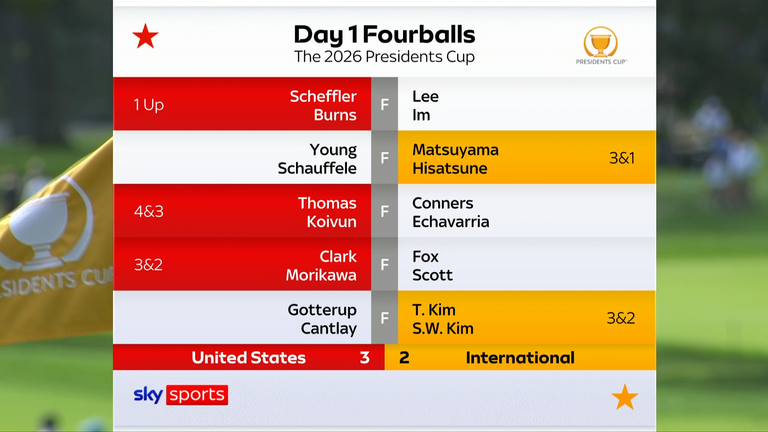
Team USA has launched its campaign for an 11th consecutive Presidents Cup victory by securing a hard-fought 3-2 lead over the International Team following Thursday’s opening fourballs session at the historic Medinah Country Club. While the American squad, captained by Brandt Snedeker, has historically maintained a stranglehold on this biennial competition, the opening day served as a potent reminder of the narrowing gap in talent between the two sides. The Internationals, determined to break a decades-long losing streak, fought tooth and nail, ensuring that every point earned by the hosts was a product of high-stakes pressure and clinical execution.
A Tense Opening Day at Medinah
The atmosphere at Medinah was electric as the world’s elite golfers navigated the challenging layout. The fourballs format, which rewards aggressive scoring and chemistry, provided the perfect backdrop for a dramatic start. The United States, entering the event as heavy favorites, found the International Team to be a formidable adversary from the very first tee.
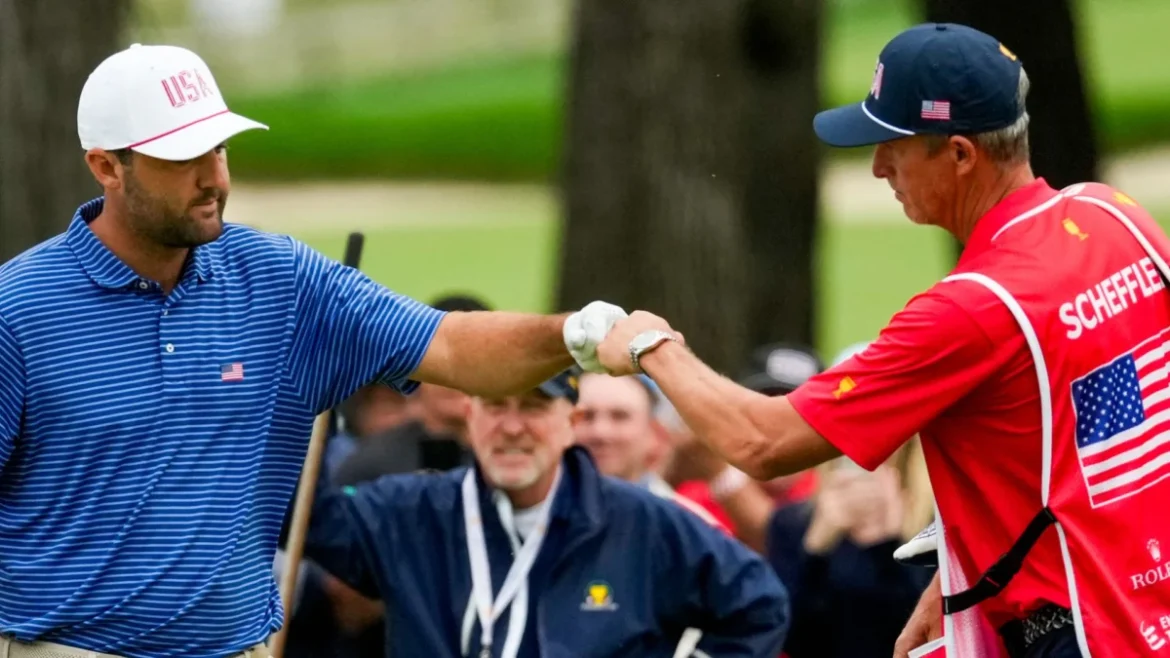
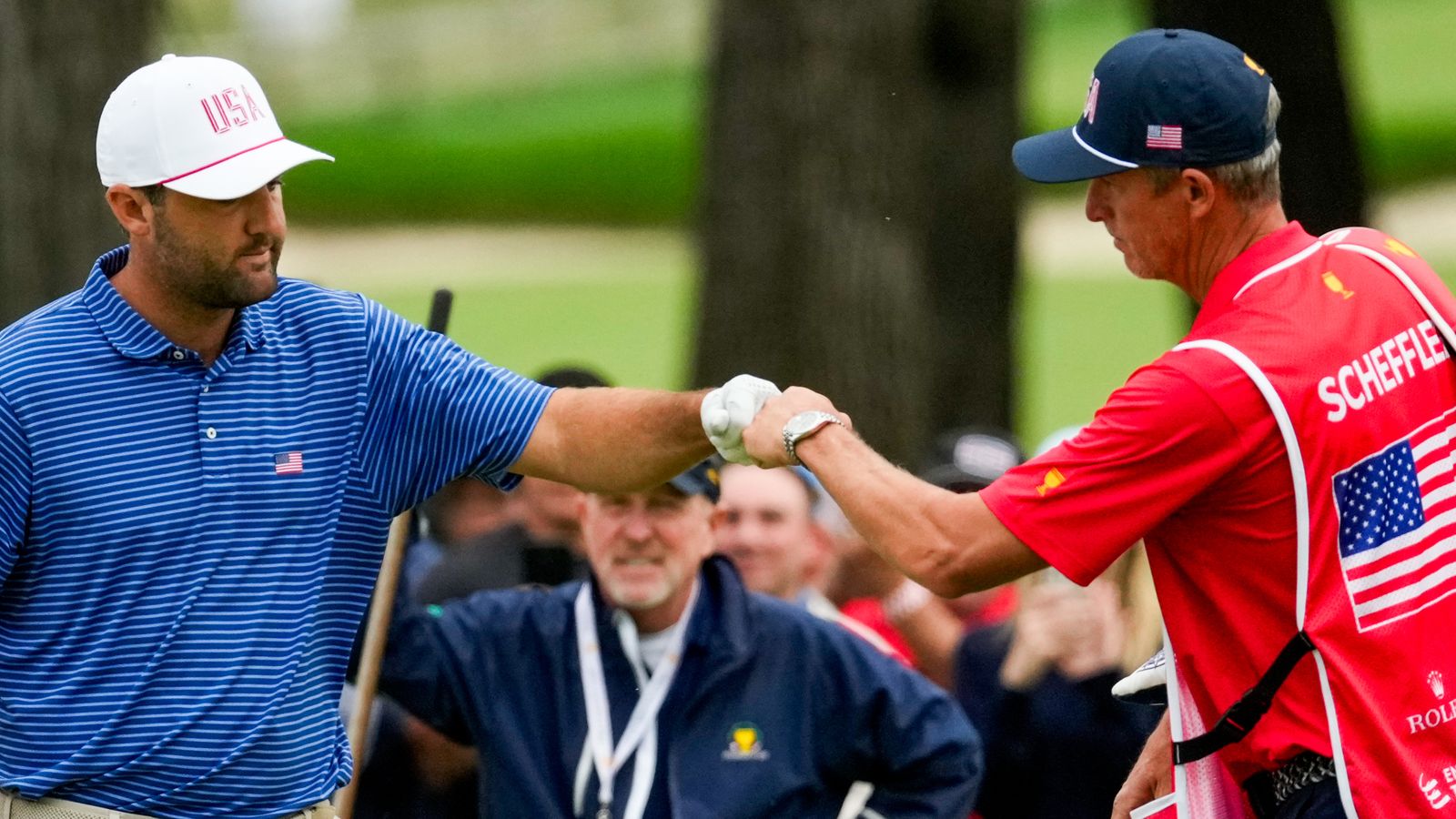
The day’s narrative was defined by momentum shifts. The most anticipated match featured World No. 1 Scottie Scheffler and his partner Sam Burns against the dynamic duo of Min Woo Lee and Sungjae Im. The match went the distance, culminating in a final-hole thriller that saw Scheffler break his personal winless streak in Presidents Cup play. The victory was a significant psychological boost for the American side, which has often relied on Scheffler’s consistency to anchor their campaigns.
Key Match Results and Chronology
The session began with high intensity as both teams sought to secure early points to dictate the tone of the tournament. The match-by-match breakdown highlights the parity on display:
- Scheffler/Burns (USA) def. Lee/Im (INT): A narrow victory for the Americans, highlighted by a moment of brilliance from Min Woo Lee, who sank a spectacular 50-foot putt on the second hole, signaling the Internationals’ intent to challenge the hosts.
- Thomas/Koivun (USA) def. Conners/Echavarria (INT): Justin Thomas and rookie Jackson Koivun demonstrated why captain Snedeker placed his faith in the duo, cruising to a dominant 4&3 victory. This match provided much-needed breathing room for the American scoreline.
- Matsuyama/Hisatsune (INT) def. Young/Schauffele (USA): The all-Japanese pairing delivered a masterclass, overcoming the formidable American duo of Cameron Young and Xander Schauffele with a 3&1 scoreline. This served as a stark reminder of the depth within the International roster.
- Clark/Morikawa (USA) def. Fox/Scott (INT): Wyndham Clark and Collin Morikawa combined for a clinical 3&2 win, a result that ultimately proved decisive in handing the United States the overall session lead.
- Kim/Kim (INT) def. Gotterup/Cantlay (USA): In the final match of the day, the pair of Tom Kim and Si Woo Kim secured a 3&2 victory, preventing the Americans from running away with the session and keeping the International hopes firmly alive heading into Friday.
Context and Historical Dominance
The Presidents Cup, established in 1994, has been overwhelmingly dominated by the United States. Since its inception, the U.S. has lost only once—a narrow defeat in 1998 at Royal Melbourne—and tied once in 2003. Heading into the 2026 edition at Medinah, the U.S. team holds a commanding historical record. The Americans have led after the opening day in nine of the last 10 stagings of the event, reinforcing their status as the gold standard in team match-play golf.
However, the 2026 format presents new challenges. Medinah, a course known for its capacity to host major championships and Ryder Cups, requires precision off the tee and a deft touch around the greens. The International team’s performance on Thursday suggests that their preparation and focus on team cohesion—often a sticking point in previous years—is yielding tangible results.
The Evolution of the International Team
For years, critics have argued that the International Team suffers from a lack of identity compared to the deeply ingrained "team-first" culture of the Americans. Under the leadership of their current coaching staff, the Internationals have placed a greater emphasis on statistical pairing models and fostering camaraderie among players from diverse global backgrounds.
The success of the all-Japanese pairing of Hideki Matsuyama and Ryo Hisatsune is a testament to this strategic pivot. By pairing players with shared language and cultural ties, the International Team is attempting to manufacture the kind of synergy that has historically powered the U.S. squad. The victory of Tom Kim and Si Woo Kim in the bottom match further underscores that the Internationals have the depth to compete in the late stages of the session, where fatigue often impacts performance.
Implications for the Remainder of the Tournament
The 3-2 scoreline represents a "best-case scenario" for the International Team, keeping them within striking distance as the event transitions to the foursomes session on Friday. In team golf, momentum is a fragile but powerful commodity. A 3-2 lead for the U.S. is standard, but the manner in which the Internationals fought back late in the day suggests that this could be one of the most competitive Presidents Cups in recent memory.
For Captain Snedeker, the primary concern will be the performance of his veterans. While stars like Scheffler and Morikawa delivered, the pressure on the younger members of the U.S. team will only increase as the tournament progresses. If the Internationals can continue to neutralize the American stars in the foursomes—a format that tests alternate-shot synergy—the narrative of the week could shift drastically.
Looking Ahead: The Friday Foursomes
The focus now shifts to the Friday foursomes, a format that is often considered the true test of a team’s tactical mettle. Unlike fourballs, where players have the safety net of their partner’s ball, foursomes require absolute trust and a shared rhythm. Historically, this is where the U.S. team has exerted its greatest influence, often pulling away from the opposition through superior ball-striking and tactical discipline.
Official coverage of the second day begins at 7:00 PM on Sky Sports Golf. As the competition intensifies, both teams will look to adjust their strategies based on the lessons learned during the opening day. Whether the Americans can extend their lead or the Internationals can force a tie heading into the weekend remains one of the most compelling storylines in professional golf.
Statistical Breakdown and Venue Significance
Medinah Country Club’s role as the host venue cannot be understated. Known for its massive galleries and undulating greens, the course demands a high level of mental fortitude. Thursday’s statistics showed a high conversion rate on mid-range putts, indicating that the greens were running true, which favored those who could navigate the break accurately.
Furthermore, the participation of rookies like Jackson Koivun on the U.S. side demonstrates a shift toward youth and current form. Koivun’s performance alongside Justin Thomas—a veteran presence—was one of the highlights of the day. For the Internationals, the emergence of Ryo Hisatsune as a reliable partner for Matsuyama could prove to be the most significant development of the tournament.
As the dust settles on day one, the scoreboard reads 3-2 in favor of the United States. While the deficit is minimal for the International Team, the challenge remains immense. To dethrone the American juggernaut, they will need to sustain their current level of play, capitalize on every missed opportunity by the hosts, and find a way to silence the home crowd at Medinah. The Presidents Cup, often criticized for its lack of competitive parity, has provided a opening day that suggests the tide might finally be ready to turn.