
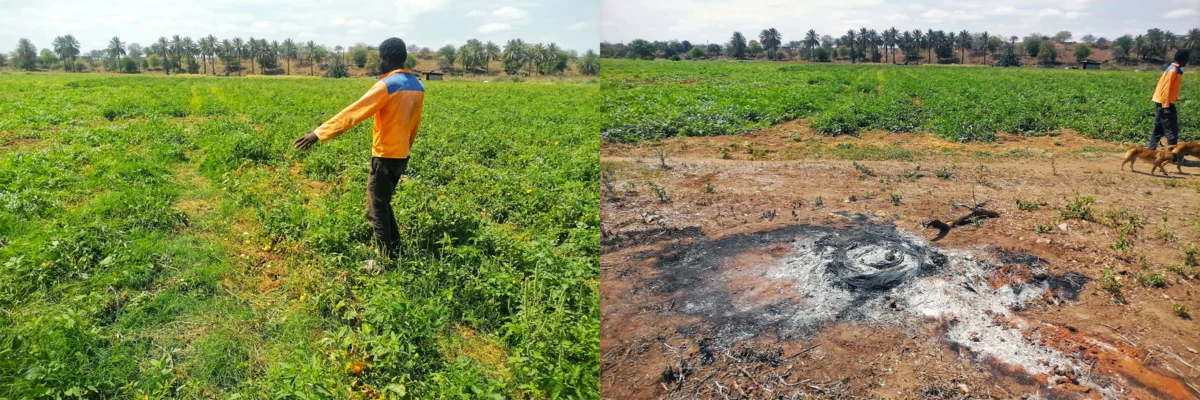
As the sun sets over the Limpopo region of South Africa, the atmosphere at the Den Staat farm shifts from the tranquility of rural agricultural life to a high-stakes vigil. For farmers like Joeman Moyo, the night is not a time for rest but a period of tactical defense. His 5-hectare (12.4-acre) plot, a vital source of income for his family and the community, sits directly in the path of one of nature’s most formidable forces: the African elephant.
The struggle in Den Staat is emblematic of a wider, intensifying crisis across Southern Africa, where human-wildlife conflict is increasingly defined by the overlap of expanding farming interests and essential migratory wildlife corridors. Situated within the Greater Mapungubwe landscape, Den Staat serves as a natural transit point for elephants moving between South Africa, Zimbabwe, and Botswana. As these animals follow ancient migratory routes, they inevitably cross paths with the subsistence and smallholder farmers who have returned to land reclaimed from the legacy of apartheid.

The Human Cost of Coexistence
The historical significance of Den Staat cannot be overstated. In 2010, the land was officially returned to the Machete community, ending decades of displacement caused by forced removals during the apartheid era. Today, the land is managed through a Community Property Association (CPA), a collective governance structure intended to foster economic independence. However, the dream of agricultural self-sufficiency is being severely tested by the nocturnal raids of elephants, as well as other wildlife including baboons, warthogs, zebras, and wildebeests.
For residents, the primary threat remains the elephant. Their sheer size and intelligence allow them to dismantle fencing and consume or trample entire harvests in a single night. Masolo Saul Sematha, a local farmer, recalls the heartbreak of watching his seasonal efforts vanish in hours. In 2024 alone, Sematha’s anticipated yield of ten truckloads of tomatoes was slashed by 20% due to elephant incursions. This loss is not merely an inconvenience; it represents a direct threat to the financial viability of the farm, which supports over 160 residents.
A Chronology of Defiance
The conflict has evolved into a persistent cycle of trial and error. Farmers have adopted a variety of improvised deterrents, reflecting both their ingenuity and their desperation. The methodology is largely reactive, changing as the elephants display remarkable cognitive adaptability.

- Initial Response (Pre-2020): Farmers relied on rudimentary noise-making, such as shouting and banging metal pots. While effective for a time, these methods proved unsustainable as elephants grew habituated to the noise.
- Expansion of Tactics (2020-2023): As the incursions intensified, farmers began using fire, including the burning of tires, and hanging white plastic containers on wires. The containers, which rustle in the wind, provide a persistent, unpredictable sensory disturbance that temporarily confuses the animals.
- Current State (2024-2026): Farmers now rotate between acoustic, visual, and physical deterrents. Many have taken to using toy guns to mimic the sound of gunfire, while others continue the practice of drumming on metal tins. These measures are often performed by families, including children, highlighting the communal burden of crop protection.
Data-Driven Realities
The increasing frequency of these encounters is supported by demographic shifts within the local wildlife population. A 2026 study analyzing elephant population data from 1991 to 2021 indicates that while the broader regional population may show fluctuations, the elephant population within the nearby Mapungubwe National Park has seen a significant annual growth rate of approximately 18% over the last five years. With an estimated 243 elephants currently residing in the park, the density of animals near the border of the farm has reached a critical threshold.
The economic implications are equally quantifiable. Research conducted by the University of Venda in 2018 highlighted that smallholder farmers in the Greater Mapungubwe area face annual losses ranging from 30,000 to 50,000 rand ($1,800–$3,000) during moderate incursions, with extreme damage cases exceeding 100,000 rand ($6,000). For households operating on thin profit margins, these figures often represent the difference between sustenance and poverty.
The Science of Deterrence
Scientific research into human-wildlife conflict suggests that the farmers’ intuition—using sound and vibration—is grounded in animal behavior studies. Research conducted in Malaysia found that Asian elephants exhibit strong avoidance behavior when exposed to recordings of natural predators, such as tigers, or the buzzing of honeybees, which elephants naturally fear due to the risk of being stung in their sensitive trunks.

Similarly, a study published in Proceedings of the Royal Society B confirmed that African elephants possess the ability to detect human-generated seismic cues. This explains why the drumming method, which creates ground vibrations, can be effective in the short term. However, the caveat remains that elephants are highly intelligent; they quickly learn that these sounds are not accompanied by physical danger. The farmers’ strategy of rotating methods is a necessary, albeit exhausting, response to this learned behavior.
Official Responses and the Funding Gap
The challenge of managing these incursions is exacerbated by the cross-border nature of the elephants’ movements. According to Rey Thakhuli, general manager for communications at South African National Parks (SANParks), the mobility of the herd makes static mitigation measures, such as constant ranger patrols, logistically and financially unfeasible.
The primary recommendation from authorities is the installation of robust, wildlife-proof fencing. However, such infrastructure is prohibitively expensive for a community-owned farm. While commercial agricultural operations in the region have successfully secured their boundaries, the community farmers of Den Staat lack the capital to invest in comparable security. Thakhuli has suggested that external funding is the only viable path forward, yet the bureaucratic landscape remains complex, with responsibilities often shifting between local, provincial, and national environmental departments.

Broader Implications for Conservation
The situation at Den Staat forces a difficult conversation regarding the future of conservation in South Africa. The "corridors, not culls" approach—which favors maintaining open pathways for wildlife—is generally supported by conservationists as a way to preserve biodiversity and genetic health in elephant populations. Yet, if this strategy is not paired with adequate support for the humans living adjacent to these corridors, it risks creating a "conservation backlash."
When local communities suffer economic devastation as a direct result of wildlife presence, the social license for conservation projects can quickly erode. If the Machete community and other smallholders are left to defend their fields with nothing more than empty tins and fire, the long-term sustainability of the Mapungubwe ecosystem is threatened.
Moving Toward Coexistence
The path to resolution will likely require a multi-stakeholder approach. This involves:

- Investment in Sustainable Infrastructure: Subsidized, durable fencing solutions that allow for local ownership and maintenance.
- Integrated Compensation Programs: Establishing clear, efficient mechanisms to compensate farmers for crop losses, which would alleviate the immediate financial pressure that leads to desperate measures.
- Community-Led Research: Partnering with local farmers to test and deploy evidence-based, low-cost deterrents—such as beehive fencing or bio-acoustic deterrents—that are less prone to habituation.
- Policy Alignment: Ensuring that the Limpopo Department of Economic Development and Environmental Tourism, along with national wildlife bodies, provides a unified, responsive interface for community concerns.
As the sun rises over Den Staat, Joeman Moyo and his neighbors inspect the damage from the night’s encounters. The scars on the land are visible, as are the signs of their continued resolve. They are not merely farmers; they are at the frontline of a global experiment in coexistence. Their ability to remain on the land, and their willingness to continue farming despite the risks, will serve as a bellwether for the future of rural South Africa’s relationship with its most iconic, and most challenging, neighbors. The success of the Den Staat project depends on recognizing that the protection of the elephant and the protection of the farmer are not mutually exclusive—provided that the burden of coexistence is shared, not carried solely by those with the least to lose.

