
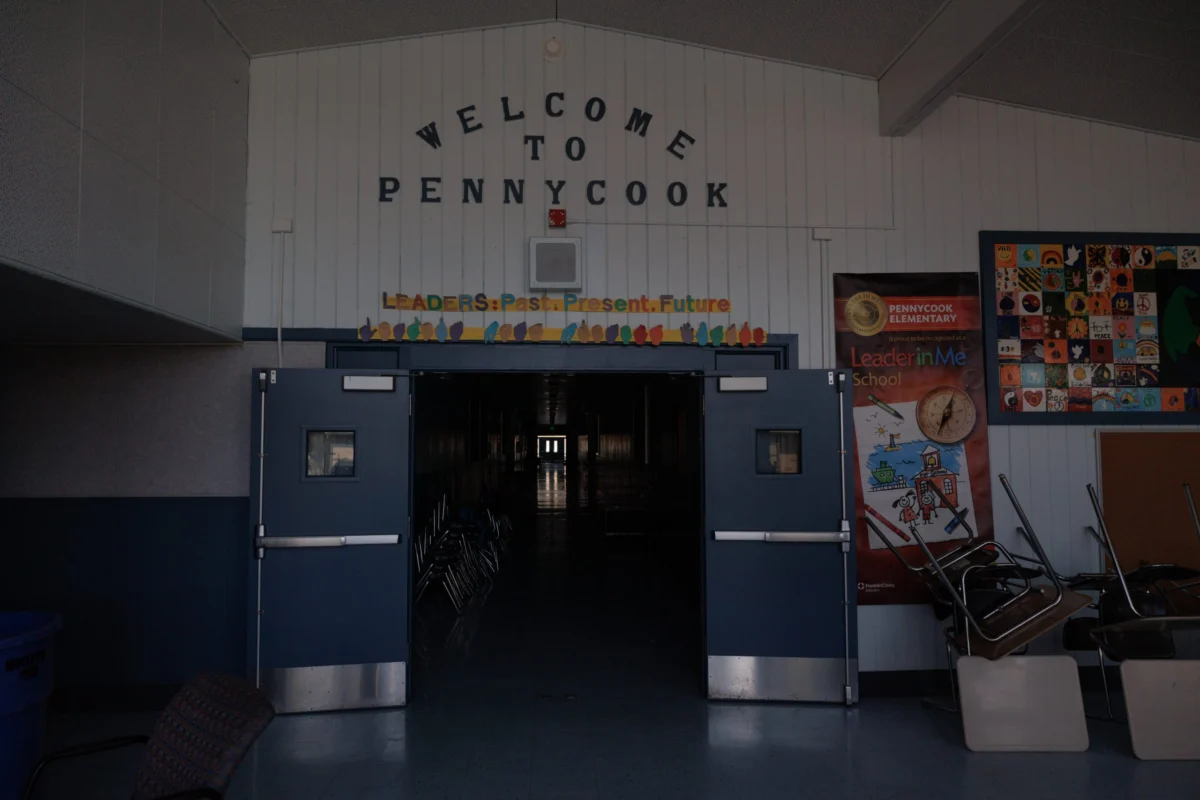
The start of a new school year is traditionally a time of optimism, defined by the smell of fresh wax, sharpened pencils, and the rhythmic bustle of hallways. For thousands of students across the United States, however, this academic year has been defined by displacement and uncertainty. As a profound demographic shift ripples across the nation, school districts are increasingly turning to the permanent closure of campuses as a primary mechanism to combat mounting financial deficits. This trend, while presented by administrators as a necessary fiscal "right-sizing," is triggering a destabilizing cycle that often leaves communities fractured, teachers overwhelmed, and students struggling to find their academic footing.
The scope of this phenomenon is vast. During the most recent academic year, 1,156 U.S. schools shuttered their doors, marking the highest volume of closures since the onset of the COVID-19 pandemic. This data, analyzed by Big Local News at Stanford University, paints a picture of a public education system struggling to reconcile a legacy infrastructure designed for a larger population with a modern reality defined by shrinking enrollment and tightening budgets.
The Demographic and Financial Catalyst
The primary driver behind these closures is a multi-decade decline in birth rates. As fewer children are born, the "pipeline" for public K-12 education has constricted. However, the decline is not solely attributable to demography. Shifts in policy and parent behavior have exacerbated the trend. The post-pandemic rise in homeschooling, coupled with the aggressive expansion of private school vouchers and state-level immigration policies that have stifled population growth in certain regions, has drained the public school rolls.
According to an analysis of federal education data by Stanford economist Thomas Dee and sociologist Jaymes Pyne, public school enrollment dropped by over 1.4 million students—roughly 3%—between the fall of 2019 and 2024. While the number of schools has also declined, the rate of closure is lagging behind the rate of enrollment loss, signaling that many districts are currently operating "ghost schools" that are inefficiently staffed and maintained.
Research from the Bellwether and WestEd groups projects that by the 2030-2031 academic year, these enrollment declines could cost public school systems approximately $11.5 billion in annual state revenue. This creates a "death spiral" for districts: as funding per pupil drops, districts close schools to save overhead; this closure drives remaining families toward charter or private alternatives; the subsequent loss of those students further lowers per-pupil funding, necessitating even more closures.
A Case Study in Contraction: The Vallejo Experience
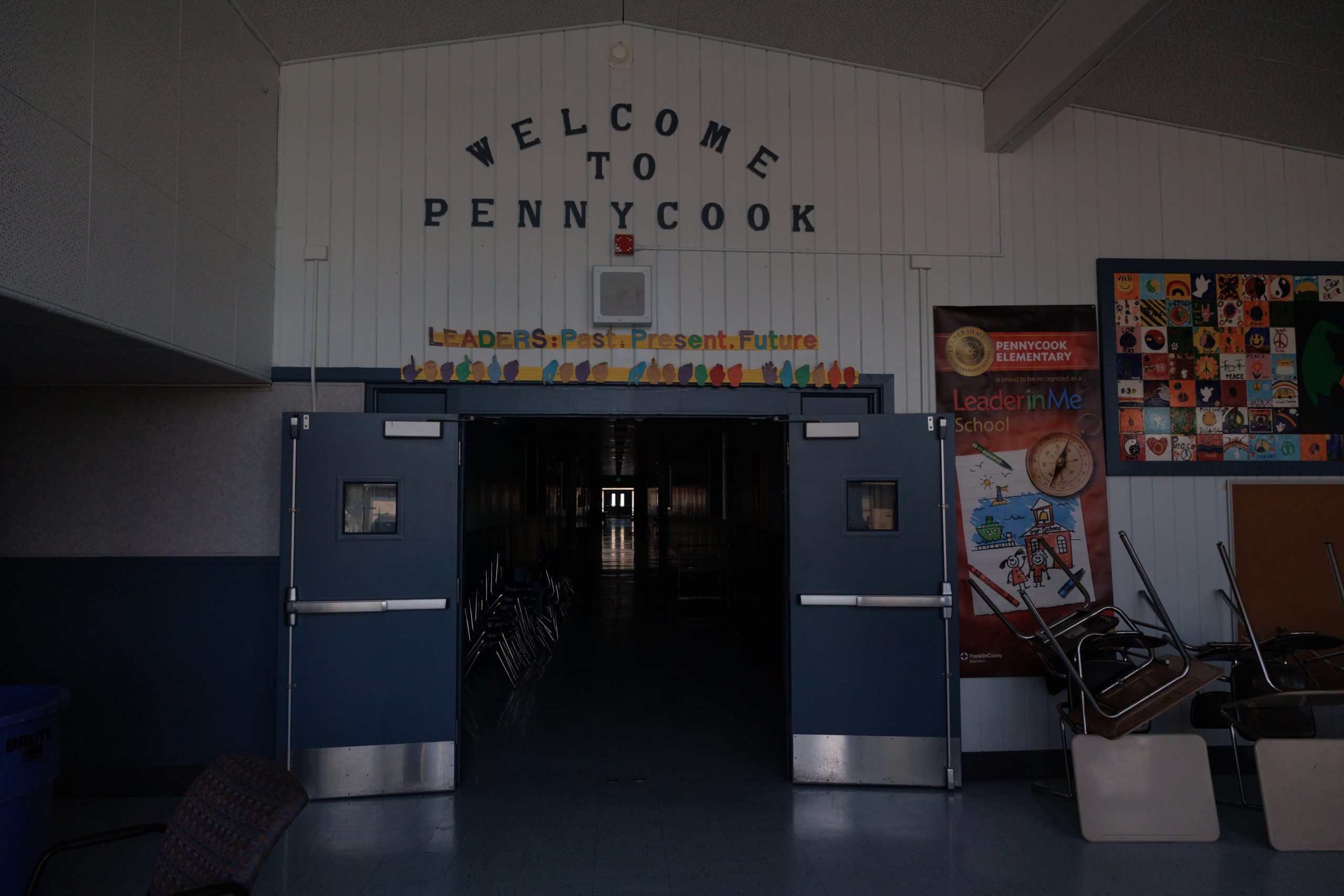
The Vallejo City Unified School District in California serves as a stark archetype of this national struggle. Once a robust district, Vallejo has seen its enrollment collapse from approximately 18,000 students in 2006 to just 9,300 today. The district, still grappling with the long-term economic fallout from the 1990s closure of a local naval base, has shuttered five campuses since 2025—roughly 25% of its total school footprint.
The human cost of these decisions is visible in the lived experiences of families. Kimberly Núñez-Brandão, a parent in the district, represents the anxiety felt by many. After her daughter’s elementary school was shuttered, she was reassigned to Glen Cove Elementary. The transition was not seamless. Upon arriving, Núñez-Brandão discovered that her daughter’s fifth-grade classroom was overcrowded, with 32 students vying for the attention of a single instructor.
The instability was further punctuated when the school’s administration notified parents in October that the teacher—a participant in a new residency program aimed at retention—had resigned. The classroom was immediately handed over to a long-term substitute. For families like the Núñez-Brandãos, the systemic attempt to "right-size" the district has resulted in a diminished quality of service, prompting many to consider moving to neighboring districts or exiting the public system entirely.
The "Right-Sizing" Paradox
Superintendent Rubén Aurelio of the Vallejo district argues that these measures are not born of malice, but of mathematical necessity. "We’re not just closing schools to close schools," Aurelio stated. "We’re right-sizing a district that was built for significantly more kids. And if we’re going to actually improve outcomes for the kids we still have, we need to concentrate resources."
The theory behind consolidation is simple: by pooling resources, districts can theoretically provide better-equipped labs, more robust extracurriculars, and higher-quality support staff. However, data suggests this rarely manifests in practice. A report from the University of Chicago Consortium on School Research indicates that the financial "savings" promised by closure advocates are often offset by hidden costs. These include the logistical expense of busing displaced students to new campuses, the severance packages required for pink-slipped staff, and the ongoing security and maintenance costs for abandoned, often aging, facilities.
Furthermore, academic outcomes for displaced students are frequently negative. Studies show that students who are forced to move to new schools—particularly those moving from one low-performing school to another—experience a long-term dip in reading and math proficiency. Marisa de la Torre, a managing director at the UChicago Consortium, notes that the trauma of displacement creates a period of academic instability that can last for years. "It takes a while to recover, if they recover at all," de la Torre observed.
Broader Economic and Structural Implications
The challenge is not confined to smaller or struggling districts; major metropolitan systems in cities such as Houston, Philadelphia, and Cleveland are navigating similar pressures. In these larger systems, the political fallout is often more volatile, as school closures are frequently perceived as an attack on the neighborhood identity and community cohesion.
Lydia Rainey, a research principal at the Center on Reinventing Public Education, offers a sobering outlook for the coming decade. She suggests that states are unlikely to provide the emergency funding necessary to halt the closures. Instead, districts will be forced to continue these painful restructurings.
To mitigate the damage, some districts are attempting to pivot. Vallejo, for instance, is investing in the renovation of older facilities, aiming to attract younger demographics who have been priced out of the high-cost housing markets of nearby cities like San Francisco. The district is also experimenting with specialized curriculum, such as a planned Tagalog-language school, to appeal to specific cultural demographics in the Bay Area. Whether these niche strategies can successfully reverse the trend of enrollment decline remains to be seen.
The Future of the American Classroom
The evidence suggests that the United States is currently in the middle of a systemic contraction that will redefine the relationship between taxpayers and public education. As districts struggle to remain solvent, the definition of a "neighborhood school" is becoming increasingly fluid.
For parents, the primary concern remains the quality of the immediate environment. When a child’s teacher resigns mid-semester or a classroom size balloons to accommodate students from a shuttered school, the "macro" arguments for fiscal efficiency hold little weight against the "micro" reality of a disrupted education.
As the 2026-2027 school year approaches, analysts expect a new wave of closure announcements. The challenge for policymakers will be to determine whether these closures are merely a stopgap measure that delays an inevitable decline, or if they can be leveraged to create a more resilient, if smaller, public education system. Until that balance is struck, thousands of students will continue to navigate the transition, hoping that their new classrooms—no matter how crowded—will eventually feel like home.

