
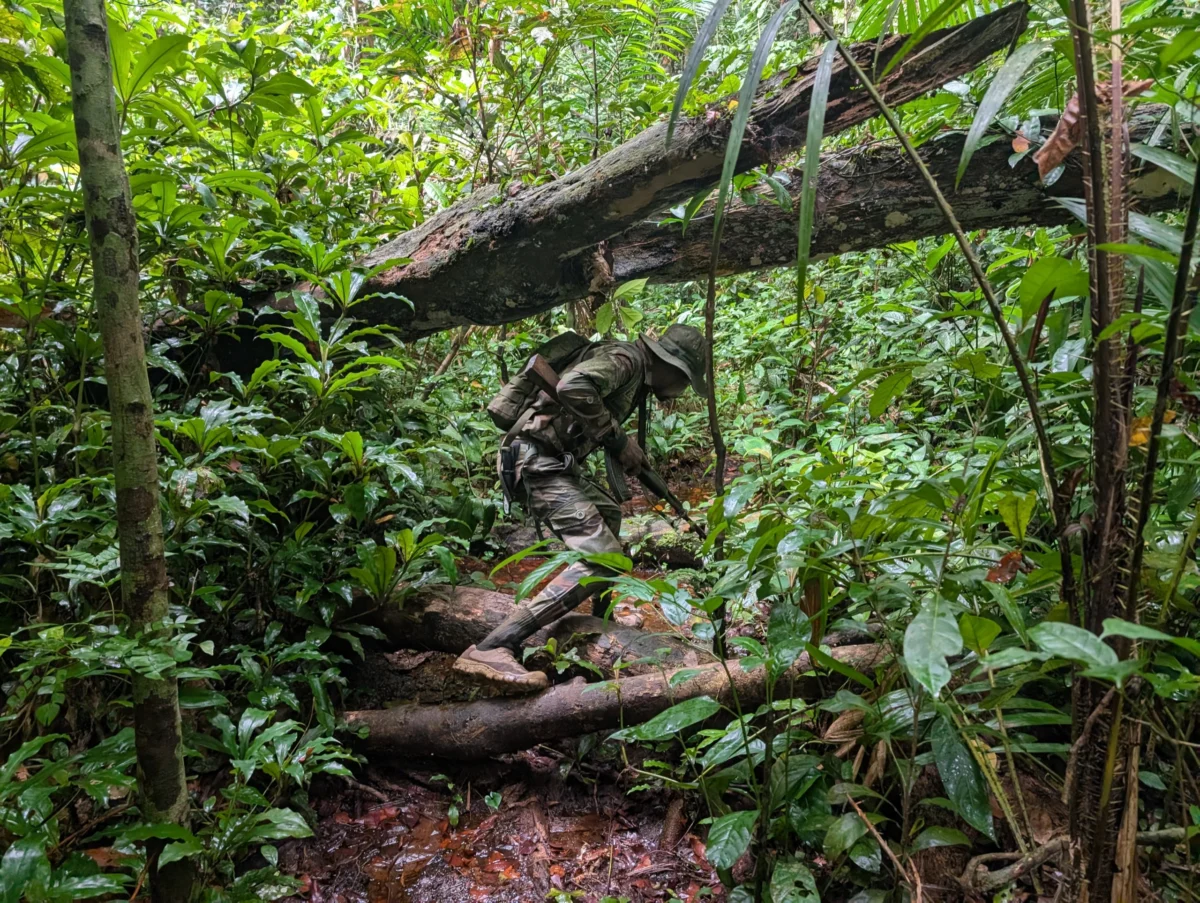
The conclusion of the 2026 United Nations biodiversity summit, known as COP17, in Yerevan, Armenia, marked a critical juncture in the global effort to halt ecological decline. As the conference drew to a close on October 30, the atmosphere was defined by prolonged, contentious negotiations, with the central friction point remaining the mobilization of biodiversity finance. At the heart of these discussions was the Democratic Republic of the Congo (DRC), a nation that stewards a significant portion of the Congo Basin—the world’s second-largest rainforest—and which has emerged as one of the most vocal critics of the current international financial architecture regarding conservation.

Daniel Mukubi, a lead negotiator for the DRC and current head of the country’s climate change division, has become a prominent figure at these summits, consistently challenging the Global North to meet its fiscal obligations. According to Mukubi, the discrepancy between the ambitious goals of the Kunming-Montreal Global Biodiversity Framework and the actual flow of funds represents a systemic failure that threatens the future of global ecosystems.

A Chronology of Broken Promises and Financial Gaps

The tension surrounding biodiversity finance is not a recent development. During the landmark COP15 summit in Montreal in 2022, negotiations were nearly derailed when developing nations, including the DRC, threatened to withdraw over the lack of a dedicated, effective financial mechanism. The result of that summit was the Kunming-Montreal Global Biodiversity Framework, which set a target of $200 billion annually in total biodiversity-related funding by 2030. Specifically, developed nations committed to providing $20 billion per year by 2025, rising to $30 billion annually by 2030.

However, recent global reports indicate that these interim targets have likely been missed. The shortfall is attributed to a combination of geopolitical instability, domestic economic crises in donor countries, and a shifting focus toward military spending. As of the end of 2026, the financial trajectory remains insufficient to bridge the estimated $700 billion annual funding gap required to reverse biodiversity loss. Mukubi argues that of that $700 billion, approximately $500 billion is currently being funneled into subsidies that are actively harmful to biodiversity, such as those supporting intensive pesticide use or fossil fuel extraction. He asserts that reallocating these harmful subsidies would leave a manageable gap of $200 billion—a figure he insists is well within the reach of the international community if political will is present.

The Structural Failure of Current Mechanisms

A primary grievance voiced by the DRC and other developing nations at COP17 is the reliance on the Global Environment Facility (GEF) as the primary conduit for biodiversity funding. Mukubi characterizes the GEF as a cumbersome institution with administrative procedures that are often incompatible with the urgent needs of the Global South. The DRC has reported that even when projects are approved, the actual disbursement of funds can be delayed for more than a year, rendering the aid ineffective for on-the-ground conservation efforts.

Furthermore, the requirement for "co-financing" acts as a significant barrier for developing nations that are already struggling with debt and limited domestic resources. Mukubi highlights the contradiction inherent in asking nations with limited budgets to provide matching funds to access resources intended to mitigate ecological crises that were largely precipitated by the industrial expansion of the Global North.

The argument for a new, independent financial mechanism under the Convention on Biological Diversity (CBD) gained momentum in Yerevan. Under Articles 20 and 21 of the Convention, the GEF was originally intended as an interim arrangement, not a permanent solution. The DRC and its allies are pushing for a structure that is directly accountable to the Conference of the Parties (COP), operates with democratic governance, and provides streamlined, predictable funding that reaches Indigenous peoples and local communities directly.

The Role of Indigenous Peoples and Local Communities

While international negotiations often focus on state-to-state transfers, the on-the-ground reality is that the conservation of the Congo Basin is inseparable from the livelihoods of the people living there. Indigenous communities serve as the primary stewards of these forests, yet they are frequently excluded from the decision-making processes that determine how funding is allocated.

The DRC has piloted community-based projects in collaboration with local organizations, such as the National Alliance for the Support and Promotion of Indigenous and Community Heritage Territories. These projects are designed to provide sustainable alternatives to activities like illegal logging or bushmeat hunting by investing directly in community livelihoods. Mukubi notes that while some progress has been made—with approximately 40% of certain project budgets being managed directly by community organizations—these remain isolated successes in a landscape where institutional barriers remain the norm.

The Political Economy of Conservation

The debate at COP17 also revealed a sharp divide over who should contribute to the funding pool. Developed nations, including members of the European Union, have sought to broaden the donor base to include emerging economies like China and various Gulf states. Developing nations, however, view this as an attempt to evade the historical responsibility of the industrialized world.

Mukubi emphasizes that the Convention on Biological Diversity establishes a clear legal obligation for developed nations to mobilize resources. He argues that the attempt to shift this burden onto other nations is a political maneuver designed to mask the failure of the original 25 developed nations tasked with funding the ninth replenishment of the GEF. Only about half of those nations contributed, further exacerbating the resource crisis.

Moreover, the politicization of environmental diplomacy has hindered progress. When the European Union expressed reluctance to explicitly include "all" eligible parties in provisions for equitable access to finance, the DRC strongly opposed the move. The concern was that such language would allow for the arbitrary exclusion of nations based on political agendas, undermining the universal cooperation required to address a global crisis.

Implications and Future Outlook

The road ahead for biodiversity finance is narrow. Decision 16/34, established at COP16 in Colombia, set a roadmap for a new, permanent financing mechanism to be operational by COP19 in 2030. The current period, leading up to COP18 in 2028, will be defined by the difficult choice of whether to create an entirely new institution or to fundamentally restructure an existing one.

For the DRC, the stakes are existential. With 155 million hectares of forest and a commitment to conserve 30% of its land by 2030, the country is undertaking a "conservation gamble." This involves balancing the protection of global public goods—such as carbon sequestration and biodiversity—with the nation’s sovereign right to development. The Kivu-Kinshasa Green Corridor project is a testament to this effort, yet its long-term viability depends on a predictable flow of external resources.

Ultimately, the stance of the DRC reflects a growing consensus among Global South nations that the current framework for biodiversity financing is not only inadequate but fundamentally inequitable. As the international community looks toward 2030, the ability to move beyond rhetoric and address the "bottlenecks" in funding will determine whether the Kunming-Montreal Global Biodiversity Framework results in meaningful environmental recovery or becomes another chapter in a long history of unmet global commitments. The message from Yerevan is clear: biodiversity conservation cannot be separated from the necessity of climate justice, and until the Global North honors its financial obligations, the world’s most critical ecosystems will remain in peril.

