
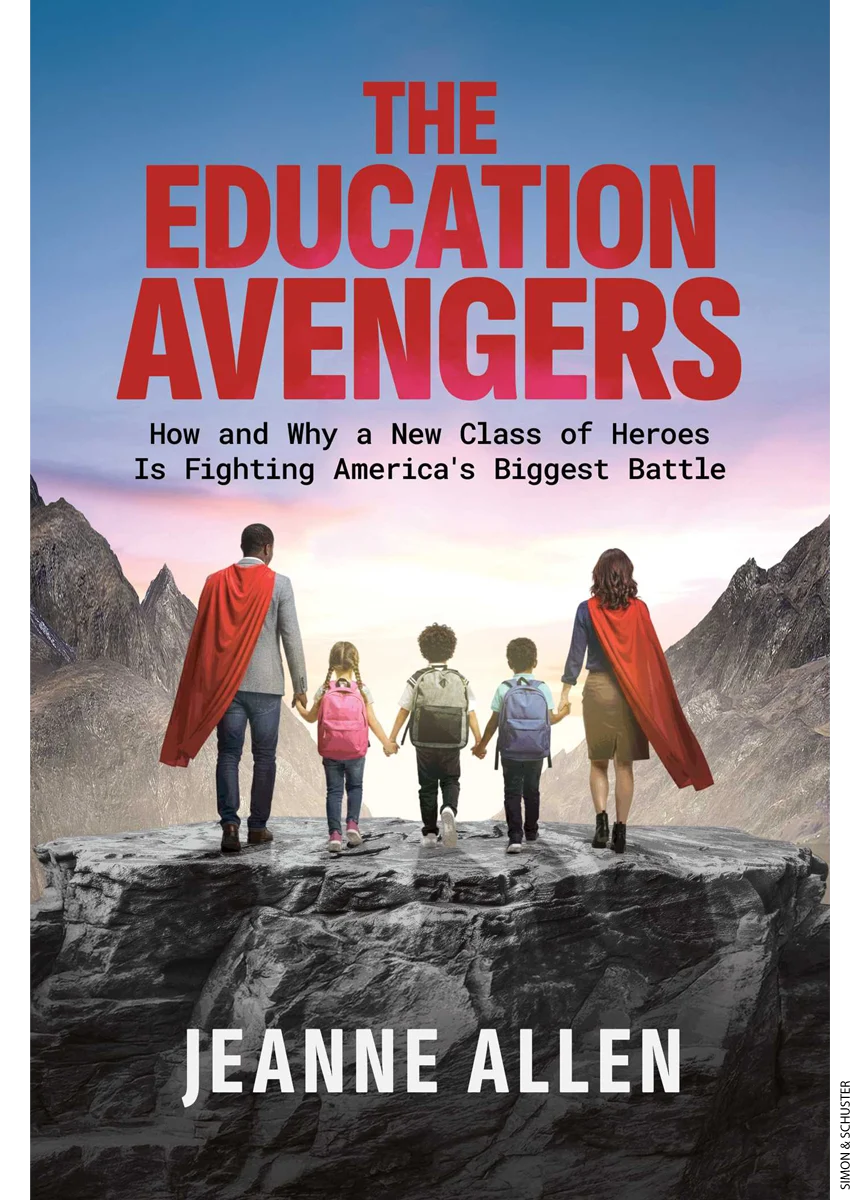
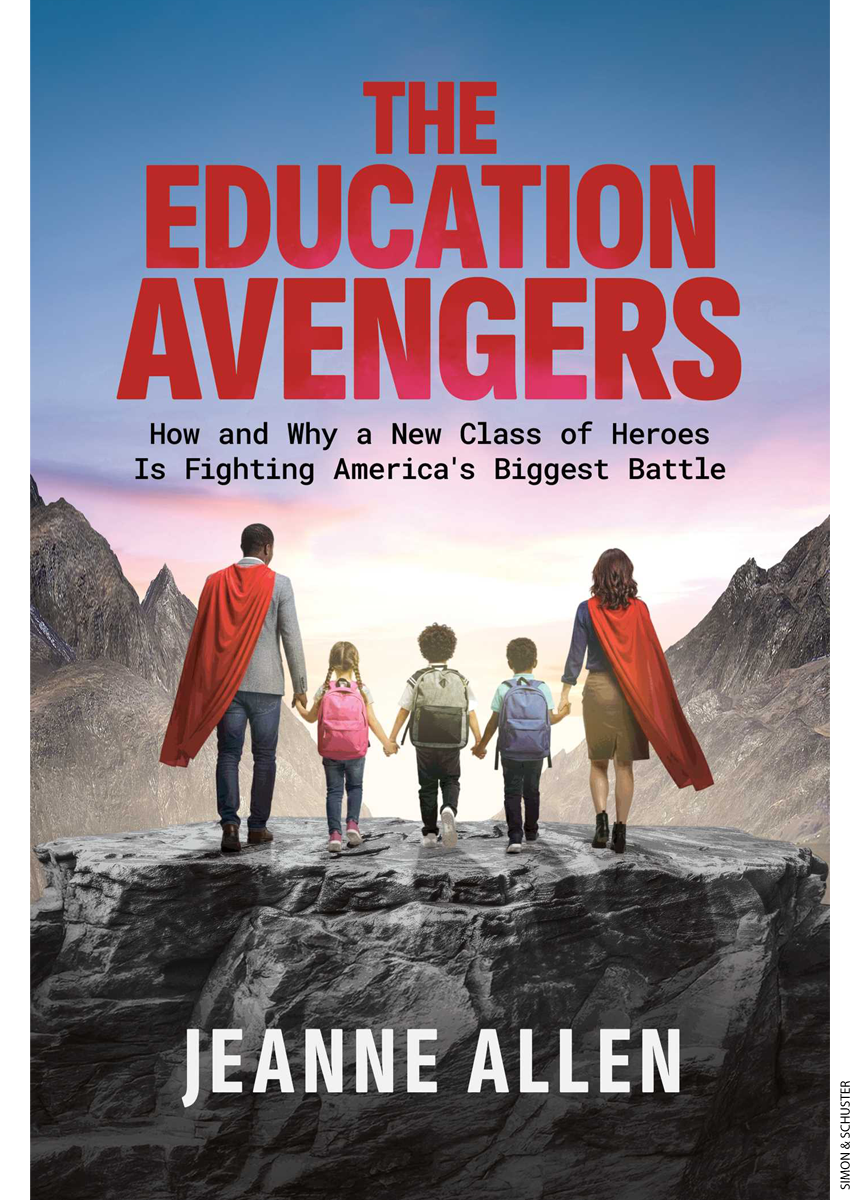
The state of modern American education is frequently framed through a lens of systemic paralysis, institutional stagnation, and intractable political polarization. Test scores fluctuate, achievement gaps persist, and bureaucratic red tape often seems to suffocate pedagogical innovation before it can take root. Yet, within this landscape of widespread institutional skepticism, a distinct brand of grassroots leadership has emerged, prioritizing active transformation over passive complaint. This phenomenon forms the core thesis of Jeanne Allen’s new book, The Education Avengers: How and Why a New Class of Heroes Is Fighting America’s Biggest Battle, published by Simon & Schuster.
Drawing its conceptual framework from the distinction between optimism and hope—a philosophical divide famously articulated by the late Rabbi Jonathan Sacks—the book explores the journeys of 12 distinct educational reformers across the United States. While optimism is characterized as a passive virtue requiring little personal sacrifice, hope is defined as an active, demanding endeavor. Hope requires acknowledging the profound flaws of the existing system while simultaneously accepting the rigorous labor necessary to rectify them. The profiled individuals in Allen’s work embody this active hope, stepping outside traditional comfort zones to forge unconventional pathways for student success.
Main Facts and the Architecture of Modern Educational Reform
At its core, The Education Avengers serves as a collective biography of modern educational entrepreneurship. The subjects operating within its pages are not traditional school district superintendents or Ivy League policymakers. Instead, they are founders of charter schools, directors of workforce development nonprofits, and pioneers of specialized alternative learning environments.
Among those highlighted is Mary Jo Fairhead, who manages a small private school on the Pine Ridge Reservation in South Dakota, navigating the unique socio-economic and geographic challenges of rural indigenous education. In New Orleans, Aaron Frumin established unCommon Construction, a workforce development nonprofit that integrates hands-on construction projects into the high school curriculum, allowing students to earn academic credits while building residential housing. In Ohio, Cris Gulacy-Worrel helped establish Oakmont Education, a rapidly expanding network of 21 workforce-development-focused schools tailored specifically to students who have become alienated from or disconnected within the conventional public school apparatus.
Other profiles emphasize personal sacrifice and financial risk. Eugene Slocum founded Alpha Academy, a charter school in Fayetteville, North Carolina. To sustain the institution through its formative years, Slocum chose to forgo a salary, placed a second mortgage on his personal residence, and assumed custodial duties alongside his teaching responsibilities. In Pasco County, Florida, José and Ampy Suárez transitioned from foster parenting to establishing Hope Ranch, an initiative that expanded organically from supporting foster children to providing targeted services for autistic children and transitional programs for young adults on the autism spectrum. Similarly, JoAnn Mitchell adopted a radical approach to institutional creation, throwing herself entirely into launching the Mission Achievement and Success Charter School in New Mexico.
The Chronology of Resistance: Facing the Bureaucratic Hydra
The trajectory of these educational reformers rarely follows a straight line. Instead, their stories reflect a distinct chronology of institutional friction, beginning with the identification of a systemic failure, moving through the immense hurdles of startup development, and culminating in sustained conflict with entrenched bureaucratic structures.

In Allen’s analytical framing, the primary antagonist confronting these reformers is dubbed "the Hydra"—a metaphorical representation of the complex amalgamation of individuals, legacy organizations, regulatory rules, and administrative bureaucracies dedicated to maintaining the educational status quo. Historically, American public education has resisted structural decentralization. The twentieth century saw the steady consolidation of school districts, rising administrative overhead, and the codification of rigid certification pathways. While these measures were initially implemented to standardize quality and ensure equitable funding, critics argue they have ossified into defensive mechanisms that penalize outside-the-box thinking.
When the individuals profiled in The Education Avengers attempted to introduce alternative models—whether through charter legislation, specialized vocational integration, or non-traditional care models—they frequently encountered institutional pushback. School districts, state agencies, and legacy teachers’ unions often viewed these autonomous initiatives not as complementary partners in public education, but as direct threats to their resource allocation and enrollment metrics. Consequently, the chronology of these reform efforts is marked by legal challenges, zoning disputes, funding fights, and intense public relations battles.
Supporting Data and the Macro Landscape of School Choice
To understand the resonance of Allen’s subjects, it is necessary to examine the broader empirical landscape of American school choice and alternative educational delivery models. Over the past decade, the landscape of education in the United States has undergone a quiet tectonic shift, accelerated significantly by disruptions during the early 2020s.
According to data compiled by organizations such as the National Alliance for Public Charter Schools and various educational research centers, enrollment in alternative public schools, charter networks, and private choice programs has expanded notably. Between 2019 and 2024, public charter school enrollment nationwide grew by hundreds of thousands of students, even as traditional public school districts experienced overall enrollment declines. Furthermore, an increasing number of states have enacted universal or near-universal education savings account (ESA) programs, allowing public funds to follow students to private, specialized, or micro-school environments.
However, quantitative growth tells only part of the story. The qualitative data regarding student outcomes in non-traditional settings highlight both the promise and the peril of educational entrepreneurship. Studies consistently show that while high-performing charter networks and specialized vocational programs yield exceptional graduation and career-placement rates—particularly for low-income and minority students—underfunded or poorly regulated startups face high attrition rates. The path chosen by figures like Slocum and Mitchell, characterized by personal financial exposure and institutional vulnerability, underscores the precarious nature of launching educational alternatives outside the safety net of legacy school districts.
Underlying Themes: The Crucible of Adversity and the Pursuit of Joy
Beyond structural critique and policy inclinations, The Education Avengers explores deeply human dimensions of reform, focusing heavily on the catalysts that drive individuals to risk their livelihoods for the sake of children.
A recurring motif throughout the biographical sketches is the role of early adversity. Many of the profiled reformers experienced significant challenges during their own formative years, ranging from domestic instability and neglect to inadequate educational access. Rather than serving as an impediment, these early trials appear to have forged an acute resilience. Allen posits that this background equips the "Avengers" with a unique capacity to empathize with marginalized students. Having navigated personal trauma or educational exclusion themselves, these founders are better positioned to design learning environments that address the holistic emotional and developmental needs of their students, rather than merely focusing on standardized test metrics.
Furthermore, this resilience becomes their primary defensive armor when confronting the aforementioned bureaucratic Hydra. When institutional resistance mounts, the lived experience of overcoming structural hurdles provides these leaders with the psychological endurance necessary to sustain their missions.
Coupled with resilience is a deliberate focus on institutional joy—a concept Allen distinguishes sharply from superficial happiness. Modern educational environments sometimes fall into the trap of manufacturing artificial contentment by lowering academic standards, reducing behavioral expectations, and utilizing grade inflation to ensure short-term emotional comfort. The reformers profiled in The Education Avengers explicitly reject this philosophy. They argue that true joy in an educational setting is derived from mastery, hard work, and the genuine accomplishment that comes from meeting high expectations. By fostering environments that demand rigor while offering authentic support, these schools aim to cultivate long-term self-efficacy that stays with students long after they graduate.
Broader Impact and Policy Implications
While Allen’s book deliberately avoids prescribing a rigid legislative checklist or policy blueprint, its underlying implications for the future of American education are profound. The narrative champions a decentralized, entrepreneurial model of school creation, suggesting that systemic improvement is more likely to emerge from the bottom up than from top-down federal or state mandates.
Critics of the school choice and alternative reform movement often argue that decentralization risks fragmenting the public school system, exacerbating funding inequities, and draining resources from traditional districts that serve the most vulnerable populations. From this perspective, the actions of independent charter founders and vocational pioneers can be seen as destabilizing forces that undermine the foundational civic mission of a universal public education system.
Conversely, proponents view these figures as vital innovators who inject necessary competition and flexibility into an otherwise monopolistic market. In this view, the "Avengers" serve as a laboratory for best practices, demonstrating how targeted workforce development, trauma-informed care, and community-specific curricula can succeed where one-size-fits-all models have historically stalled.
Ultimately, The Education Avengers does not attempt to resolve the macro-political debates surrounding school governance, funding formulas, or educational equity. Instead, it shifts the focus back to the human element of institutional change. By documenting the sacrifices, struggles, and triumphs of individuals who chose active hope over passive optimism, the book provides a compelling window into the ongoing transformation of the American classroom—a battle fought not in legislative chambers, but in the trenches of local communities where the future of the next generation is actively shaped.

