
Australia’s political landscape has been thrust into a period of intense scrutiny and debate as a convergence of soaring cost-of-living pressures, institutional investigations, and heightened security concerns dominate the parliamentary sitting week in Canberra. Amidst this backdrop of economic uncertainty and social tension, Greens leader David Shoebridge is preparing to address the National Press Club to pitch a sweeping economic reform package. At the same time, federal authorities and regulators are grappling with unprecedented security challenges, severe inflation forecasts, and high-stakes legislative battles over digital safety and social media governance.

The economic and political pressures facing the nation have intensified following predictions that upcoming official data will reveal an acceleration in annual inflation to 4.2% for the September quarter, up from 4% in the previous reading. This persistent inflationary trend, compounded by escalating global fuel costs stemming from a worsening Middle East conflict, has raised the specter of a fifth interest rate hike by the Reserve Bank of Australia (RBA) ahead of Melbourne Cup day. Financial markets have priced in a substantial probability of a rate rise, placing mounting pressure on mortgaged households and presenting the Albanese government with severe political headwinds from the parliamentary opposition.
The Greens Economic Pitch: A Bold Overhaul of Taxation and Welfare
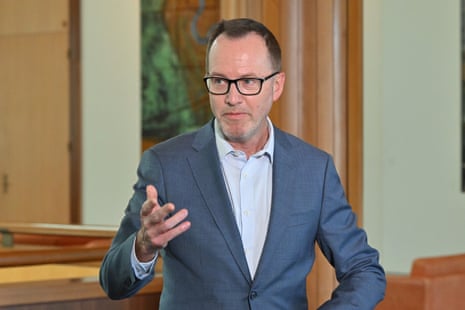
In his keynote address at the National Press Club, Greens leader David Shoebridge is set to unveil a major policy platform aimed at alleviating financial distress for everyday Australians. Central to the Greens’ proposal is a dramatic restructuring of the federal income tax system. Shoebridge will advocate for lifting the tax-free threshold from its current level of $18,200 to $26,000. Under this plan, workers would be exempt from paying income tax on their first $26,000 of earnings, a change projected to save the average working Australian upwards of $1,000 annually.

Complementing the tax-free threshold adjustment, the Greens are also proposing a $1,000 annual financial boost for individuals reliant on income support payments. This targeted relief encompasses pensioners, carers, students, and job seekers. Shoebridge emphasized the universal scope of the package during media appearances prior to the address, asserting that whether citizens are working, studying, looking for work, or receiving a pension, they will receive direct financial support exceeding $1,000.
According to costings provided by the Parliamentary Budget Office (PBO), the comprehensive welfare and tax reform package would carry a price tag of approximately $22bn per year. To fund these ambitious initiatives, the Greens propose implementing higher taxes on gas exports and introducing a market-based resource rent tax targeting major mining and resources corporations. Shoebridge framed the economic package as a necessary antidote to political cynicism, arguing that systemic reform is required to support the millions of Australians struggling with foundational living expenses rather than catering exclusively to corporate interests.
While outlining his economic vision, Shoebridge is also expected to address questions regarding internal party matters, specifically the status of Greens Senator Jordon Steele-John. Steele-John is currently on a leave of absence from parliament while an independent investigation reviews allegations regarding his conduct toward women. The senator has consistently denied the allegations, but his temporary absence adds another layer of complexity to the party’s legislative agenda.
Inflation, Fuel Crises, and Reserve Bank Pressures
The timing of the Greens’ policy announcement coincides with critical economic indicators that continue to shape national discourse. Economists and financial markets are closely monitoring the Australian Bureau of Statistics (ABS) data release regarding the Consumer Price Index (CPI). While headline inflation is anticipated to tick upward to 4.2%, focus remains centered on the RBA’s preferred measure of underlying inflation. Economists predict this core gauge will remain steady at 3.6% for the September quarter; however, any upside surprise is expected to virtually guarantee an interest rate increase at the central bank’s upcoming monetary policy meeting.

Compounding these domestic inflationary pressures is a stark new assessment regarding Australia’s exposure to international energy shocks. Data released by the Climate Council via its latest energy security scorecard revealed that Australia has absorbed disproportionately high costs during the global fuel crisis. Over a recent six-month period, the nation paid an additional $9bn in extra diesel import costs—more than double the expenditure of any other comparable nation. This equates to an added financial burden of $324 for every Australian citizen, outstripping the toll recorded in countries such as Brazil, South Africa, France, and the United Kingdom. Additionally, the report highlighted an extra $1.6bn spent on petrol imports. These figures underscore the acute vulnerability of Australia’s supply chains to geopolitical volatility, particularly following recent spikes in global oil prices driven by escalating Middle East conflicts.
Security Concerns and the Digital Sphere Under Scrutiny
Beyond economic and fiscal debates, the parliamentary sitting week has been overshadowed by serious concerns regarding public safety, online radicalization, and the protection of public officials. In her final appearance before Senate estimates, outgoing eSafety Commissioner Julie Inman Grant delivered a stark warning regarding the safety of public-facing figures and government officials. Reflecting on her decade-long tenure, Inman Grant revealed that she and her family have been subjected to a persistent onslaught of online abuse and threats.
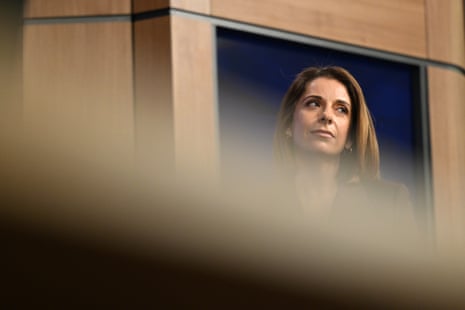
Describing the current political climate as a "sensitive and pivotal moment" for parliament—particularly in the wake of an alleged attack on independent MP Helen Haines—Inman Grant characterized the environment as dangerously febrile for women holding senior government roles. She criticized the instrumentalization of public officials for political point-scoring, which she argued paints a target on their backs. Drawing a bleak picture of contemporary digital discourse, Inman Grant remarked that social media has devolved from a envisioned digital town square into a "gladiatorial arena," exacerbated by technology platforms rolling back abuse and violent speech policies.
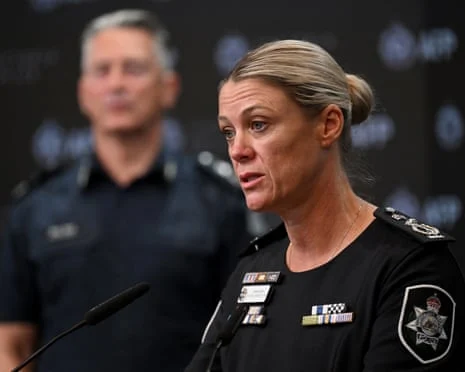
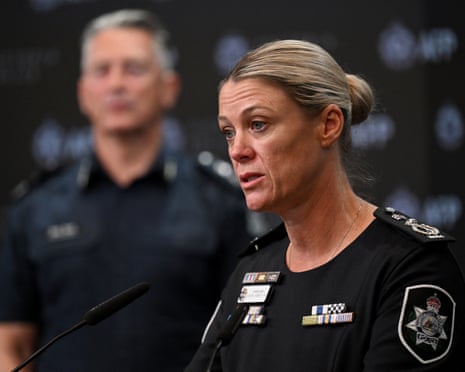
Echoing these security concerns, Australian Federal Police (AFP) Commissioner Krissy Barrett addressed the Senate estimates hearing, noting a palpable heaviness hanging over the nation following the alleged assault on Helen Haines. Barrett highlighted a concerning global trend of "lone actor" violence, noting that individuals motivated by personal grievances, mental health vulnerabilities, and extremist ideologies are carrying out attacks with little to no warning. She pointed out that Australia’s traditional geographic isolation and analogue systems have been eroded by fully integrated technology, social media, and artificial intelligence, which together create an "instant pipeline of hate" directly into homes and workplaces.
Legislative Battles Over Social Media and Free Speech
The tensions surrounding digital regulation have also manifested in an ongoing legislative standoff between the federal government and the parliamentary opposition over social media safety reforms. Communications Minister Anika Wells has criticized the Coalition for "refusing to participate" constructively in passing the government’s digital duty of care legislation. While acknowledging the opposition’s stated concerns regarding child safety online, Wells challenged lawmakers to propose formal legislative amendments rather than engaging in rhetorical opposition.
Opposition foreign affairs spokesperson Ted O’Brien defended the Coalition’s stance during interviews, arguing that the government must "go back to the drawing board." O’Brien cited concerns over the expansive powers granted to the eSafety commissioner, ill-defined legislative terminology, and potential regulatory burdens imposed on small businesses. He maintained that the Coalition remains willing to engage constructively, but argued that the government’s refusal to negotiate has produced an unworkable bill that risks undermining its own objectives.

Meanwhile, the eSafety Commission’s ongoing regulatory enforcement has prompted intense questioning in parliament. Officials confirmed during Senate estimates that updated figures regarding the deactivation of underage accounts under the government’s social media ban will not be publicly released while active investigations into major tech platforms—including TikTok, YouTube, Meta, and Snapchat—are underway. While Prime Minister Anthony Albanese previously cited figures exceeding five million deactivated accounts across ten platforms, eSafety representatives cautioned that prematurely releasing detailed metrics could prejudice legal proceedings and compliance investigations that carry potential penalties of up to $100m for systemic breaches.
Institutional Transparency and Broader Social Challenges
The breadth of issues confronting federal policymakers extended into human rights and public administration, highlighted by a new report from the Australian Human Rights Commission (AHRC). The findings indicate that incidents of racism across Australia are severely undercounted due to inconsistent data collection methodologies across state and territory jurisdictions. Race Discrimination Commissioner Giridharan Sivaraman emphasized that developing a national anti-racism data plan is essential not for proving the existence of systemic discrimination, but for establishing institutional accountability and empowering affected communities. The report calls for stronger evaluation frameworks for public policies designed to eliminate racial inequality, though the federal government is yet to formally respond to the overarching framework recommendations.
As the parliamentary sitting week progresses, the convergence of cost-of-living distress, monetary policy decisions, digital regulatory battles, and heightened security imperatives presents a formidable test for the Albanese government and the broader political establishment. With inflation figures imminent and policy debates intensifying across both chambers, Canberra remains on high alert as lawmakers navigate an increasingly complex economic and social landscape.

