
The project, a complex exploration of faith, sexuality, and the performative nature of modern religion, marks the latest ambitious undertaking from the acclaimed Singaporean filmmaker. As the film enters the final stages of post-production, it arrives in Japan seeking to secure the remaining financial support necessary for completion.
A Narrative Structured by the Trinity
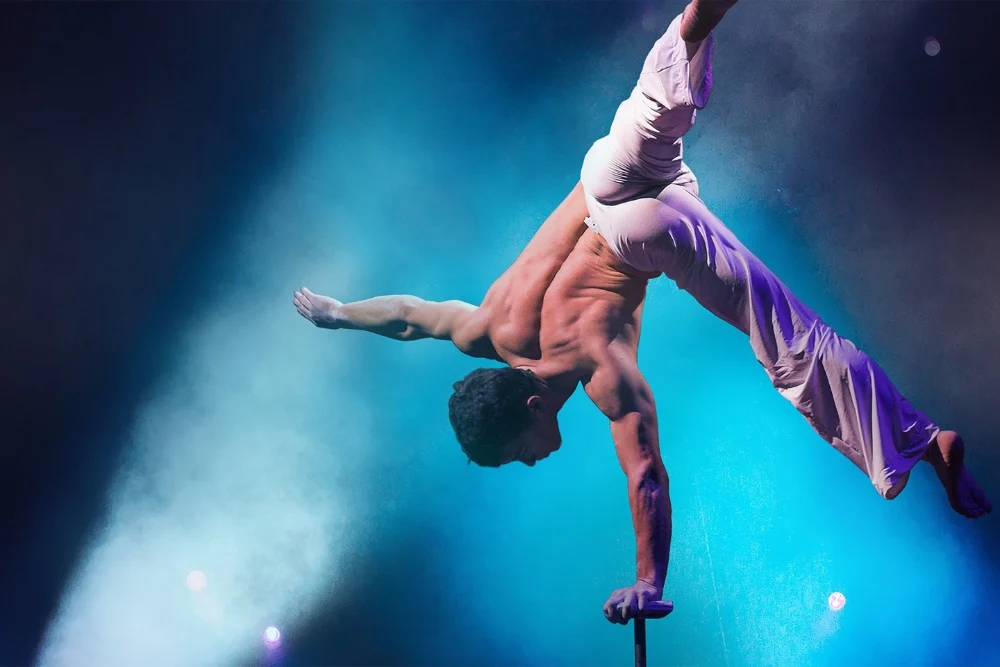
The film is organized into three distinct chapters—Father, Son, and Holy Spirit—a structural choice that mirrors the theological framework of the church setting in which the story unfolds. The narrative centers on Johnny, a charismatic pastor from Taiwan who has successfully exported his ministry to Singapore. Johnny’s megachurch is characterized by its high-octane atmosphere, where traditional sermons are punctuated by elaborate, Cirque du Soleil-inspired acrobatic performances.
While Johnny maintains a public image of rigid, conservative morality, his private life is defined by a growing, transgressive fixation on Yang, a new recruit in his rigorous performance-training program. This obsession creates immediate friction within the church’s leadership hierarchy. Johnny’s wife, Ruth, and his protégé, David—who is also betrothed to Johnny’s daughter—become increasingly alarmed by the pastor’s blatant favoritism. The tension reaches a breaking point when Yang suddenly disappears, triggering a desperate, internal investigation by Johnny that exposes the volatile dynamics of his inner circle and culminates in tragic consequences.
The final act of the story sees Johnny and Ruth seeking anonymity in rural Taiwan, retreating to a modest, quiet congregation. The film leaves the audience with a lingering sense of uncertainty as Johnny encounters an enigmatic stranger, a moment that suggests the possibility of divine intervention or further moral reckoning.
The Vision Behind the Lens
Boo Junfeng, a filmmaker whose career has been defined by his examination of institutional power and human fallibility, described his motivation for the project as a deep dive into the intersection of identity and belief. "I’ve always been very interested in the subject of sexuality and faith, and I wanted to make a film that dives deep into the psyche of these characters within a church," Boo stated.
Boo’s track record as a director provides significant pedigree for Trinity. His 2010 debut, Sandcastle, made history as the first Singaporean film selected for the Cannes Critics’ Week. He followed this with the acclaimed 2016 capital punishment drama Apprentice, which premiered in the Un Certain Regard section at Cannes. Beyond his filmography, Boo’s influence in the Singaporean creative sector is substantial; he recently served as the creative director for Singapore’s 2025 National Day Parade, commemorating the nation’s 60th anniversary, and he currently holds the position of chair for the Singapore International Film Festival.
Production Context and Global Collaboration
The production of Trinity is an international endeavor of significant scale, reflecting the global nature of modern film financing. The project is a co-production spanning 11 countries: Taiwan, France, Singapore, Poland, Greece, Japan, Germany, Brazil, South Korea, Indonesia, and the Philippines. This diverse coalition of production houses, including Peanut Pictures, Filmagic Pictures, and Gaïjin, underscores the film’s broad appeal and the collaborative effort required to bring such a sensitive, multi-layered story to the screen.
Producer Raymond Phathanavirangoon, a long-time collaborator of Boo, has been instrumental in the film’s development. Phathanavirangoon, whose resume includes producing Thirteen Lives for Ron Howard and the intense dramas Headshot and Dream Home, brings extensive experience in international film markets. Having served as an international programmer for the Toronto International Film Festival and a delegate for Cannes Critics’ Week, his involvement underscores the project’s high-level industry ambitions.
"Personally, I have had people close to me convert to Christianity due to Evangelism, but this is seldom seen in Asian films," Phathanavirangoon noted. He highlighted that the film’s unique aesthetic—specifically the integration of circus-style stunts—is not merely a narrative device but a reflection of the "spectacle" now inherent in certain segments of the Asian megachurch movement. He pointed to recent real-world examples, such as a viral incident in South Korea where a stunt performer dressed as Jesus was hoisted into the air during a service, as evidence that the film’s premise is firmly rooted in contemporary reality.
Tokyo Gap-Financing Market and TIFFCOM
The Tokyo Gap-Financing Market, where Trinity is currently being showcased, serves as a crucial bridge for high-potential projects nearing the finish line. Held in conjunction with TIFFCOM—the content market attached to the Tokyo International Film Festival—the event provides a platform for filmmakers to meet with potential distributors, financiers, and international partners.
For Trinity, the market represents the final push to close a small but essential financing gap. In the current global economic climate for independent cinema, such markets are indispensable. They allow producers to finalize post-production, sound design, and color grading, ensuring that the finished product meets the high artistic standards expected of a director of Boo’s caliber.
Cultural Implications and Thematic Analysis
The film’s exploration of the megachurch model taps into broader sociological trends across Asia. Over the past three decades, Southeast Asia and parts of East Asia have seen a dramatic rise in the influence of large, charismatic evangelical congregations. These institutions often utilize modern marketing, celebrity-driven leadership, and high-production-value events to appeal to a younger, more globalized demographic.
By centering the narrative on a pastor who utilizes acrobatics as a form of worship, Boo is engaging with the commodification of the sacred. The film asks difficult questions about the relationship between the "showman" and the "shepherd." When the leader of a congregation prioritizes his personal desires over the moral tenets he preaches, the resulting institutional decay is not just a personal failure but a systemic one.
Furthermore, the film’s shift from the urban, high-tech environment of a Singaporean megachurch to the quiet, rural landscape of Taiwan serves as a narrative critique of the noise and artifice that often surround modern celebrity preaching. The transition from the "Father, Son, and Holy Spirit" structure to a simpler, more grounded setting suggests that the characters are finally forced to confront their faith—and their sins—without the protective layer of their performative roles.
Looking Ahead
As the Tokyo Gap-Financing Market proceeds, the team behind Trinity remains optimistic. The project’s combination of a seasoned director, a prolific international production team, and a provocative subject matter makes it a noteworthy addition to the slate of upcoming Asian cinema.
Boo Junfeng’s stated goal—to elicit empathy for "flawed human beings"—is the ultimate challenge of the film. By navigating the delicate intersection of religious devotion and human frailty, Trinity seeks to move beyond a simple critique of the church, opting instead for a character-driven study that resonates with anyone who has grappled with the gap between public persona and private truth.
Industry analysts are watching the project closely. If Trinity successfully secures its remaining funding and reaches the screen with its intended vision intact, it will likely be positioned as a major entry in the international festival circuit, following in the footsteps of Boo’s previous successes. The film stands as a testament to the resilience of independent filmmaking, proving that even in the face of complex financial hurdles, stories that challenge the status quo continue to find a path to the screen.

