
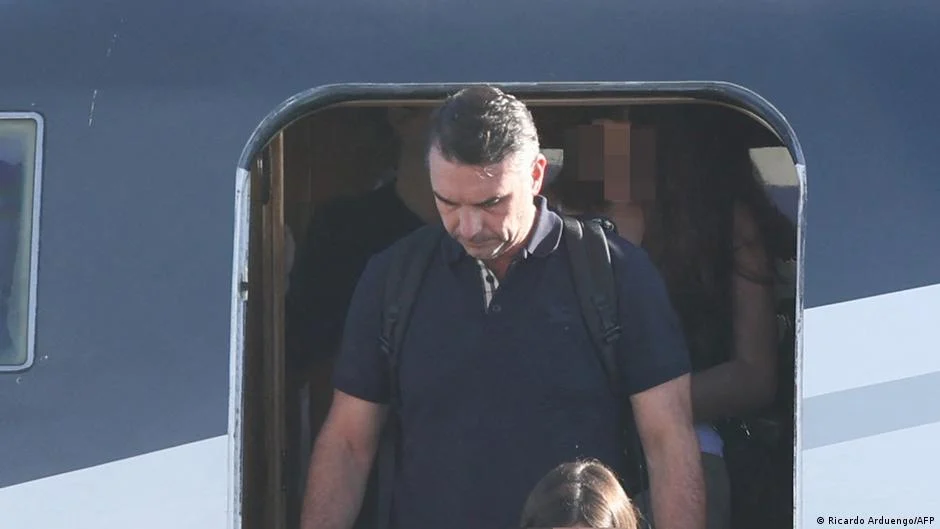
The arrival of Brazilian Senator Flavio Bolsonaro at Miami-Opa Locka Executive Airport on Wednesday morning marks a dramatic escalation in the political instability currently gripping Latin America’s largest nation. Accompanied by his wife and two daughters, the senator—who is the son of incarcerated former President Jair Bolsonaro—disembarked from a Gulfstream G400 following a multi-leg journey that began in Brazil, transited through Argentina, and made a stop in Guayaquil, Ecuador. His departure from Brazilian soil occurred in direct defiance of a Supreme Court directive requiring him to surrender his passports, a move intended to prevent his exit from the country as he faces mounting criminal probes into alleged financial crimes.
A Controversial Arrival and Claims of Leadership
Upon landing on U.S. soil, the atmosphere surrounding the Bolsonaro family was one of guarded secrecy, with the group being escorted to a waiting vehicle under the cover of umbrellas. Shortly after his arrival, Flavio Bolsonaro utilized the social media platform X to issue a defiant proclamation. In an initial post, he declared himself the "elected president" of Brazil, though this statement was swiftly deleted and replaced by a more nuanced claim asserting that he remains the rightful "leader" of the Brazilian people.
In this updated missive, Bolsonaro characterized his departure as an act of resistance against what he termed a "tyranny" orchestrated by a "criminal organization" that he alleges stole the recent presidential election from his party. By failing to concede defeat to President Luiz Inacio "Lula" da Silva, Bolsonaro has positioned himself at the center of an escalating constitutional crisis. Despite these claims, the Brazilian electoral authority has maintained that the voting process was conducted with full integrity, adhering strictly to the nation’s laws and constitutional framework. International observers who monitored the election have echoed these findings, describing the process as fair and transparent.
Chronology of the Flight and Judicial Tensions
The timeline of the past 72 hours underscores a calculated effort to circumvent Brazilian judicial authorities. On Monday, only two days before his flight, the senator had publicly stated on Instagram that he possessed no intention of leaving Brazil. He vowed at that time to "hand over my passports and defend myself against this travesty," which he framed as a politically motivated attempt by left-leaning justices to intimidate his family.
However, the reality of his legal standing shifted rapidly. Faced with the impending expiration of his parliamentary immunity in February—which would expose him to direct prosecution for the financial crimes currently being investigated by the Supreme Court—Bolsonaro opted to utilize his Italian citizenship to facilitate international travel after his Brazilian and diplomatic passports were invalidated by the court.
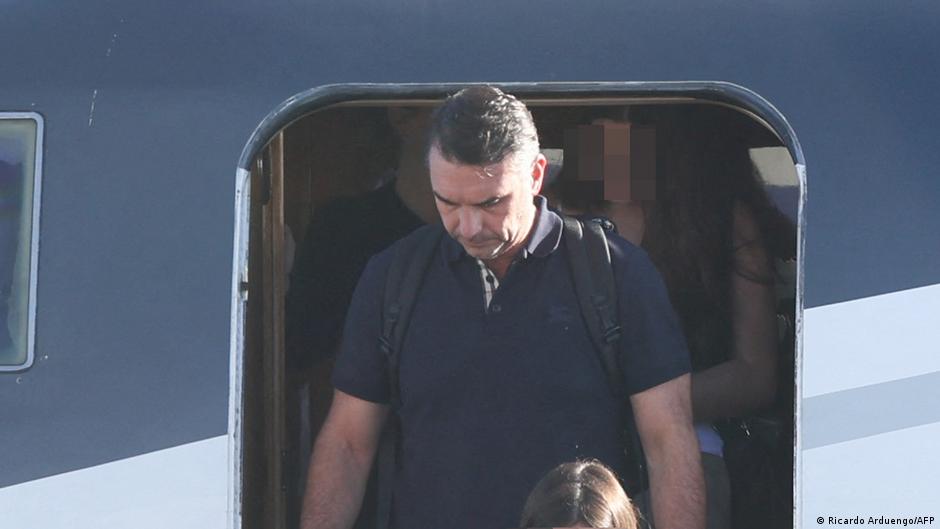
The route taken—Brazil to Argentina, then to Ecuador, and finally to the United States—highlights the logistical efforts made to avoid interception. The U.S. State Department has confirmed that it will grant the Bolsonaro family visas, a decision that has sparked debate regarding the diplomatic implications of providing safe haven to a high-ranking foreign official currently under investigation for domestic crimes.
Contextualizing the Financial Investigations
The investigations targeting Flavio Bolsonaro are deeply rooted in long-standing allegations of financial misconduct. Brazilian prosecutors have been scrutinizing the senator’s affairs for years, focusing on claims related to embezzlement and money laundering during his time in the Rio de Janeiro Legislative Assembly. Specifically, these investigations involve the practice of "rachadinha," or the siphoning of salaries from legislative staff members.
Bolsonaro has consistently denied any wrongdoing, framing the legal pressure as a "witch hunt" aimed at dismantling his family’s political influence. However, the legal environment for the Bolsonaro clan has darkened significantly since the imprisonment of his father, Jair Bolsonaro, who is currently serving time for his role in a conspiracy to retain power following his 2022 election defeat. The confluence of these legal battles suggests that the younger Bolsonaro’s flight is a defensive maneuver designed to delay, if not evade, the legal reckoning that awaits him in the Brazilian justice system.
Diplomatic Implications and Regional Reactions
The arrival of a prominent Brazilian political figure in the United States, particularly one who challenges the legitimacy of the current Brazilian administration, creates a complex diplomatic challenge for Washington. During the recent campaign, President Lula da Silva publicly accused the administration of U.S. President Donald Trump of colluding with the Bolsonaro faction to facilitate their return to power.
President Trump, when asked about the situation at Joint Base Andrews, declined to provide a direct endorsement or condemnation of Bolsonaro’s actions. Instead, he reiterated his earlier rhetoric regarding the Brazilian election, describing it as a "very strange" event. This subtle alignment of narratives between the Trump camp and the Bolsonaro family risks further cooling relations between the United States and the Lula administration, which has sought to strengthen its ties with the current U.S. government while navigating the ideological polarization within the Western Hemisphere.
The potential for this event to deepen the rift between the two most populous nations in the Americas is significant. Brazil, a key strategic partner in the region, is currently undergoing a period of intense domestic reconciliation following the turmoil of the 2022 elections. The presence of a self-declared "leader in exile" in Florida could serve as a rallying point for opposition forces, potentially complicating diplomatic cooperation on trade, environmental policy, and security.

Data and Institutional Standing
It is essential to note that the Bolsonaro party’s official position stands in stark contrast to the rhetoric of the senator himself. While Flavio Bolsonaro continues to allege irregularities, his political party has formally acknowledged the election results, accepting the legitimacy of the process. The Brazilian electoral authority has provided granular data confirming that the vote proceeded in full accordance with constitutional standards, noting that the voter turnout and counting procedures were among the most scrutinized in the country’s history.
The following table summarizes the key milestones in the recent, turbulent period:
| Date | Event |
|---|---|
| October 25, 2026 | Brazil concludes presidential elections; results confirm victory for Lula. |
| October 26, 2026 | Supreme Court orders the surrender of passports for the Bolsonaro family. |
| October 27, 2026 | Senator Flavio Bolsonaro flees Brazil; begins journey to Argentina. |
| October 28, 2026 | Bolsonaro arrives in Miami, Florida, via Ecuador; claims to be the rightful leader. |
| February 2027 | Expected expiration of parliamentary immunity for Senator Bolsonaro. |
Analysis of the Road Ahead
The implications of this incident extend beyond the individual fate of the senator. For the Brazilian judicial system, the inability to compel the return of a high-profile suspect who holds dual citizenship presents a significant challenge to the rule of law. If the Brazilian government chooses to pursue extradition, the case will likely wind its way through the U.S. court system, potentially resulting in a protracted legal battle that could last for years.
Furthermore, the rhetoric employed by Flavio Bolsonaro—labeling the current administration a "tyranny"—is indicative of a broader trend of democratic erosion and the contestation of institutional legitimacy. By appealing to his base of 60 million voters, he is signaling that the political struggle in Brazil is not merely an electoral one, but an ideological conflict that transcends national borders.
As Washington weighs its policy toward this influx of high-profile political exiles, it must balance its commitment to the rule of law with the realities of its diplomatic engagements in the Southern Hemisphere. For the people of Brazil, the coming months will be a test of their democratic institutions as they face both internal political pressures and the external influence of a displaced political movement seeking to redefine its future from abroad. The situation remains fluid, and international observers expect the Brazilian Supreme Court to continue its efforts to seek legal clarity regarding the senator’s status in the coming weeks.

