
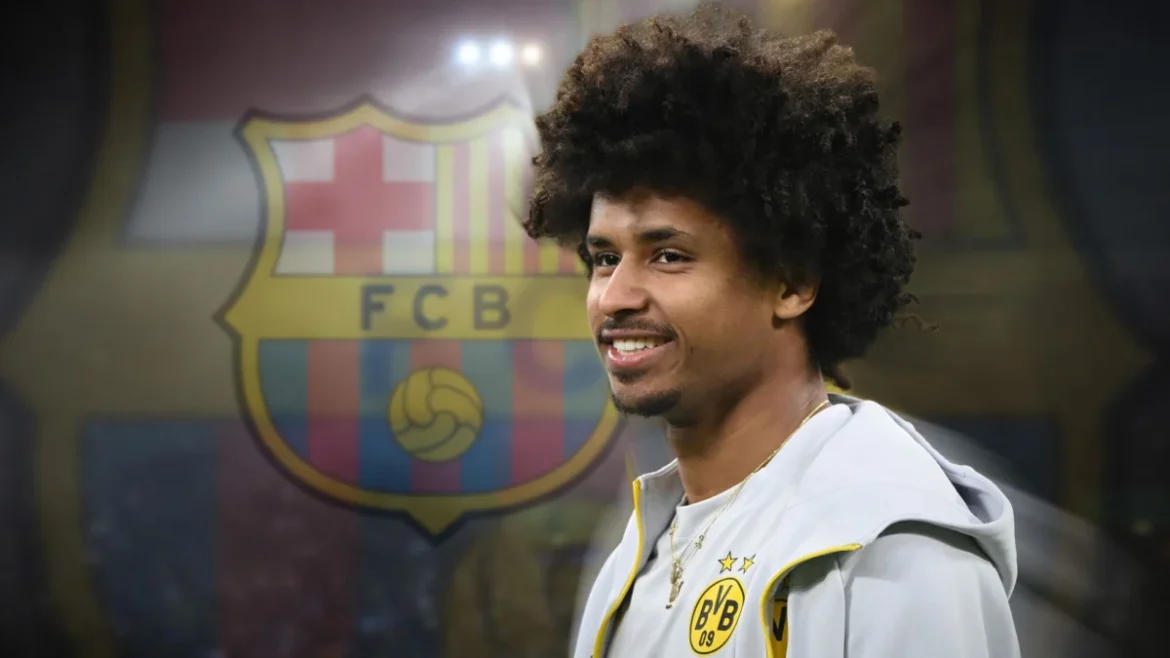
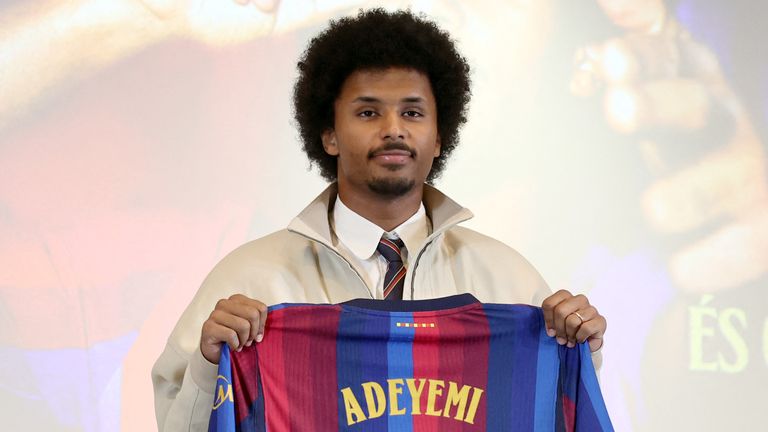
The landscape of European football shifted significantly this week as FC Barcelona officially announced the acquisition of German international Karim Adeyemi from Borussia Dortmund. The transfer, which marks a pivotal moment in the club’s ongoing rebuilding process under head coach Hansi Flick, brings one of the continent’s most explosive attacking talents to the Camp Nou. While the task of displacing established stars like Lamine Yamal remains a formidable challenge, the move is widely viewed as a strategic masterstroke by Flick, the man who originally handed Adeyemi his international debut for Germany. This reunion between mentor and protégé is expected to provide the catalyst for a player whose career, while decorated with moments of brilliance, has yet to reach the consistent heights many scouts predicted during his formative years in Austria.
The Hansi Flick Connection and the Path to Catalonia
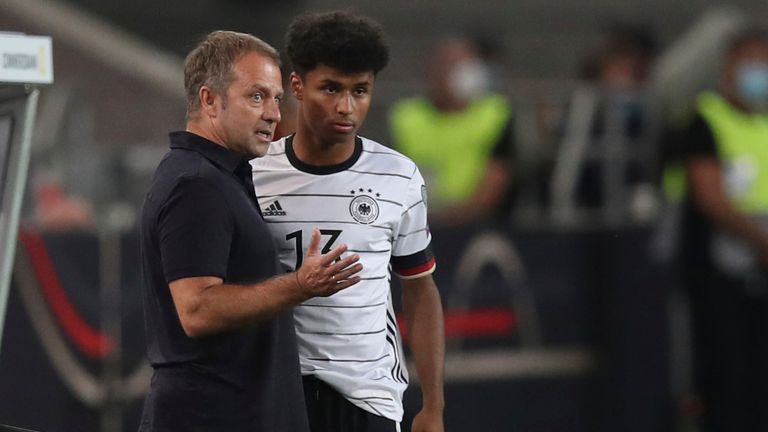
The appointment of Hansi Flick as Barcelona’s head coach has fundamentally altered the club’s recruitment strategy, shifting the focus toward players who possess the physical profile to execute a high-intensity, vertical pressing game. Adeyemi fits this archetype perfectly. Flick’s familiarity with the 24-year-old dates back to 2021, when he integrated the then-teenager into the German national setup. At that time, Adeyemi was the rising star of Red Bull Salzburg, and Flick was among the first elite coaches to recognize that his raw pace was a weapon that could be refined for the highest level of international competition.
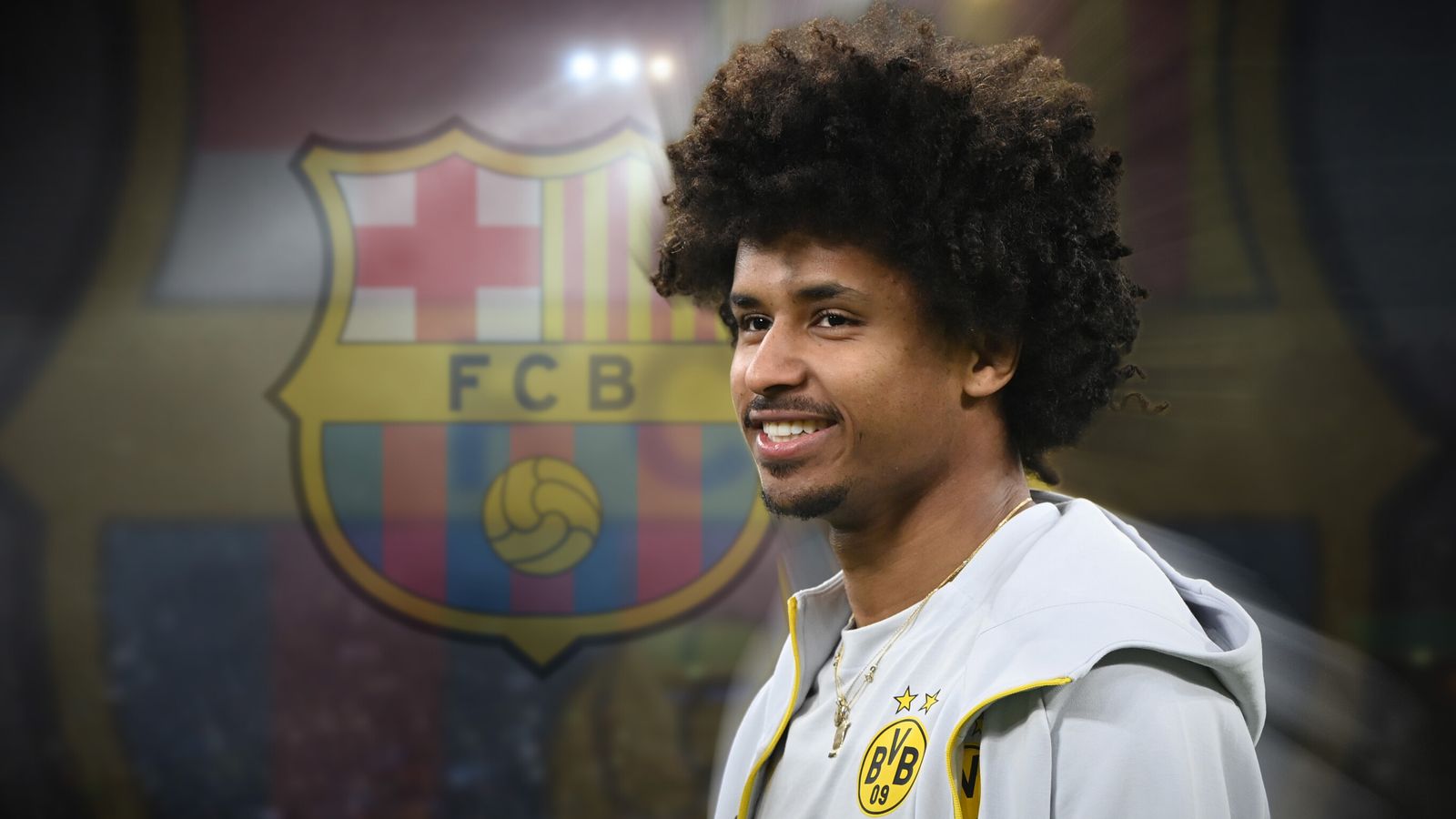
The hope within the Barcelona hierarchy is that Flick’s nuanced understanding of Adeyemi’s psychological and tactical needs will spark a transformation. For Adeyemi, this move represents a definitive opportunity to shed the "prospect" label and establish himself as a world-class protagonist. The transition to Spain is not merely a change of scenery but a calculated step into an environment where his specific attributes—speed, directness, and positional flexibility—are precisely what the squad requires to maintain its dominance in La Liga and reassert itself in the Champions League.
A Foundation Built in Salzburg: The Chronology of a Rising Star
To understand why Barcelona has invested so heavily in Adeyemi, one must look at the unique trajectory of his early career. Unlike many of his peers who remained in traditional academy structures, Adeyemi opted for the rigorous "men’s football" education provided by the Red Bull system. After joining Salzburg, he was immediately integrated into their feeder club, FC Liefering, in the Austrian second division. Debuting at just 16, he was forced to adapt to the physical demands of professional football far earlier than most.
Reflecting on this period, Adeyemi has previously stated that playing against adults as a teenager was the "best move" he could have made. This accelerated development saw him amass nearly 100 appearances for Red Bull Salzburg before his 20th birthday, a statistic that underscores his durability and early maturity. By the time he moved to Borussia Dortmund in 2022 for a fee exceeding €30 million, he was already a seasoned professional with significant Champions League experience. His time in Austria was defined by a ruthless efficiency in front of goal and a tactical versatility that allowed him to operate as a central striker or a wide forward, a trait that remains central to his appeal today.
The Dortmund Years: Brilliance Amidst Inconsistency
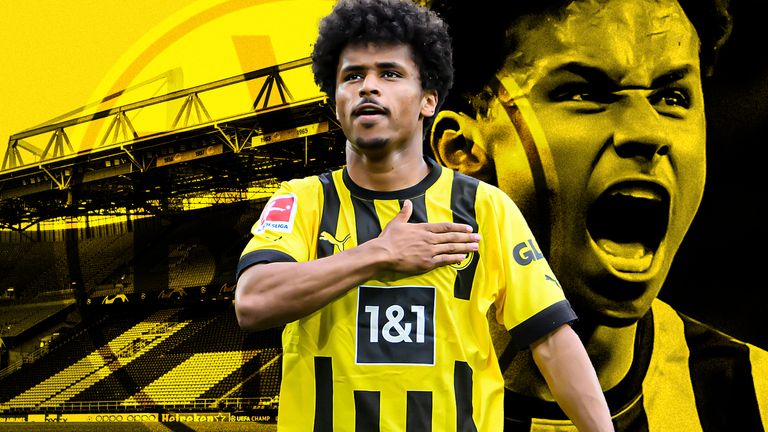
Adeyemi’s four-year tenure at Borussia Dortmund was a period of high peaks and frustrating troughs. His arrival at the Westfalenstadion was greeted with immense expectation, and he wasted little time in showcasing his primary asset: terrifying speed. In his debut Bundesliga season, Adeyemi was clocked at 36.65 kilometres per hour, the fastest speed recorded in the league that year. This physical dominance was most famously on display during the 2023 Champions League knockout stages, where he outpaced Chelsea’s Enzo Fernández in a 60-yard sprint to score a solo winner that echoed around Europe.
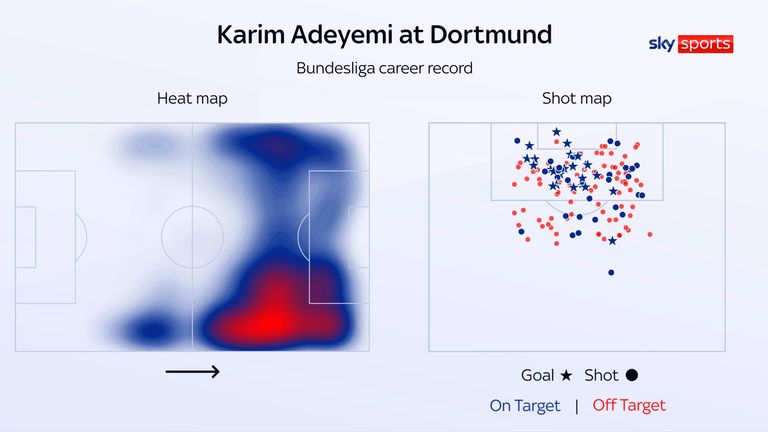
However, as his career in Germany progressed, a narrative of inconsistency began to take hold. While he remained a frequent threat, he struggled to transition from an "impact player" to an undisputed starter. Statistical analysis of his time at Dortmund reveals a player who often performed better as a substitute, using his pace to exploit tired defenses in the final 30 minutes of matches. His final season in the Bundesliga saw him score crucial goals against the likes of Atalanta and Stuttgart, yet he found it difficult to maintain a high level of output over the full 90 minutes.
This period was also marked by external scrutiny. In December 2023, a controversial substitution against Borussia Mönchengladbach led to a public display of frustration from Adeyemi, prompting former German international Markus Babbel to question his professional mentality. Despite these criticisms, those within the Dortmund coaching staff, such as former set-piece coach Alex Clapham, have remained staunch defenders of the player. Clapham described Adeyemi as an "incredible guy" and a "unique character" who responds best to personalized, one-on-one coaching—a management style that Hansi Flick is famously proficient in.
Tactical Integration: How Adeyemi Fits the Barcelona Blueprint
The tactical rationale for Adeyemi’s move to Barcelona centers on the need for elite-level rotation and tactical variety. Under Flick, Barcelona has maintained their traditional high-possession style, averaging 69 percent possession in the previous domestic campaign. However, Flick has introduced a more aggressive verticality, requiring wingers who can stretch the pitch and provide an outlet when teams attempt to press high.
Adeyemi’s ability to play across the offensive line—on both the left and right flanks as well as through the middle—provides Flick with a "Swiss Army knife" in attack. While Lamine Yamal has solidified his position as the primary creator on the right, the physical toll on the young Spaniard has been immense. Yamal started 26 league games last season, a staggering number for a teenager. Adeyemi’s arrival allows Flick to manage Yamal’s minutes without a significant drop-off in threat. Furthermore, Adeyemi’s left-footedness allows him to cut inside from the right or provide traditional width on the left, offering a different dynamic to players like Raphinha or Ferran Torres.
In interviews, Adeyemi has defined his role as "getting on the nerves of defenders" through constant one-on-one isolations and runs in behind. In a Barcelona side that dominates the ball, his movement will be essential in creating space for midfielders like Pedri and Gavi to operate. By staying on the shoulder of the last defender, Adeyemi forces the opposition backline to drop deeper, thereby opening up the "Zone 14" area that is so critical to Barcelona’s chance creation.
Data Analysis and the Speed Metric
The quantitative data supporting Adeyemi’s move is compelling. Despite concerns about his consistency, his physical metrics remain in the top one percent of European forwards. Over the past three seasons, he has consistently ranked among the top 12 fastest players in the Bundesliga. Even when his top speed "tailed off" slightly to the 35 km/h range, he remained faster than almost any defender he faced.
| Metric | Adeyemi (Dortmund Avg) | La Liga Winger Avg |
|---|---|---|
| Top Speed (km/h) | 36.65 | 33.40 |
| Progressive Carries (per 90) | 5.2 | 3.8 |
| Touches in Opp. Box (per 90) | 6.8 | 4.2 |
| Successful Take-ons (%) | 54% | 46% |
The data suggests that while Adeyemi may not yet be a high-volume goalscorer, his ability to progress the ball into the final third and his presence in the opposition box are elite. For a Barcelona team that scored 95 goals last season, Adeyemi does not need to be the primary finisher; he needs to be the disruptor that creates the chaos from which Robert Lewandowski and others can profit.
Managing Expectations and the Road Ahead
The move to Catalonia places Adeyemi at a career crossroads. At 24, he is no longer the "wunderkind" of Salzburg, but he is still young enough to reach his projected ceiling. There is a historical precedent for players finding their best form at this age upon moving to Barcelona; Raphinha was 25 when he arrived from Leeds United and subsequently elevated his game to become a vital component of the Brazilian national team and the Barca starting XI.
The expectation levels at the Camp Nou, paradoxically, might be more manageable for Adeyemi than they were at Dortmund. At the Westfalenstadion, there was a constant pressure for him to become the "next Erling Haaland" or "next Jadon Sancho." At Barcelona, he is joining an established constellation of stars. His role is to be a high-level contributor within a system, rather than the sole savior of the franchise.
As the new season approaches, the focus will be on how quickly Adeyemi can internalize Flick’s tactical demands and whether he can maintain the professional discipline required at a club of Barcelona’s stature. If Flick can indeed "spark something new" in his former pupil, the €50 million-plus investment will likely be seen as a bargain. For now, the German forward stands ready to bring his record-breaking pace to the sun-drenched pitches of Spain, eager to prove that he is more than just a speed merchant, but a cornerstone of the next great Barcelona era.
