
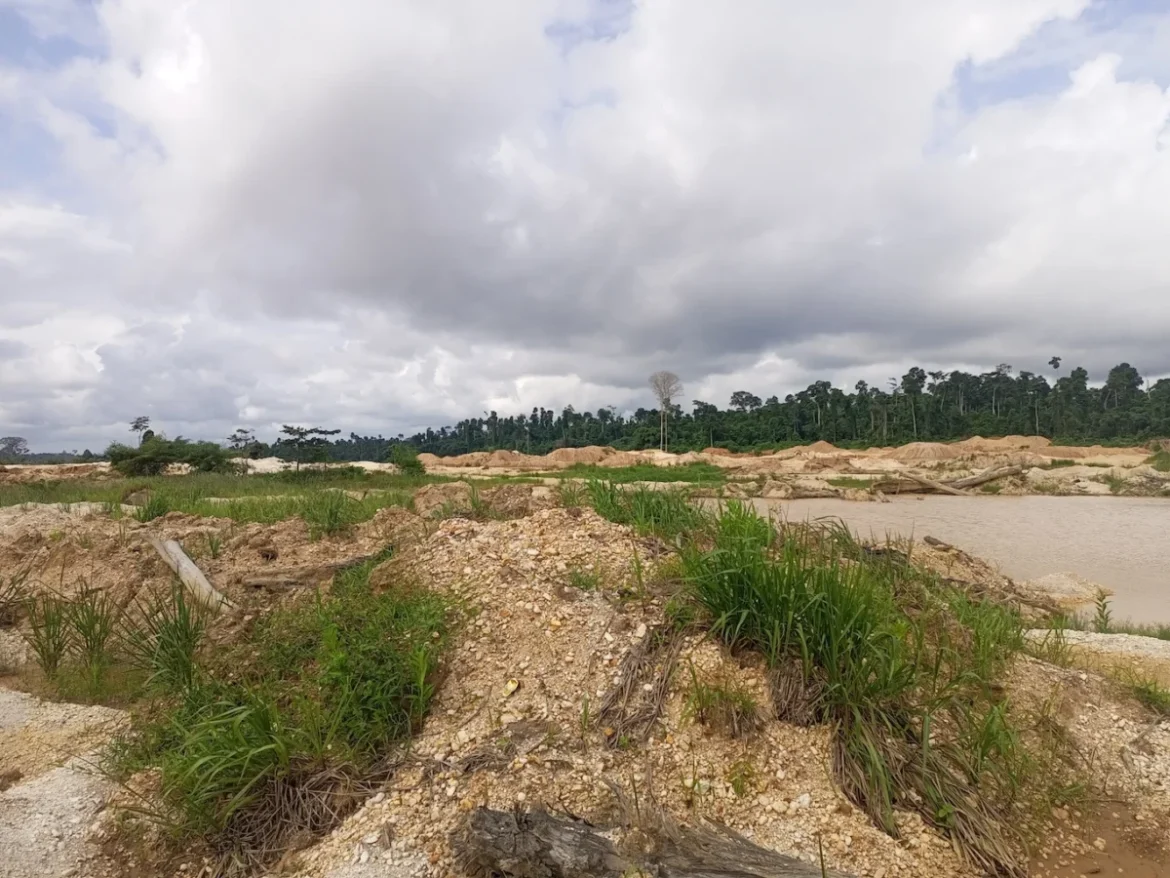
In a legal decision that has sent shockwaves through Ghana’s political and environmental sectors, the Accra High Court has sentenced Bernard Antwi Boasiako, a high-ranking regional chairman of the New Patriotic Party (NPP), to 20 years in prison. The ruling, delivered on July 20, centers on Boasiako’s role in facilitating unlicensed and destructive mining operations within the Samreboi concession, a critical ecological zone in the Western Region. The conviction of Boasiako, a prominent political figure often referred to by his alias "Chairman Wontumi," marks a significant milestone in the nation’s long-standing battle against "galamsey"—the local term for illegal artisanal and small-scale mining.
The case against Boasiako and his firm, Akonta Mining, has been a focal point for environmental activists and civil society organizations for several years. The Samreboi concession lies within the Upper Guinean Forest Belt, a global biodiversity hotspot that stretches across West Africa. Once a lush expanse of tropical rainforest, the area has faced unprecedented pressure from both legal and illegal extractive industries. While the region has historically supported timber and cocoa production, the recent surge in gold prices has led to a devastating expansion of unlicensed mining activities, often occurring with the alleged complicity of local and national power brokers.
The Ecological Significance of Samreboi and the Western Region
The Samreboi concession is more than just a site for mineral extraction; it is a vital component of Ghana’s remaining natural heritage. Situated near the Tano Nimiri and Aboi forest reserves, the landscape is characterized by dense tropical vegetation and complex river systems that provide essential ecosystem services. These forests act as carbon sinks, regulate local climate patterns, and serve as the habitat for numerous endangered species.
However, the environmental integrity of this region has been systematically compromised. Over the past decade, the encroachment of illegal mining has transformed parts of the forest into a wasteland of excavated pits and toxic sludge. The process of galamsey involves the use of heavy machinery, such as excavators and "changfans" (improvised floating platforms used for dredging), which tear through the forest floor and riverbeds. This activity not only destroys the flora and fauna but also permanently alters the natural drainage patterns of the land, making the surrounding communities vulnerable to natural disasters.
The Human and Environmental Cost of Galamsey
The sentencing of Boasiako comes in the wake of a catastrophic flooding event that served as a grim reminder of the consequences of environmental mismanagement. In June, following a period of heavy rainfall, the Tano River burst its banks with unprecedented force. The resulting floods submerged more than 200 houses in Samreboi and its neighboring villages. Several buildings collapsed entirely, leaving hundreds of families displaced.

Regional experts and the Western Regional Minister have directly attributed the severity of these floods to illegal mining. The dredging of riverbeds causes massive siltation, reducing the river’s capacity to carry water. When the rains come, the water has nowhere to go but into the homes and farms of local residents.
Beyond the immediate threat of flooding, the long-term health implications of galamsey are profound. Kenneth Ashigbey, Chief Executive of the Ghana Chamber of Mines, has been a vocal critic of the methods used by unlicensed operators. Unlike regulated industrial mines, galamsey sites often utilize mercury and cyanide to extract gold from ore without any safety protocols or waste management systems. These heavy metals leach into the water table and enter the food chain.
"We are seeing the impact of the changfans and the excavators going into the belly of these river bodies," Ashigbey noted in a statement following the court’s ruling. "They are polluting the stability of water. You have mercury, cyanide, arsenic, and heavy metals entering our water bodies. This is resulting in women with stillbirths, deformed babies, and a host of other health crises."
Socio-Economic Disparity and the "Resource Curse"
The Samreboi case also highlights the deep-seated socio-economic inequalities exacerbated by illegal mining. While Ghana is Africa’s largest gold producer, the wealth generated from the Samreboi concession has rarely benefited the local populace. Instead, the "resource curse" has taken hold, where the extraction of valuable minerals leads to increased poverty and social instability for the majority, while a small elite accumulates vast fortunes.
Ashigbey pointed out that the gold mined in Samreboi has not translated into improved infrastructure, better schools, or healthcare for the community. Instead, traditional livelihoods have been destroyed. Cocoa farmers have seen their lands seized or poisoned, and timber workers have lost their jobs as forests are cleared for mining. The vacuum left by the collapse of traditional industries is often filled by social vices, including drug abuse and human trafficking, which tend to proliferate around unregulated mining camps.
A Complex Legal and Political Timeline
The road to Boasiako’s conviction has been paved with legal and political controversy. For years, environmental groups argued that political figures were using their influence to shield illegal mining operations from prosecution. The firm at the center of the Samreboi dispute, Akonta Mining, had been accused of operating without valid permits in protected areas, yet enforcement was often slow or non-existent.

The legislative landscape has also shifted significantly in recent years. In 2022, the Ghanaian government passed controversial legislation that allowed mining concessions to be granted even inside forest reserves, effectively opening previously protected lands to industrial exploitation. This move was met with fierce resistance from environmental NGOs, who argued that it prioritized short-term economic gain over long-term survival.
Following a sustained public campaign and mounting evidence of environmental collapse, that legislation was repealed in 2025. The repeal signaled a shift in the government’s stance, reflecting a growing recognition that the country’s forests are "worth more than gold." The sentencing of Boasiako is seen by many as the first major test of this renewed commitment to environmental law enforcement.
Reactions from Civil Society
The 20-year sentence handed to Boasiako has been widely praised by environmental advocates, though some remain cautious about its broader impact. Awula Serwah, the convener of the NGO Eco Conscious Citizens, described the ruling as a necessary deterrent. She emphasized that for too long, the fight against galamsey has been hampered by "political colors."
"When people hide behind politics, thinking that there are no consequences for their actions on the environment, the fight cannot be won," Serwah stated. She argued that the law must be applied blindly, regardless of the perpetrator’s political affiliation. Her organization has called for a nationwide audit of mining licenses and a more aggressive approach to reclaiming land in other regions, such as Ashanti and Eastern, where illegal mining remains rampant.
The Ghana Chamber of Mines, which represents the formal, large-scale mining sector, also expressed support for the court’s decision. By distancing itself from the actions of unlicensed operators and politically connected firms like Akonta Mining, the Chamber seeks to protect the reputation of the legal mining industry, which contributes significantly to the national GDP through taxes and regulated royalties.
Implications for the Future of Mining in Ghana
The conviction of a regional chairman of the ruling party sends a powerful message to both the public and the international community. It suggests that the Ghanaian judiciary is willing to assert its independence and hold powerful individuals accountable for environmental crimes. However, the challenge remains immense.

Ghana faces a difficult balancing act: it must satisfy the economic demands of a nation that relies heavily on gold exports while ensuring that its natural resources are managed sustainably for future generations. The degradation of the Upper Guinean Forest Belt is not just a local issue; it is a global one, as the loss of these forests contributes to the acceleration of climate change.
In the coming months, the government will face pressure to follow through on the restoration of the Samreboi concession. Sentencing the perpetrators is only the first step; the "scarred landscape" of abandoned pits and contaminated rivers requires massive investment in land reclamation and water purification.
Furthermore, the case has ignited a debate about the need for systemic reform in the Minerals Commission and the Environmental Protection Agency (EPA). Critics argue that the current system for monitoring mining activities is prone to corruption and lack of oversight. Without structural changes to how mining leases are granted and monitored, the victory in the Boasiako case may remain an isolated incident rather than a turning point.
As the 20-year sentence begins, the people of Samreboi are left to rebuild their lives in the shadow of the mines. For them, the ruling is a measure of justice, but the true test of the government’s resolve will be whether the Tano River runs clear again and whether the forests of the Western Region are allowed to recover from a decade of destruction. The eyes of the nation—and the world—remain on Ghana as it navigates this critical juncture in its environmental history.
