
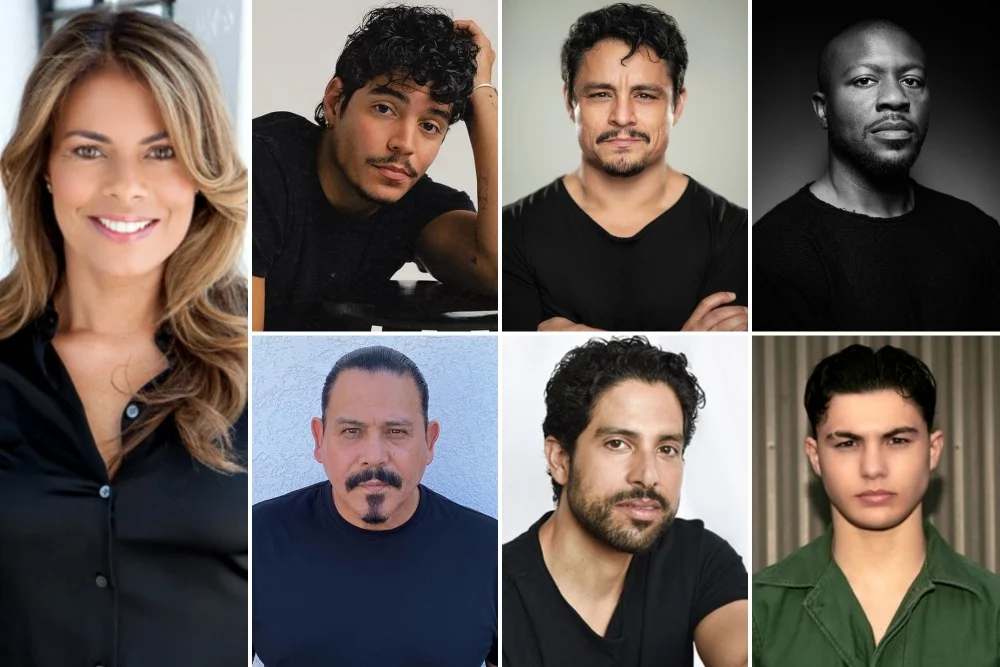
The production of The House of Guerrero, the highly anticipated feature film directorial debut from actress and filmmaker Gina Rodriguez, has officially entered its next phase of development with the announcement of an expansive new roster of supporting actors. As cameras roll across locations in Los Angeles and the Imperial Valley, the project—which centers on the visceral and emotional world of professional boxing—is steadily assembling a formidable group of performers to round out its narrative core.
Joining the previously announced lead cast—which features Carlos Sanson Jr. as the protagonist, alongside Rosario Dawson, George Lopez, and Gina Rodriguez herself—are Lisa Vidal, Aaron Dominguez, Jesse Garcia, Edwin Hodge, Emilio Rivera, Adam Rodriguez, and Javon Walton. This latest influx of talent underscores the project’s commitment to building a deeply textured ensemble, reflecting the complex familial and community dynamics essential to the film’s premise.
Narrative Framework and Character Dynamics
The House of Guerrero is rooted in an original story co-authored by Gina Rodriguez and playwright Bernardo Cubría. The film serves as a character-driven drama that pivots on the life of Alex Guerrero, a promising boxer whose professional trajectory is abruptly derailed. The narrative follows Alex as he attempts a high-stakes return to the ring, a journey that forces him to reconcile with his past, his grief, and his fractured relationship with his father, Alejandro Guerrero, portrayed by veteran actor George Lopez.
Central to the story is the legacy of Elsa Guerrero, played by Rosario Dawson, whose passing acts as the catalyst for the film’s emotional trajectory. As Alex grapples with the vacuum left by his mother’s death, the film explores themes of redemption and mentorship. Paloma Guerrero, played by Gina Rodriguez, emerges as a pivotal figure; as Alex’s older sister and a skilled pugilist in her own right, she transitions into the role of his trainer, guiding him through the physical and psychological rigors of his comeback.
The newly announced cast members are tasked with populating the world of El Centro, the setting that anchors the Guerrero family history. Lisa Vidal will portray Tia Lupe, with Emilio Rivera cast as her husband, Tio Turi, establishing the older generation of the family unit. Aaron Dominguez has been cast as Perico, a close friend of Alex, while Jesse Garcia will take on the role of Diego, Alex’s therapist, suggesting a narrative focus on the mental health challenges faced by athletes. Edwin Hodge joins the project as Malcolm, the manager of Club Crave, and Adam Rodriguez will portray Ruben Chapa, a local boxing gym trainer. Rounding out the cast is Javon Walton, who will appear in the film’s flashback sequences, portraying a young Alex Guerrero.
Chronology and Production Context
The progression of The House of Guerrero has been marked by a deliberate and strategic rollout. The project, which was conceived as a vehicle for exploring the intersection of sports culture and Latinx family dynamics, began its official development cycle under the banner of I Can And I Will Productions.
Following the initial casting announcement, which signaled the project’s transition from pre-production to active principal photography, the current phase in Southern California and the Imperial Valley marks a significant milestone. The selection of the Imperial Valley—a region known for its stark landscapes and proximity to the U.S.-Mexico border—suggests that the film will lean into the atmospheric authenticity of its setting.
For Gina Rodriguez, this transition into the director’s chair represents a natural evolution of her career. Having achieved international acclaim for her work in Jane the Virgin and her subsequent filmography, Rodriguez has spent years positioning herself as an advocate for authentic representation. The decision to cast a blend of established industry veterans and rising talent suggests a production strategy aimed at both critical prestige and broader audience appeal.
Industry Support and Financial Structure
The financial and logistical infrastructure behind The House of Guerrero is indicative of the current landscape of independent filmmaking, where collaborative financing models have become the standard for high-profile projects. The film is being produced by Scott Budnick and Ameet Shukla of 1Community, alongside Molly Breeskin of I Can And I Will Productions, and Justin Baldoni and Calof from Wayfarer Studios.
The co-financing arrangement includes contributions from Wayfarer Studios, 1Community, HarbourView Media Group, and Clare LoCicero. Furthermore, the inclusion of tax credit financing from Three Point Capital highlights the economic importance of filming on location in California, where state-level incentives continue to play a vital role in attracting feature-length productions.
The film’s commercial potential is further bolstered by the involvement of the UTA Independent Film Group, which is managing worldwide sales. This indicates that despite its independent roots, the project is being positioned for a significant global footprint. Casting directors Mary Vernieu and Lindsay Graham Ahanonu were instrumental in assembling the ensemble, with Eric W. Thompson overseeing the negotiation of the extensive cast deals.
Thematic Analysis: The "Boxing Drama" Genre
The boxing film remains one of the most enduring tropes in American cinema, often serving as a metaphor for the struggle for self-actualization. By focusing on the "House of Guerrero," the film taps into the tradition of works like The Fighter or Creed, where the sport is secondary to the domestic struggle.
Industry analysts note that the addition of characters like a therapist (played by Garcia) and a manager of a local club (played by Hodge) suggests a sophisticated approach to the genre. Rather than focusing solely on the "glory" of the ring, the screenplay appears to prioritize the socio-economic pressures of the El Centro community and the psychological toll of athletic failure. This thematic depth is likely what attracted a cast of this caliber, as it provides actors with substantive material beyond the standard sports-movie archetypes.
Institutional Representation
The professional representation involved in this production reflects the current standing of the cast members within the entertainment industry. The diverse list of agencies includes Paradigm, Mosaic, Independent Artist Group, Amsel, Eisenstadt, Frazier & Hinojosa Inc., and Brillstein Entertainment Partners, among others. The fact that such a broad array of management firms has coordinated to align their talent with this specific project speaks to the perceived quality of the script and the professional reputation of Gina Rodriguez as a first-time director.
Broader Implications for Latinx Cinema
The House of Guerrero serves as a case study for the current shift toward Latinx-led narratives in mainstream Hollywood. Unlike previous decades, where such projects might have been relegated to "niche" categories, this film is being developed with the backing of major independent studios and a comprehensive distribution strategy.
The significance of this cannot be overstated. By centering a story on a family that navigates both the complexities of grief and the physical demands of boxing, the production seeks to normalize Latinx-led dramas within the global box office. The involvement of established stars like Rosario Dawson and George Lopez alongside newer talent like Carlos Sanson Jr. provides the necessary bridge for cross-generational appeal.
As production continues, the focus will shift toward the post-production phase, where the synthesis of performance, cinematography, and editing will determine the final impact of the film. For Rodriguez, the success of this project will likely define her trajectory as a filmmaker, potentially opening doors for more expansive, high-budget projects that prioritize diverse narratives.
The industry remains focused on the progress of The House of Guerrero as a litmus test for the viability of character-driven dramas in an era dominated by franchise intellectual property. With a solid production team, a clear thematic vision, and a robust cast, the film is positioned to contribute significantly to the cultural dialogue surrounding the American dream, family legacy, and the resilience of the human spirit.
