
The Nancy Grace Roman Space Telescope, NASA’s next-generation flagship observatory, is poised to significantly exceed its original operational life expectancy, potentially doubling its scientific output over the coming decades. Following an exceptionally precise first mid-course correction maneuver and advantageous mass-to-propellant ratios at launch, mission controllers at NASA’s Goddard Space Flight Center in Greenbelt, Maryland, have announced that the observatory now possesses sufficient fuel to conduct scientific operations for at least 22 years. This development represents a monumental shift for the mission, which was originally scoped for a primary five-year mission supplemented by a five-year extension, totaling a decade of planned observation.
The extension of the mission’s life is not the result of a single event but rather a confluence of high-precision orbital mechanics, conservative engineering margins, and the reliable performance of the SpaceX launch vehicle. As the observatory journeys toward its permanent residence at the second Lagrange point (L2)—a gravitationally stable position approximately one million miles from Earth—the mission team continues to refine the trajectory, setting the stage for what could become one of the longest-running and most productive astrophysics missions in NASA’s history.
Chronology of a Successful Launch and Initial Maneuvers
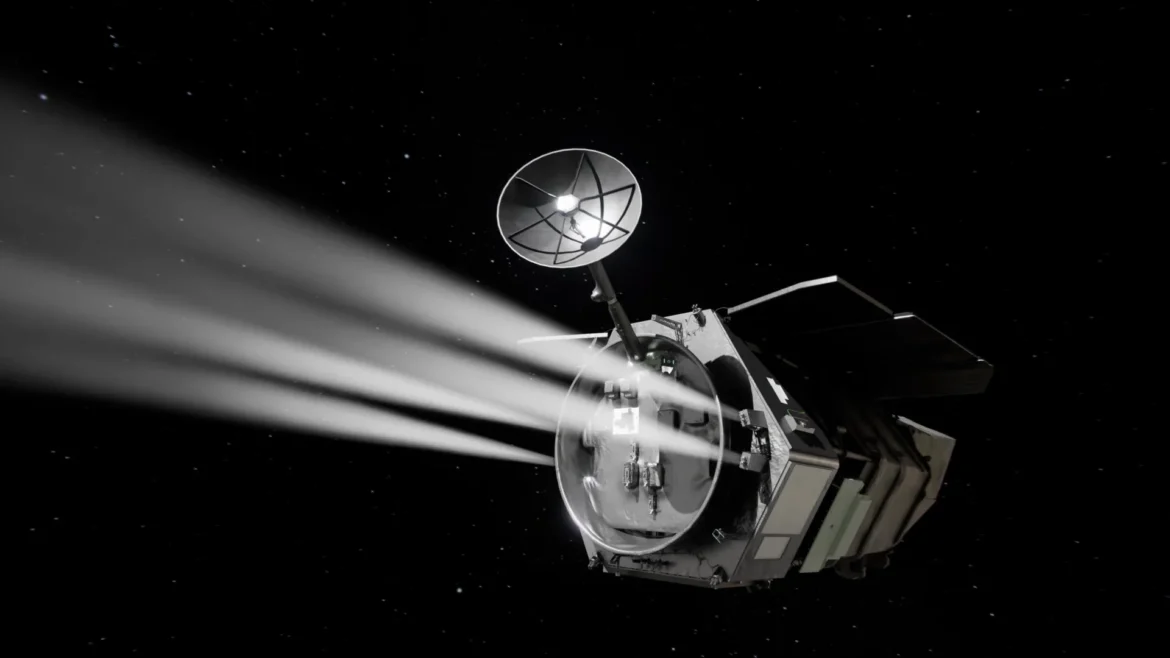
The Roman Space Telescope’s journey began with a successful liftoff, establishing the foundation for its current success. From the moment the fairing separated, the mission has been defined by extreme precision. On August 31, the spacecraft executed its first major mid-course correction burn, a critical maneuver designed to refine the observatory’s path toward the L2 halo orbit.
This maneuver was not merely a routine adjustment; it served as a high-stakes test of the spacecraft’s propulsion systems and the team’s navigation models. The results were unprecedented in their accuracy: the burn was completed with a precision level exceeding 99 percent. Perhaps more impressively, the maneuver consumed a mere 18 kilograms (40 pounds) of propellant. Planners had originally allocated a budget of 200 kilograms (441 pounds) for this specific phase of the journey. By utilizing less than 10 percent of the fuel reserved for this leg of the trip, the team effectively "bought" four additional years of operational time in a single afternoon.
The mission timeline remains on track, with the second mid-course correction scheduled for later this month. This upcoming burn is designed to provide the final velocity adjustments needed for orbital insertion. Because the first maneuver was so exceptionally accurate, the mission team has been able to delay the second burn, allowing for a more refined approach. Current projections suggest that the second correction and the subsequent orbital insertion will also require significantly less propellant than the original conservative estimates, potentially netting the mission another four years of fuel beyond the gains already realized. Roman is expected to reach the L2 region approximately 100 days post-launch, with full scientific operations slated to commence in early December.
Technical Factors: Mass and Propellant Management
The dramatic extension of the Roman mission is rooted in the careful interplay between spacecraft mass and fuel capacity. In the aerospace industry, weight is the ultimate constraint; every kilogram of scientific instrumentation, shielding, and structural material dictates the amount of energy required to achieve orbit.
Engineers at NASA Goddard initially calculated the propellant requirements based on a conservative maximum weight of 9,800 kilograms (21,605 pounds). This "worst-case scenario" planning is standard practice to ensure that, should the spacecraft end up heavier than expected during the integration process, the mission would not be jeopardized by a lack of fuel. However, upon completion of the final assembly and testing, the Roman Space Telescope weighed in at only 8,056 kilograms (17,760 pounds).
This significant weight discrepancy offered the mission team a rare luxury. With a lighter spacecraft, the energy required to reach L2 was substantially lower than initial projections. Rather than reducing the amount of fuel loaded onto the spacecraft, the team made the strategic decision to fill the propellant tanks to their maximum capacity. Alison Rao, the Roman propulsion lead at NASA Goddard, highlighted the necessity of this approach: "A spacecraft’s mass changes throughout the design and build process, so we base the propellant budget on a set maximum value so we won’t come up short. Since Roman’s was lower than we budgeted for, we were able to fill the propellant tanks to their capacity rather than only filling them as much as we needed to for the 10-year requirement."
This decision effectively added another four years of potential operations to the mission’s lifespan, separate from the savings gained during the flight maneuvers. When combined with the high-precision burns and the expectation of future fuel savings during routine station-keeping, the total projected mission life has soared from 10 years to over 22 years.
Official Responses and Strategic Implications
The implications of a 22-year mission duration for the astronomical community cannot be overstated. Jamie Dunn, center director at NASA Goddard, expressed optimism regarding the mission’s future, noting that "as a result of exquisite planning by our orbital dynamics team, brilliant execution by the operations team, and a precise launch from SpaceX, Roman has fuel for at least 22 years of potential science operations."
The extended life of the observatory provides a broader window for data collection, allowing for longer-term monitoring of celestial phenomena. While the telescope’s primary goals—such as mapping the expansion history of the universe, investigating dark energy, and performing a massive survey of exoplanets—remain unchanged, the additional decade of fuel allows for a more comprehensive survey of the sky. It also creates opportunities for secondary science programs that were previously considered too risky or time-intensive for a 10-year mission profile.
Furthermore, the stability of the L2 environment is a significant factor in the mission’s longevity. Once the Roman Space Telescope is securely in its permanent orbit, station-keeping requirements are minimal. The mission architecture only requires periodic burns approximately once every 28 days to maintain the spacecraft’s position. This low-intensity maintenance cycle further minimizes fuel consumption, ensuring that even in the latter years of the mission, the observatory will have sufficient reserves to remain operational.
The Broader Impact on Astrophysics
The Nancy Grace Roman Space Telescope is designed to act as a wide-field survey instrument, capable of capturing images with the resolution of the Hubble Space Telescope but across a field of view 100 times larger. This capability allows astronomers to observe large swaths of the sky with unprecedented detail, creating a vast database of information that will serve the scientific community for decades.
By extending the mission’s life, NASA is essentially doubling the return on investment for the taxpayers. The data gathered during the additional 12 years of operation will likely lead to discoveries that were not even conceived when the mission was first proposed. For instance, the extra time will allow for deeper, more refined surveys of distant galaxies, potentially revealing new insights into the formation and evolution of the universe.
Moreover, the longevity of the mission allows for a "long-baseline" approach to time-domain astronomy. Observing the same regions of the sky over two decades enables scientists to track slow-moving changes in the cosmos—such as the evolution of variable stars, the motion of galaxies, and the rare occurrence of transient astronomical events. This capability would be impossible within the constraints of a shorter mission.
Conclusion: A New Era for Deep Space Observation
The success of the Roman Space Telescope’s initial maneuvers marks a turning point in current space operations. The ability to exceed mission duration expectations through superior orbital mechanics and efficient resource management serves as a model for future deep-space observatories.
As the mission progresses toward its permanent station at L2, the scientific community is preparing for a new era of discovery. With fuel no longer the primary limiting factor for the mission’s longevity, the focus shifts entirely to the observatory’s hardware and the endurance of its instruments. If the spacecraft maintains its current operational health, the Nancy Grace Roman Space Telescope will serve as the premier eye on the universe well into the 2040s, providing an invaluable bridge between the current generation of observatories and the future of deep-space exploration.
The achievement stands as a testament to the meticulous work of the NASA engineering teams and the precision of the systems currently operating millions of miles from home. For the astronomical community, the message is clear: the mission is not just on track; it has been granted a decade of extra time to rewrite our understanding of the cosmos.
