
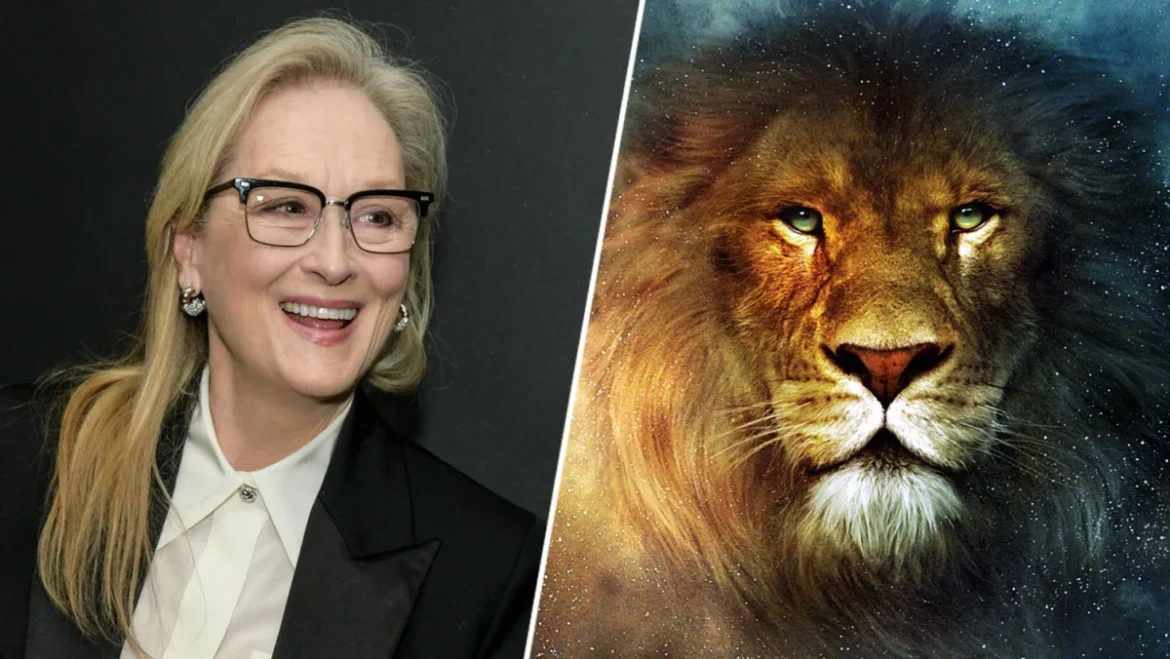
The landscape of fantasy cinema is set for a seismic shift as acclaimed director Greta Gerwig prepares to unveil her highly anticipated interpretation of C.S. Lewis’s seminal literary work, The Chronicles of Narnia. In a move that has sent ripples of excitement through both the film industry and the literary community, Gerwig has confirmed that the iconic role of Aslan, the great lion and sovereign of the Narnian realm, will be voiced by none other than three-time Academy Award winner Meryl Streep. This casting decision marks a departure from previous iterations of the franchise, signaling Gerwig’s intent to imbue the character with a specific blend of maternal gravitas, profound wisdom, and an unwavering capacity for wonder.
The production, titled Narnia: The Magician’s Nephew, is slated to hit Imax theaters on February 12, 2027, followed by a wide-release streaming debut on Netflix on April 2, 2027. By securing a performer of Streep’s caliber, Gerwig aims to ground the ethereal and mythological elements of Lewis’s universe in a vocal performance that demands both authority and empathy.
The Vision Behind the Casting
In an exclusive interview with Empire, Gerwig provided insight into the rigorous process of selecting an actor to voice a character who serves as the moral and spiritual compass of the entire Narnian narrative. For Gerwig, the challenge was identifying a performer capable of balancing the immense weight of Aslan’s responsibilities with the light-heartedness required of a creator deity.
"The list is not a long one," Gerwig remarked, noting that the search for the perfect Aslan was guided by a desire for a voice that is "profound but not pretentious." The director emphasized that she sought an individual who could project gravitas without slipping into morose self-seriousness, and who could communicate depth and pathos alongside joy and delight.
Gerwig’s specific criteria—a performer over the age of 70 who possesses the wisdom of experience while retaining the fresh, unburdened curiosity of a child—narrowed the field significantly. In her view, Streep represents the pinnacle of this requirement, embodying a rare synthesis of technical mastery and emotional vulnerability. By choosing to step away from the traditionally male-coded vocal performances associated with Aslan, Gerwig is positioning the character as a transcendent, ageless force, rather than a mere patriarchal figure.
A Chronological Perspective: The Magician’s Nephew
To understand the scope of Gerwig’s ambition, one must consider the chronological placement of this project. While The Lion, the Witch and the Wardrobe was the first book published by C.S. Lewis in 1950, The Magician’s Nephew, published in 1955, serves as the prequel that establishes the origins of Narnia.
The story follows Digory Kirke and Polly Plummer, two children who are transported into different worlds through the use of magical rings. It is within the pages of this narrative that readers witness the very birth of Narnia, as Aslan sings the world into existence. By beginning her adaptation with this origin story, Gerwig is setting the stage for a grand, multi-film saga that will likely span the entirety of Lewis’s seven-book series. This approach allows the director to build the mythology from the ground up, ensuring that the audience’s introduction to Aslan is tied directly to the act of creation itself.
The Evolution of Aslan on Screen
The character of Aslan has been a cornerstone of fantasy cinema for decades. The most prominent previous iteration occurred during the 2005–2010 film series produced by Walden Media and distributed by Disney and 20th Century Fox. In those films, Liam Neeson provided the voice for the lion, delivering a performance characterized by a deep, resonant, and calm authority that became the standard for the character.
Neeson’s portrayal was widely praised for its steadying influence, reflecting the "fatherly" aspect of the character as presented in the original text. However, Gerwig’s departure from this archetype suggests a thematic pivot. By selecting Streep, the production indicates a move toward a more nuanced, perhaps more ethereal, representation of Aslan. This change reflects the broader evolution of fantasy filmmaking, where gender-neutral or non-traditional casting is increasingly used to explore the multifaceted nature of characters who exist outside the constraints of human biology.
Production Timeline and Development
The journey toward this production began in earnest in July 2023, when Netflix confirmed that Greta Gerwig would be spearheading the adaptation of the Narnia franchise. The deal was viewed as a major coup for the streaming giant, which had been seeking a marquee franchise to rival the scale of Disney’s Marvel and Lucasfilm properties.
- July 2023: Netflix officially announces Greta Gerwig as the creative lead for the Narnia adaptation.
- April 2025: Meryl Streep is formally attached to the project to voice Aslan, ending months of speculation within the industry regarding the casting.
- February 12, 2027: The Magician’s Nephew is scheduled for a limited Imax theatrical run, emphasizing Netflix’s commitment to high-end, cinematic experiences.
- April 2, 2027: The film arrives on the Netflix platform, marking the beginning of the platform’s most significant investment in family-friendly fantasy to date.
Industry Implications and Market Analysis
The casting of Meryl Streep is not merely an artistic choice; it is a strategic business maneuver. In an increasingly crowded streaming marketplace, Netflix is under pressure to deliver "event" television that justifies subscription costs. Attaching a generational talent like Streep—a performer who commands international respect and a massive multi-generational audience—elevates the prestige of the project significantly.
Furthermore, the decision to prioritize an Imax release prior to the Netflix debut demonstrates a shift in the streaming giant’s strategy. Netflix is increasingly testing the waters of theatrical distribution for its tentpole titles, acknowledging that certain narratives require the scale and immersion of a cinema screen. This "prestige model" allows Netflix to capture the critical acclaim and cultural visibility that accompany a theatrical release, while still funneling subscribers to its home platform.
From a critical standpoint, the casting of a woman as the voice of Aslan provides a fresh lens through which to analyze the source material. C.S. Lewis’s work has often been critiqued for its rigid gender roles and heavy-handed moral allegories. By casting a woman in the role of the creator figure, Gerwig may be subtly modernizing the subtext of the series, softening the edges of the character’s perceived authoritarianism while highlighting the restorative, nurturing qualities of Aslan’s power.
Conclusion: The Road Ahead
As the 2027 premiere date approaches, the film community remains fixated on how Gerwig will reconcile the nostalgic reverence many fans hold for the Narnia books with her own distinct, auteur-driven style. The combination of Gerwig’s acclaimed directorial sensibilities—known for their focus on female interiority and sharp, character-driven storytelling—and Streep’s unmatched ability to inhabit complex, iconic roles, suggests that the new Narnia will be a significant departure from previous adaptations.
The success of The Magician’s Nephew will likely dictate the pace and scope of Netflix’s future Narnia projects. Should the film resonate with audiences, it could set a new benchmark for fantasy adaptations, proving that even the most well-trodden literary paths can be reinvigorated through bold casting and a clear, unified creative vision. For now, the world waits for the voice of the lion to roar, as Meryl Streep prepares to step into the wardrobe and bring the King of Narnia to life for a new generation.
