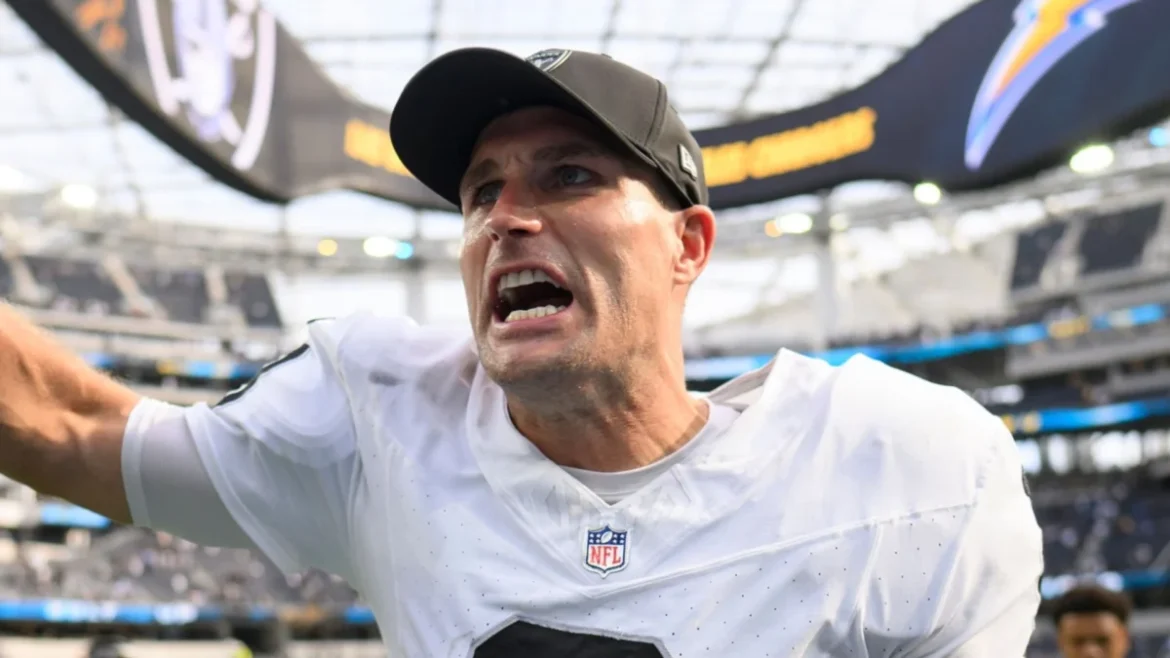
In a move designed to salvage a wavering postseason campaign, the Minnesota Vikings have completed a high-stakes trade to bring veteran quarterback Kirk Cousins back to the Twin Cities. The transaction, confirmed on Tuesday, November 10, 2026, sees the Vikings acquire the seasoned signal-caller from the Las Vegas Raiders in exchange for a 2027 third-round draft selection. This homecoming marks the latest chapter in a turbulent timeline for the Vikings’ quarterback room, which has struggled for stability since Cousins’ departure in the 2024 offseason.
A Turbulent Timeline: The Post-Cousins Era
To understand the gravity of this acquisition, one must examine the volatility that has defined the Vikings’ offense since Cousins left for the Atlanta Falcons in 2024. During his initial six-year tenure in Minnesota (2018–2023), Cousins provided a baseline of production that the organization has since failed to replicate. Following his exit, the Vikings entered a period of extreme instability, cycling through eight different starting quarterbacks in less than three seasons.
The search for a successor proved elusive. Despite drafting talent and attempting stop-gap solutions, the franchise found itself unable to establish a rhythm under center. The desperation reached a boiling point following a series of disappointing performances, most notably the recent 23-6 loss that effectively signaled that the current roster’s ceiling had been reached without a veteran presence capable of managing head coach Kevin O’Connell’s complex scheme.
The Catalyst: A Franchise in Crisis
The catalyst for this trade was a catastrophic offensive display by Carson Wentz, who was filling in for an injured Kyler Murray. In a performance that will likely be remembered as a nadir for the franchise, Wentz struggled mightily, completing just 8 of 25 passes for 81 yards. The statistics were damning: two interceptions and a fumbled swing pass to star wide receiver Justin Jefferson that turned into a live-ball disaster in the first quarter.
The optics were further complicated by Wentz’s inability to move the ball effectively while nursing an ankle injury. With the offense failing to generate any meaningful yardage, backup Max Brosmer was eventually inserted midway through the fourth quarter. The loss served as a harsh wake-up call for the front office. Having started the 2026 season with a promising 6-2 record, the team’s subsequent slide necessitated an aggressive intervention to prevent a total collapse of their playoff aspirations.
The Raiders’ Perspective: Embracing the Future
For the Las Vegas Raiders, this trade represents a strategic pivot toward long-term development. By offloading the veteran Cousins, the Raiders have effectively handed the keys to the kingdom to 2026 No. 1 overall pick Carlos Mendoza. The organization’s decision to move on from a veteran of Cousins’ caliber suggests that they believe Mendoza’s development is best served by consistent, high-leverage playing time.
The addition of a 2027 third-round pick serves as significant draft capital, providing the Raiders with the flexibility to bolster their roster in the coming years. While losing a player of Cousins’ experience is always a calculated risk, the Raiders are betting on the mobility and upside of their rookie quarterback to define the next era of Las Vegas football.
Data-Driven Context: Why the Vikings Needed a Change
The Vikings’ decision to re-acquire Cousins is rooted in more than just sentimentality; it is a cold, calculated move based on the team’s current statistical reality. In the 2022 season, under O’Connell’s inaugural year as head coach, Cousins led the Vikings to 13 victories, showcasing an uncanny ability to facilitate the team’s elite offensive weapons. Even in 2023, prior to his season-ending Achilles tendon injury in Week 8 against the Green Bay Packers, Cousins was statistically outpacing his previous career benchmarks.
The Vikings’ roster currently features a top-tier defensive unit and a collection of offensive weapons—including the aforementioned Jefferson—that are currently underutilized. By bringing in a quarterback who already understands the intricacies of the team’s playbook and possesses an existing chemistry with the veteran core, the Vikings are attempting to maximize the "championship window" that many analysts believe is currently open.
The acquisition of the 2027 third-round pick from Philadelphia, secured earlier this year in the trade for edge rusher Jonathan Greenard, provided the Vikings with the necessary capital to facilitate this deal without gutting their immediate future draft reserves. It was a rare instance of smart front-office asset management providing the liquidity required for a mid-season roster transformation.
Tactical Implications and Coaching Philosophy
Kevin O’Connell’s offensive system requires a high degree of precision and anticipation, traits that have been largely absent in the team’s quarterback play over the last two years. Cousins’ return brings back the "point guard" style of play that O’Connell prizes. Unlike a younger or less experienced signal-caller who might struggle with the nuances of pre-snap reads, Cousins is expected to stabilize the offense almost immediately.
Analysts point to the Vikings’ dominant defense as the primary reason for this move. With a defense capable of keeping games low-scoring, the team does not need a quarterback to perform miracles; they need a quarterback who can manage the game, convert third downs, and avoid catastrophic turnovers. Cousins’ career history of high completion percentages and low interception rates makes him an ideal candidate for this specific role.
Official Responses and Internal Outlook
While official statements from the front office remain guarded, sources close to the organization indicate a sense of urgency within the locker room. The veterans, who have played with Cousins previously, are reportedly optimistic about the change. The move is viewed not as a panacea, but as a stabilizing force that restores confidence to a unit that has been visibly frustrated by the recent turnover and inconsistency.
"We have the pieces," one anonymous team source noted. "We just needed the floor to be higher. We needed someone who has been in the fire and knows how to execute the game plan when the pressure is on."
Looking Toward the Postseason
The immediate impact of this trade will be felt in the coming weeks as the Vikings look to reverse their current losing streak. The schedule ahead features several high-stakes divisional matchups, and the front office is clearly banking on Cousins’ familiarity with the NFC North to navigate the remainder of the season.
The financial and logistical hurdles of integrating a veteran mid-season are significant, yet the Vikings have opted for a "win-now" approach. By securing a player who has already proven he can succeed in the Minnesota system, the organization is signaling to its fan base and its players that they remain committed to contending for a title in 2026.
As the team prepares for the next round of fixtures, the focus will shift to how quickly Cousins can regain his form following his time in Las Vegas. If he can recapture the efficiency he displayed during the 2022 and 2023 campaigns, the Vikings may find themselves transformed from a team on the decline into a legitimate threat to make a deep postseason run. Conversely, the Raiders will be closely monitoring the growth of Carlos Mendoza, marking a fascinating divergence in strategy between two franchises looking to define their respective futures in the NFL.
Ultimately, this trade is a testament to the volatility of the quarterback position in modern professional football—a position where even a veteran of over a decade can find himself traded in a mid-season scramble, bridging the gap between a team’s past successes and its future ambitions.