
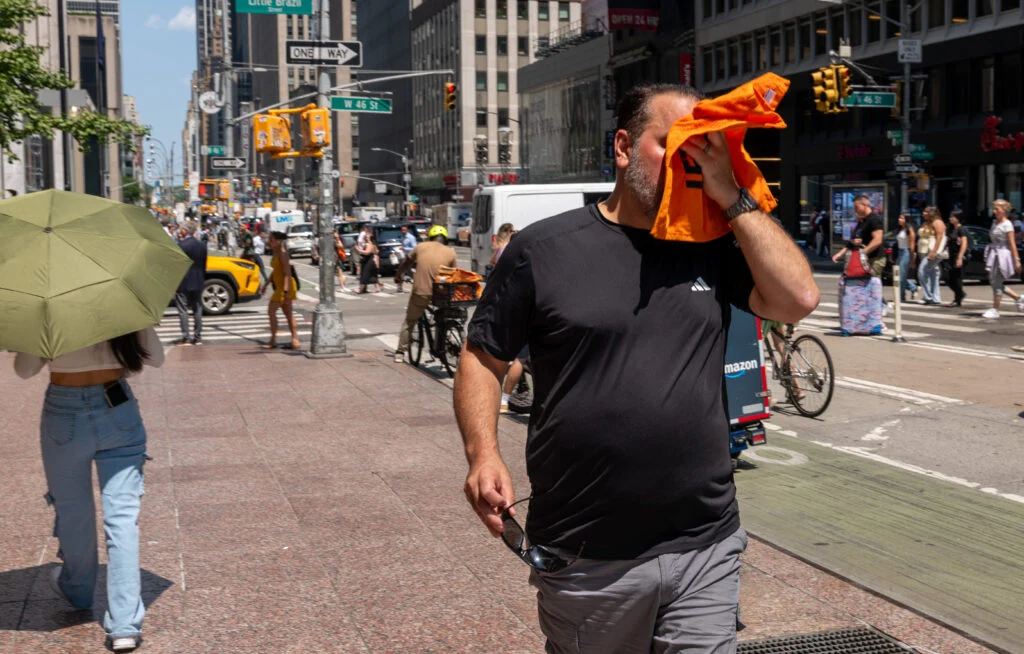
As global temperatures continue to climb, the burden of extreme heat is becoming an increasingly localized crisis, defined as much by the materials used to build a neighborhood as by the weather itself. In cities across the United States, from the humid corridors of Houston to the dense blocks of New York City, the phenomenon known as the "urban heat island" effect is transforming metropolitan areas into thermal traps. This effect, where man-made surfaces like concrete and asphalt absorb and re-emit the sun’s heat, is not merely a scientific curiosity; it is a public health emergency that disproportionately impacts low-income residents and communities of color.
The science behind the urban heat island (UHI) effect is rooted in the physical properties of modern infrastructure. Luis Ortiz, an assistant professor at George Mason University and a member of the New York City Panel on Climate Change, describes concrete structures and roads as "heat batteries." These surfaces possess high thermal mass, meaning they absorb vast amounts of solar radiation during the day and continue to radiate that heat long after the sun has set. In natural landscapes, vegetation provides cooling through shade and evapotranspiration—the process by which plants release water vapor into the air. In contrast, urban environments replace trees with steel and stone, which block wind flow and trap heat in "urban canyons." Furthermore, the very tools used to combat heat, such as air conditioning units, exacerbate the problem by ejecting waste heat directly into the atmosphere, creating a feedback loop of rising temperatures.
A Chronology of Heat Mapping and Federal Support
The effort to quantify and visualize these temperature disparities has evolved significantly over the last decade. Between 2016 and 2024, the National Oceanic and Atmospheric Administration (NOAA), in collaboration with other federal agencies, spearheaded a nationwide initiative to map heat inequities in 14 major U.S. cities. These campaigns relied on "citizen science," where local volunteers equipped their vehicles with thermal sensors to record temperature and humidity at different times of the day.
In Houston, this methodology has provided a stark look at the city’s thermal landscape. A 2020 study conducted by the Houston Advanced Research Center (HARC) was followed by a second, more comprehensive mapping project in 2024. During this most recent study, approximately 150 residents drove through the city to document the UHI effect in real time. The data confirmed that neighborhoods with dense development and minimal tree cover were significantly hotter than their wealthier, greener counterparts.
However, the future of such research is currently in flux. While the U.S. Department of Agriculture (USDA) recently provided $1.5 million to HARC to increase the tree canopy in underserved communities, federal cutbacks on climate research suggest that the responsibility for mapping and mitigating heat may soon fall entirely on municipal leaders. This shift comes at a critical time, as climate projections indicate that the severity of urban heat is only beginning to manifest.
The Intersection of Infrastructure and Social Inequality
The urban heat island effect does not impact all city residents equally. In many American cities, a resident’s ZIP code is a reliable predictor of their exposure to extreme heat. Research indicates that low-income neighborhoods and communities of color are consistently hotter than affluent areas. This is often the result of historical urban planning decisions, including redlining, which restricted investment in certain neighborhoods, leaving them with more industrial sites, more highways, and fewer parks.
The presence of heavy infrastructure, such as highways and power plants, acts as a dual threat. Power plants release heat as a byproduct of electricity generation, while highways contribute to the heat island effect by replacing soil with vast expanses of dark, heat-absorbing asphalt. A recent study published in the journal Cities found that highway expansions considerably worsen the UHI effect, further isolating neighborhoods from cooling breezes and natural shade.
In New York City, the human cost of this inequality is documented in health statistics. Data from the New York City Department of Health and Mental Hygiene reveals that Black New Yorkers are twice as likely to die from heatstroke compared to white residents. This disparity is linked to several factors: a lack of access to air conditioning, the high cost of electricity, and the higher likelihood of living in neighborhoods with minimal green space. Furthermore, the city’s panel on climate change predicts that the number of "hot days"—defined as days reaching 90 degrees Fahrenheit or higher—could increase by as many as 52 days by mid-century.
Health Implications and the Cooling Crisis
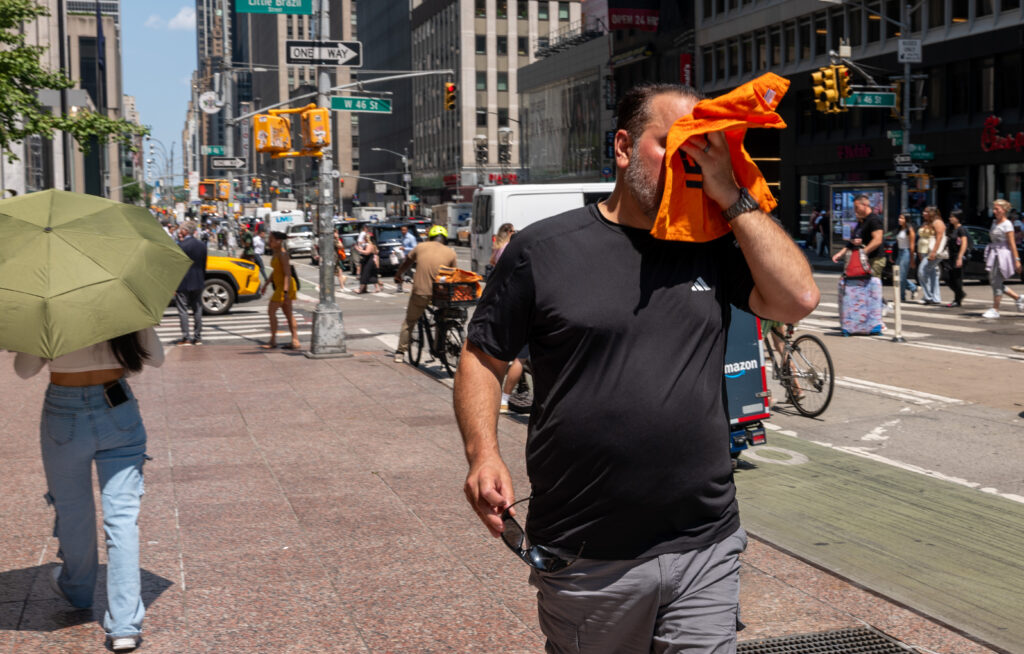
Extreme heat is one of the deadliest weather-related phenomena in the United States, often claiming more lives annually than hurricanes or tornadoes. The physiological toll of overheating includes sunstroke, heat exhaustion, and the exacerbation of underlying cardiovascular and respiratory conditions. For outdoor workers, particularly those in the construction and agricultural sectors, the risk is existential. In Texas, a state known for its grueling summers, labor advocates have raised alarms regarding the lack of federal and state protections for workers exposed to lethal temperatures.
While air conditioning is often viewed as the primary defense against heat, it is not a universal solution. Rising electricity costs mean that even those with window units may hesitate to turn them on. Additionally, the reliance on cooling centers—air-conditioned public spaces like libraries or senior centers—presents its own challenges. While cities like New York have a dense network of these centers, residents must still travel through the heat to reach them, a journey that can be dangerous for the elderly or those with mobility issues.
Strategies for Mitigation: Green Space and Reflective Materials
To combat the rising temperatures, city governments are increasingly looking toward "nature-based solutions." The most effective of these is the expansion of the urban forest. New York City’s forthcoming Urban Forest Plan aims to cover 30 percent of the city with a tree canopy. While ambitious, the plan faces significant hurdles. Maintaining street trees is expensive, and recent droughts have led to high mortality rates among young saplings. Furthermore, the New York City Parks and Recreation Department has historically been underfunded, making it difficult to keep up with the maintenance required for a massive canopy expansion.
Beyond trees, cities are experimenting with "cool roofs" and "cool pavements." These involve using materials or coatings that have a high albedo, meaning they reflect more sunlight and absorb less heat. In Houston, the city’s Resilience Plan sets a framework for achieving carbon neutrality by 2050, with a focus on increasing tree plantings in heat-vulnerable zones. The urgency is underscored by data showing that by 2050, Houston residents could experience 74 days a year with a heat index of 105 degrees or more—a massive jump from the current average of 10 days.
Broader Environmental Context: Wildfires and Policy Shifts
The urban heat crisis is unfolding against a backdrop of broader environmental instability across the United States. In the Great Plains, a warmer and drier winter has led to catastrophic wildfires. In Nebraska, fires recently destroyed over a million acres of grassland, marking the largest blaze in the state’s history. These events serve as a reminder that the impacts of climate change are interconnected; the same atmospheric warming that fuels urban heat islands is also drying out rural landscapes, creating tinderbox conditions for wildfires.
Simultaneously, the regulatory landscape is shifting. Under the leadership of EPA Administrator Lee Zeldin, the agency has seen a pivot in its stated mission. Recent analyses of EPA communications suggest a move away from focusing on environmental health risks—such as the impact of pollution and heat on children—toward a mandate of cutting "red tape" for businesses. This shift in federal priorities could have long-term implications for how cities receive support for climate adaptation and environmental justice initiatives.
In the legislative sphere, scrutiny is also increasing over how energy transitions are managed. U.S. Senator Sheldon Whitehouse (D-R.I.) has recently questioned the transparency of settlements involving offshore wind leases, highlighting the complex political and economic tensions that accompany the move toward renewable energy.
Analysis of Future Implications
The battle against urban heat is essentially a battle for the livability of the 21st-century city. If current trends continue, the "unbearable summer" will become the standard rather than the exception. The quality of life for millions of urban residents depends on whether local governments can successfully integrate climate resilience into the very fabric of urban design.
The transition from a "heat battery" city to a "cool" city requires more than just planting trees; it requires a fundamental rethinking of urban density, transportation, and material science. It also requires a commitment to environmental justice, ensuring that the cooling benefits of new infrastructure are distributed equitably across all ZIP codes. As Meredith Jennings of the Houston Advanced Research Center noted, this is ultimately a quality-of-life issue. Without aggressive intervention, the divide between the "cool" and "hot" neighborhoods will only widen, cementing thermal inequality as a permanent fixture of the American landscape.
