
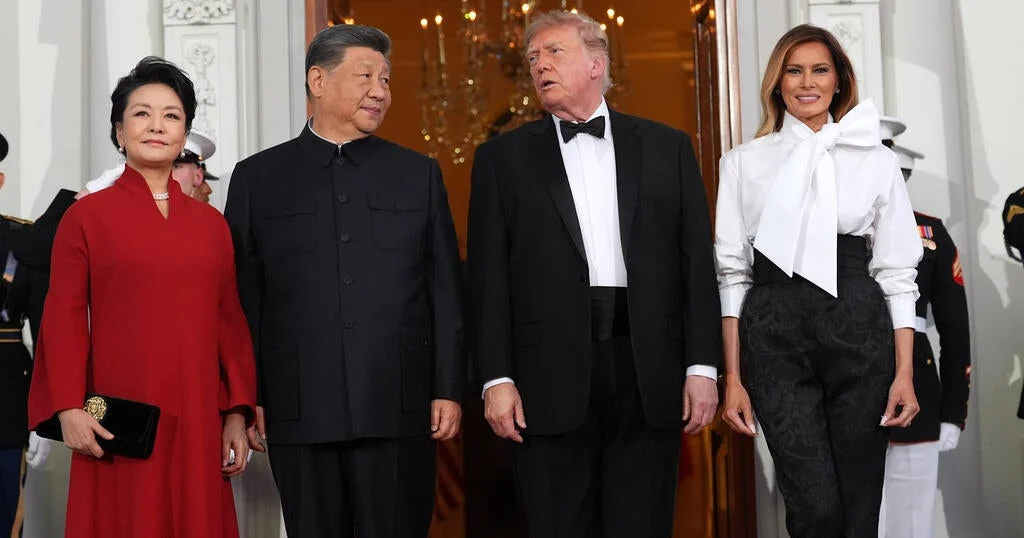
WASHINGTON — President Donald Trump rolled out an elaborate red-carpet welcome for Chinese President Xi Jinping on Thursday, marking the first time in over a decade that a leader of the People’s Republic of China has made a second formal state visit to the United States. Against the backdrop of escalating global technology competition, delicate trade maneuvers, and deep-seated geopolitical rivalries, the multi-day diplomatic engagement combined heavy pageantry with intensive behind-the-scenes negotiations. While the leaders traded warm personal remarks and highlighted a mutual desire for stability, the summit underscored the profound complexities and enduring tensions defining the world’s most consequential bilateral relationship.
The diplomatic visit brought together high-level government officials, top-tier international executives, and major policy debates spanning artificial intelligence, tariff enforcement, geopolitical flashpoints like Taiwan, and broader security dynamics involving Russia and Iran. While concrete policy breakthroughs remained limited, both administrations emphasized the necessity of maintaining open communication channels to forestall direct confrontation.
A Detailed Chronology of the State Visit
The high-profile diplomatic itinerary commenced on Wednesday evening when President Xi and his wife, Peng Liyuan, arrived at Joint Base Andrews in Maryland. Their Air China aircraft taxied past a striking display of American military power, rolling past six lined-up F-16s and six advanced F-22 raptors. President Trump and First Lady Melania Trump greeted the Chinese delegation directly on the tarmac, utilizing the presidential limousine, known as The Beast, to travel alongside the visiting leaders for a brief, high-security welcoming ceremony featuring a 21-gun salute and an Air Force band performance.
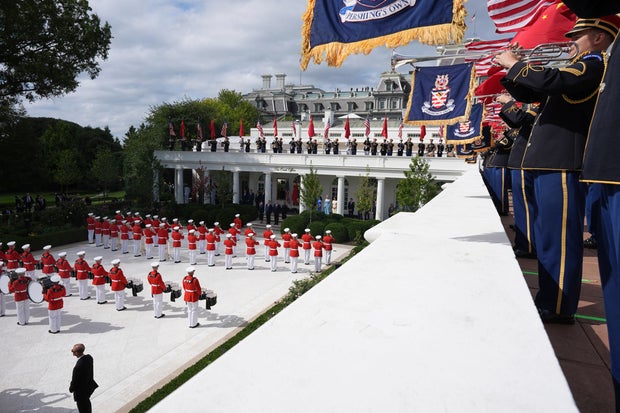
Thursday morning marked the official state arrival at the White House South Lawn. The proceedings opened just after 10 a.m. with a full military honors review, featuring the United States Army Herald Trumpets, the Army Old Fife and Drum Corps, and a powerful flyover by a B-2 Spirit bomber and four F-22 Raptors. Following the outdoor reception, the delegations moved inside for national anthems and formal exchanges.
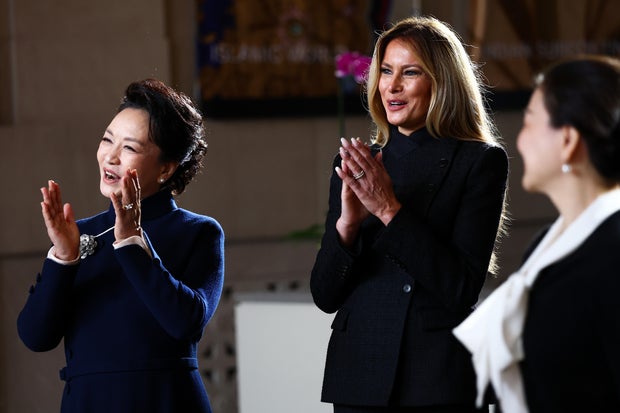
While President Trump and President Xi convened in the Oval Office for bilateral discussions starting at 11:30 a.m., First Lady Melania Trump and Madame Peng Liyuan undertook a cultural excursion to the Smithsonian National Museum of Asian Art. There, they were greeted by local students from the Hope Chinese School performing a choral program waving both American and Chinese flags.
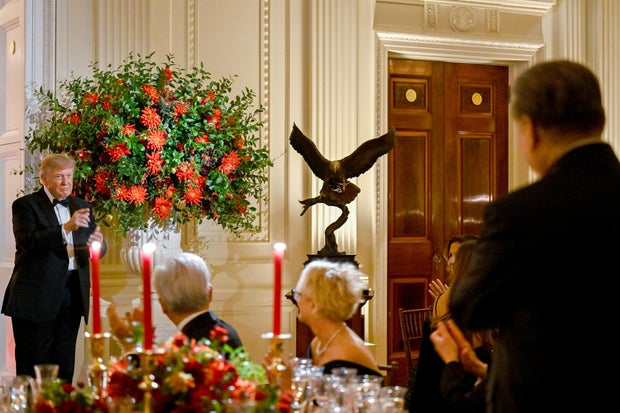
Following the morning meetings, President Trump showcased the White House grounds to his counterpart, introducing Xi to the new South Lawn helipad and inviting him inside Marine One, while playfully highlighting the Chinese leader’s appreciation for stonework and granite. After a mid-day recess, the leaders and their invited guests reconvened at the White House for an elaborate Thursday evening state dinner hosted in the East Room. The visit is scheduled to conclude on Friday morning with a traditional tea ceremony in the Red Room, followed by a joint cultural tour of the National Archives before the Chinese delegation departs for Beijing.
Trade Truces and Economic Realities
Economic discussions and trade frameworks served as a central pillar of the Washington summit. Just days prior to the meetings, top economic officials from both nations agreed to a two-month extension of an ongoing tariff truce, temporarily forestalling the resumption of a broader trade conflict. The original agreement, brokered in Busan, South Korea, had significantly lowered mutual tariffs, paused restrictions on critical Chinese rare earth mineral exports, and included provisions for expanded Chinese purchases of American agricultural goods such as soybeans—a commitment that American officials note has seen inconsistent fulfillment.
Treasury Secretary Scott Bessent, who held extensive preparatory talks with Chinese Vice President He Lifeng, indicated that Beijing had expressed openness to pursuing a more comprehensive bilateral trade pact that would go beyond the current Busan arrangement. Additionally, U.S. Trade Representative Jamieson Greer announced plans to establish a cooperative U.S.-China "Board of Trade." This body is designed to insulate a select, low-risk subset of consumer goods and agricultural products from ongoing regulatory and tariff disputes.
Despite these stabilizing mechanisms, Chinese economic analysts and trade experts cautioned that underlying structural pressures persist. Scholars noted that previous rounds of economic confrontation demonstrated the limits of unilateral coercion against the world’s second-largest economy, emphasizing that sustainable progress will require institutionalized cooperation rather than temporary halts to punitive measures.
The Artificial Intelligence Race and Technological Rivalries
Technology governance, particularly the accelerating development of artificial intelligence, emerged as a premier agenda item during the Oval Office discussions. The bilateral engagement takes place amid a fierce global race for technological supremacy, with the United States and China vying for dominance in advanced computing architectures and generative systems.
President Trump has consistently maintained that the United States must accelerate its domestic AI capabilities to outpace foreign competitors, famously declaring at the United Nations General Assembly that "whoever wins AI, wins." Concurrently, his administration has maintained strict export controls preventing Chinese entities from acquiring advanced semiconductor chips produced by firms like Nvidia, though limited sales to pre-approved corporate clients have been permitted.
During their public remarks, both leaders addressed the technological frontier. President Xi called for artificial intelligence development to remain strictly under human control and urged that Chinese technology enterprises be afforded fair and equitable treatment within the U.S. market. To mitigate potential escalation, Treasury officials previously proposed establishing a bilateral notification framework designed to alert both governments to national security incidents involving advanced AI systems.
Geopolitical Flashpoints: Taiwan, Iran, and Global Security
Beyond economics and technology, the summit was shadowed by critical foreign policy divergences. Taiwan remained a primary point of friction. Beijing continues to view the self-governing island of over 23 million people as an inalienable part of its territory and has strongly objected to ongoing American arms sales and diplomatic engagements with Taipei. Foreign policy specialists note that Taiwan represents a major potential flashpoint, not only due to its democratic governance and strategic position in the Indo-Pacific, but also because it serves as the global epicenter for semiconductor manufacturing.
Further complicating the diplomatic landscape are overlapping concerns regarding regional conflicts. Washington has scrutinized Beijing’s diplomatic and economic ties with Russia amid the ongoing war in Ukraine, leading Congress to pursue stringent legislative measures targeting major importers of Russian energy. Additionally, U.S. officials have raised questions regarding reports of technological and intelligence assistance provided by entities in China to Iran, though President Trump adopted a measured public tone regarding Beijing’s role in Middle Eastern security dynamics prior to the meetings.
The State Dinner Guest List and Domestic Political Reactions
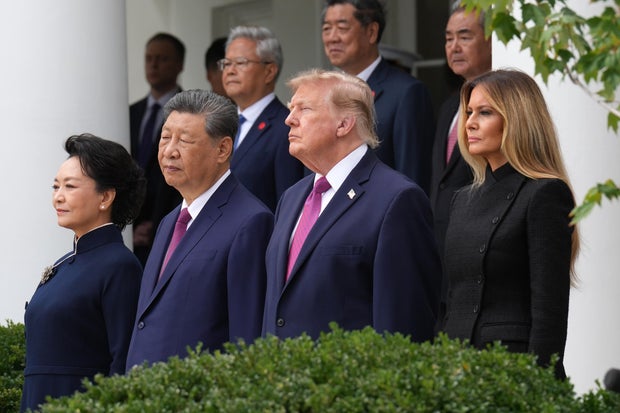
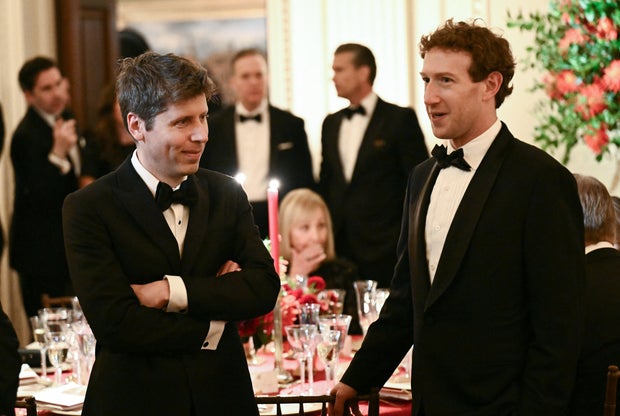
The Thursday evening state dinner reflected the intersection of traditional diplomacy and modern corporate power. The White House released an expansive guest list featuring high-ranking administration officials—including Vice President JD Vance, Secretary of State Marco Rubio, Chief of Staff Susie Wiles, Treasury Secretary Scott Bessent, and Defense Secretary Pete Hegseth—alongside the world’s most prominent technology and financial executives.
Among the high-profile corporate leaders in attendance were Tesla and SpaceX CEO Elon Musk, Nvidia CEO Jensen Huang, Meta CEO Mark Zuckerberg, Apple CEO Tim Cook, Google CEO Sundar Pichai, OpenAI CEO Sam Altman, Amazon founder Jeff Bezos, and JPMorgan Chase CEO Jamie Dimon. The heavy representation of Silicon Valley titans underscored the deep commercial interdependencies connecting the American technology sector with Chinese manufacturing and consumer markets.
The red-carpet rollout also drew notable domestic political friction. Certain congressional leaders voiced sharp skepticism regarding the pageantry afforded to the Chinese leader. Republican Senator Roger Wicker, chairman of the Senate Armed Services Committee, publicly criticized the decision to host a lavish state visit given ongoing security and human rights concerns. Similarly, retiring Senator Thom Tillis characterized the high-profile welcome as misaligned with America’s core democratic alliances, contrasting the reception with the diplomatic treatment historically extended to democratic allies.
Outside the White House gates, demonstrations materialized as civil rights advocates and pro-democracy groups utilized megaphones to voice opposition to Beijing’s policies concerning Hong Kong, Taiwan, and human rights within mainland China.
Fact-Based Analysis of Implications
The 2026 Washington summit between President Trump and President Xi illustrates the paradoxical nature of contemporary great-power relations. While both capitals recognize the absolute necessity of preventing strategic miscalculation and economic decoupling, deep structural mistrust continues to restrict the scope of formal agreements.
The extension of the tariff truce and the opening of formal dialogues on artificial intelligence safety mechanisms suggest a shared pragmatic interest in managing volatility. However, irreconcilable differences concerning territorial sovereignty in the Taiwan Strait, alignment over regional conflicts in Eastern Europe and the Middle East, and the fierce competition for technological supremacy ensure that the relationship will remain characterized by managed rivalry rather than genuine detente. Ultimately, the success of the summit will not be measured by the immediate pageantry or the warmth of the state dinner, but by whether the established communication channels can successfully absorb future geopolitical shocks without triggering broader economic or military crises.
