
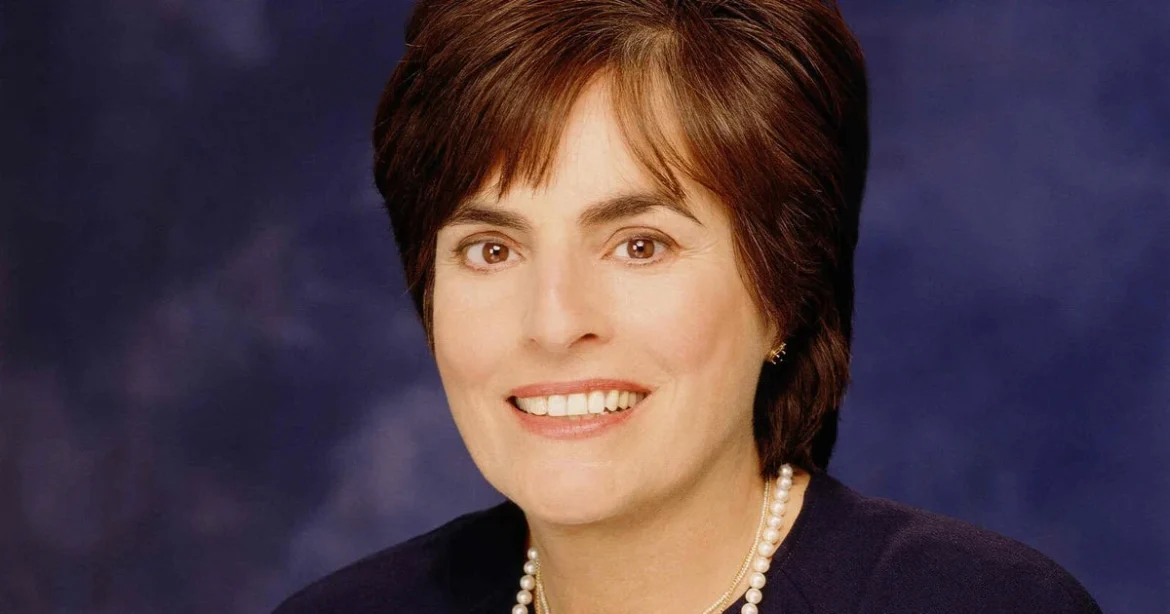
The news of her passing, confirmed by CBS News on Wednesday, marks the end of a singular era in American broadcast journalism. Mason, who died peacefully surrounded by her family, was not merely a fixture at the network; she was an architect of the modern newsroom, navigating the industry through its most significant transitions during the latter half of the 20th century. Her career spanned nearly five decades, beginning in an era when women were rarely seen in production booths and concluding in a digital age she helped define.
A Career Built on Resilience and Innovation
Linda Mason’s journey into the heart of broadcast history began in 1966. Joining CBS News as a radio desk assistant, she entered a profession then dominated almost exclusively by men. Her ascent was swift, characterized by an acute editorial instinct and an uncompromising dedication to journalistic integrity. By breaking the glass ceiling to become the first female producer of the CBS Evening News, Mason did more than secure a title; she changed the culture of the newsroom, paving the way for generations of women who would follow in her footsteps.
Her tenure with the CBS Evening News was defined by her close collaboration with the giants of the medium, Walter Cronkite and Dan Rather. During her time as a producer for the program, she helped shape the nightly national narrative, managing complex logistics and high-stakes editorial decisions during some of the most volatile years in American history.
Chronology of a Storied Path
The trajectory of Mason’s career is a mirror of the evolution of American journalism. Below is a timeline of the pivotal milestones that defined her professional life:
- 1964: Graduates with honors from Brown University with a degree in International Relations.
- 1965: Earns a Master of Science in filmmaking from Syracuse University.
- 1966: Joins CBS News as a radio desk assistant, beginning her 47-year tenure.
- 1970s–1980s: Ascends to senior producer roles for the CBS Evening News and assumes leadership of CBS Sunday Morning.
- 1989: Orchestrates critical coverage of the political unrest in China leading up to the Tiananmen Square uprising.
- 1990s: Serves as executive producer for the documentary series "CBS Reports" and the news magazine "Eye to Eye."
- 1993–1998: Leads production efforts for historic anniversary specials for "60 Minutes," cementing the show’s legacy.
- 2013: Retires from CBS News, having served as Vice President of Public Affairs and Head of Standards.
Defining Global Coverage
Mason’s impact was perhaps most visible in her work for "CBS Sunday Morning." Under her leadership, the program expanded its international reach, moving beyond domestic interest stories to provide in-depth analysis of global shifts. Her editorial oversight during President Ronald Reagan’s historic 1988 trip to the Soviet Union provided viewers with an unprecedented look at the thawing of Cold War tensions. Similarly, her coverage of the funeral of Japanese Emperor Hirohito and the escalating tensions in Beijing in 1989 showcased her ability to manage complex, sensitive, and rapidly evolving international news events.
Recognition and Industry Accolades
The sheer volume of honors bestowed upon Mason serves as a testament to her technical skill and her dedication to the craft of documentary filmmaking and broadcast production. Over nearly half a century, she was the recipient of 13 Emmy Awards, reflecting her excellence in news production. Furthermore, her work was recognized with three Peabody Awards—the gold standard in broadcast journalism—as well as an Edward R. Murrow Award and an Alfred I. duPont-Columbia University Award.
Perhaps most reflective of her character was the Grand Prize of the Robert F. Kennedy Journalism Awards, which recognizes reporting that honors the life and work of Robert F. Kennedy, particularly regarding human rights and social justice. These accolades were not merely personal achievements; they signaled to the industry that documentary-style reporting and rigorous news standards were compatible with the high-pressure environment of network television.
A Legacy of Standards and Ethics
In the latter portion of her career, Mason served as the head of CBS News’ standards department. In this role, she became the final arbiter of accuracy and ethical conduct for the network. This was a critical position, particularly as the 24-hour news cycle began to prioritize speed over verification. Mason’s colleagues have often noted that her transition from a frontline producer to a standards executive was seamless because she approached ethics with the same rigor she applied to a breaking news story.
Her influence extended into academia and professional development. Her 1991 recognition as the outstanding Brown University alumna of the year highlighted her ongoing connection to the academic world, where she remained a proponent of the importance of intellectual rigor in journalism.
The Broader Impact on Modern Journalism
The implications of Linda Mason’s career are profound. At the time she entered the industry, the "standards" of journalism were largely implicit. Through her work, she helped formalize these standards, creating institutional frameworks that ensured accuracy, fairness, and balance. As the media landscape continues to fracture, the foundational principles that Mason championed—the commitment to evidence-based reporting and the insistence on ethical production—remain the bedrock of credible news organizations.
Industry analysts observe that Mason’s specific skill set—the ability to balance the fast-paced production needs of a network news program with the slow, methodical work of long-form documentaries—is a rare commodity. Her passing represents the loss of a "living archive" of broadcast history, an individual who witnessed the transition from film to digital, from teleprinter to satellite, and from the golden age of the anchor to the fragmented landscape of the modern era.
Official Statements and Industry Reflection
While the official statement from CBS News was brief, the internal reaction within the journalistic community has been one of deep respect. Many former colleagues have characterized Mason as a "producer’s producer"—someone who understood every facet of the broadcast process, from the camera angles and lighting to the precise phrasing of a script.
"Linda was the person you went to when the story was at its most difficult," one former CBS producer remarked. "She had a way of cutting through the noise to find the human heart of a story, while never losing sight of the technical precision required to get it on air."
Final Reflections
Linda Mason’s life and work constitute a masterclass in the evolution of television news. From her roots in Middletown, New York, to the production booths of New York City, she remained a steadfast advocate for the power of the medium to inform and educate. As the industry moves forward, the legacy of her 47-year career serves as a reminder that the strength of journalism lies not just in the technology used to deliver it, but in the integrity and tenacity of those who hold the camera and write the script.
Her death leaves a significant void, not only at CBS but within the broader landscape of American media. As the industry continues to grapple with new challenges, the standard she set—one of unwavering professionalism and deep, intellectual curiosity—remains a guiding light for journalists navigating an increasingly complex world. She is survived by her family, and her influence will undoubtedly persist in the standard of excellence maintained by those she mentored throughout her four-and-a-half decades in the business.
