
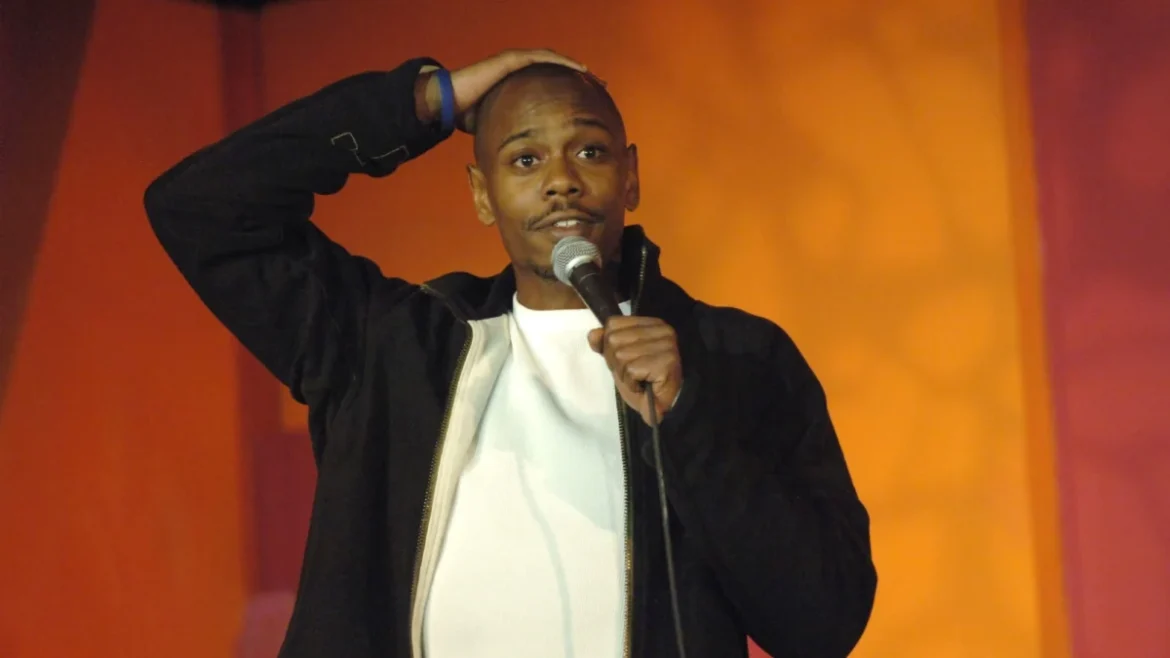
Dave Chappelle, a figure synonymous with both comedic genius and the complexities of creative autonomy, has recently signaled a potential shift in his long-standing refusal to revisit the project that defined his early career. For nearly two decades, the prospect of a revival for Chappelle’s Show seemed not only unlikely but fundamentally at odds with the comedian’s public stance on the series. However, in a recent interview with the Associated Press, Chappelle revealed that his perspective is evolving. When asked about a possible return to the sketch comedy format that made him a household name, Chappelle admitted that while he would have given a definitive "no" just a year ago, he has spent recent weeks seriously considering the possibility. This revelation marks a significant turning point in the narrative of a show that remains a cornerstone of American pop culture despite its abrupt and controversial conclusion in 2005.
To understand the weight of Chappelle’s recent comments, it is necessary to examine the historical context of his departure from Comedy Central. In 2005, Chappelle’s Show was at the absolute zenith of its influence. Following two seasons of unprecedented success, Chappelle was offered a contract extension by Viacom (now Paramount Global) reportedly worth $50 million. At the time, the series was not merely a television program; it was a cultural phenomenon. Its sketches, featuring characters like Tyrone Biggums and parodies of celebrities like Rick James and Prince, had permeated the national lexicon. Despite the immense financial incentive and the show’s massive popularity, Chappelle famously walked away during the production of the third season, citing a need for personal reflection and a growing discomfort with the direction of the material.
The immediate aftermath of his departure was characterized by intense media speculation and public confusion. Rumors circulated regarding Chappelle’s mental health and potential substance abuse, narratives that were fueled by his sudden decision to travel to South Africa without a formal announcement. In reality, Chappelle sought distance from a high-pressure environment that he felt was becoming toxic to his creative integrity. During a landmark 2006 interview with Oprah Winfrey, Chappelle clarified his motivations, explaining that he felt "socially irresponsible" while performing certain sketches. He specifically pointed to a "blackface" segment involving a "pixie" character designed to represent internal racial stereotypes. Chappelle recounted a moment on set where a white spectator laughed in a way that made him feel the satire was being misinterpreted or, worse, reinforcing the very prejudices he intended to lampoon.
The financial and operational fallout for Comedy Central was substantial. In an effort to salvage the investment and appease a hungry audience, the network released what it termed the "Lost Episodes" in 2006. These three episodes consisted of unfinished sketches Chappelle had filmed prior to his exit. In a move that underscored the rift between the star and the network, the episodes were introduced by recurring cast members Donnell Rawlings and Charlie Murphy rather than Chappelle himself. While these episodes performed well in ratings, they served as a somber postscript to what many believed was the end of a comedic era.
A Chronology of Conflict and Reconciliation
The timeline of Chappelle’s Show and its creator’s subsequent career is marked by periods of silence followed by explosive returns.
- 2003–2004: Chappelle’s Show premieres on Comedy Central, quickly becoming the network’s highest-rated program. Season 1 DVD sales break industry records, selling over 1.2 million copies in its first week and eventually becoming the best-selling TV-on-DVD set of all time.
- May 2005: Production on Season 3 is halted indefinitely as Chappelle departs for South Africa.
- February 2006: Chappelle appears on The Oprah Winfrey Show to explain his departure, citing "social irresponsibility" and the pressures of fame.
- July 2006: Comedy Central airs the "Lost Episodes," totaling three broadcasts.
- 2013–2014: Chappelle begins a gradual return to the public eye with a series of stand-up performances, including a high-profile residency at Radio City Music Hall.
- 2016–2017: Chappelle signs a massive deal with Netflix, reportedly worth $20 million per special, signaling his return to the top tier of the industry.
- November 2020: In a video titled "Unforgiven," Chappelle reveals that he never received proper royalties for Chappelle’s Show due to the nature of the contract he signed as a young man. He asks fans to boycott the show on streaming platforms like Netflix and HBO Max.
- February 2021: Chappelle announces that following his public plea, leadership at ViacomCBS agreed to return his license and pay him the millions in royalties he felt he was owed. He declares, "I got my name back."
- Present Day: Chappelle acknowledges he is considering a revival of the sketch format, citing a shift in the comedy landscape.
The Economics of Comedy and Creative Control
The financial data surrounding Chappelle’s Show highlights why the series remains a valuable asset for both Chappelle and media conglomerates. At its peak, the show averaged over 3 million viewers per episode—a staggering number for basic cable in the early 2000s. The commercial success extended far beyond the initial broadcast. The DVD sales for the first season alone generated an estimated $75 million in revenue within months of release. For years, the lack of ownership over this intellectual property remained a point of contention for Chappelle.
His 2020 boycott was a masterclass in modern leverage. By appealing directly to his fanbase through social media and his Netflix specials, Chappelle bypassed traditional legal channels to exert pressure on ViacomCBS. The eventual settlement, which included a payout and the return of his name and likeness rights, fundamentally changed his relationship with the series. For the first time since 2005, Chappelle is in a position where a revival would be a partnership on his own terms rather than a fulfillment of a legacy contract.
The shift in the "comedy landscape" that Chappelle mentioned to the Associated Press likely refers to the transition from linear television to digital streaming. On a platform like Netflix, where Chappelle currently holds a powerful residency, he would not be subject to the same Standards and Practices constraints that governed basic cable in 2003. Furthermore, the modern digital environment allows for a more direct connection with audiences, potentially mitigating the "misinterpretation" concerns he voiced in 2006.
Industry Implications and the Evolving Satire
The potential return of Chappelle’s Show would occur in a vastly different cultural climate than the one it exited nearly twenty years ago. The original series was lauded for its fearless exploration of race, power dynamics, and pop culture. However, the rise of social media and the evolution of "cancel culture" have created a more scrutinized environment for satirists. Chappelle himself has been at the center of these debates, particularly following his Netflix special The Closer, which drew criticism from LGBTQ+ advocacy groups and some employees within Netflix.
Critics and industry analysts suggest that a revival would likely move away from the traditional 22-minute sketch format in favor of something more experimental. Chappelle’s recent work has leaned toward long-form storytelling and social commentary rather than the rapid-fire character sketches of his youth. A new iteration of the show might serve as a hybrid, blending his current philosophical stand-up style with high-production-value satirical segments.
The reaction from the comedy community has been one of cautious optimism. Fellow comedians have often cited Chappelle’s 2005 departure as a "cautionary tale" of the industry’s ability to grind down creators. A successful revival would represent a rare instance of a creator reclaiming their most famous work after a multi-decade hiatus. While no official deal has been announced, the fact that Chappelle is publicly "considering it" suggests that negotiations or creative brainstorming may already be underway.
Social Responsibility and the Modern Audience
One of the most profound aspects of Chappelle’s potential return is the resolution of his "social responsibility" dilemma. In 2006, he proposed a scenario where half of the show’s revenue would go to charity to offset any potential negative social impact of his humor. "That way, even if I did something socially irresponsible, the proceeds could be given to a socially responsible cause," he told Winfrey. While it is unclear if this specific model would be used today, Chappelle’s current status as a wealthy and independent producer gives him the latitude to implement such philanthropic structures if he chooses.
The broader implication for the entertainment industry is the confirmation of "creator power." Chappelle’s journey from walking away from $50 million to successfully demanding his rights back fifteen years later serves as a blueprint for other artists seeking to retain control of their intellectual property. If Chappelle’s Show returns, it will not just be a win for fans of the original series; it will be a landmark moment in the history of labor and ownership in the digital age.
As the comedy world awaits further developments, the legacy of the original three seasons remains untarnished. Whether through a digital platform or a new hybrid format, the return of Dave Chappelle to the sketch comedy arena would undoubtedly be one of the most significant media events of the decade. For now, the comedian remains reflective, acknowledging that while the past was fraught with conflict, the future of his most famous creation is, for the first time in twenty years, entirely in his hands.
