
The Genesis of a Multimedia Educational Framework
The development of Wild Guardians stems from a growing recognition among educators that environmental science often feels abstract or disconnected from a student’s daily reality. Mongabay Kids, the youth-oriented arm of the renowned environmental news platform Mongabay, sought to dismantle this barrier. By focusing on the concept of "stewardship," the project moves beyond passive learning to encourage active participation in conservation.
The series is built upon a foundation of three distinct modules, each designed to be consumed in a five-minute video segment. These segments are accompanied by illustrated comics and interdisciplinary lesson plans that align with educational standards for math, English language arts, and social studies. The objective is to provide a versatile toolkit that teachers can adapt to their existing classroom structures without requiring additional specialized training.
Chronology of the Project
While the public launch of Wild Guardians occurred recently, the project is the culmination of extensive field research and curriculum development.
- Phase 1: Conceptualization: Mongabay Kids identified the need for localized, narrative-driven content that highlights successful conservation efforts led by youth globally.
- Phase 2: Field Partnerships: Collaborations were established with organizations such as the Wild Nature Institute and local community groups in Tennessee to document real-world conservation stories.
- Phase 3: Pedagogical Design: Education experts and conservationists worked to ensure the content met specific grade-level benchmarks, focusing on the cognitive development of nine-to-eleven-year-olds.
- Phase 4: Multi-platform Production: The production of video, digital comics, and teacher toolkits was finalized, ensuring cross-compatibility for modern classroom technology.
- Phase 5: Global Deployment: The platform was officially launched to the public as a free-access resource, aiming for immediate integration into global primary school systems.
Addressing the Biodiversity Crisis through Education
The thematic pillars of Wild Guardians—habitat restoration for giraffes in Tanzania, the ecological significance of wild bees, and the health of freshwater ecosystems in the United States—serve as microcosms for broader environmental issues.
Tanzania: The Giraffe Conservation Model
In Tanzania, the project highlights the work of primary school students engaged in habitat restoration. Giraffes are currently listed as "Vulnerable" on the IUCN Red List, with populations suffering from habitat fragmentation and poaching. By involving children in tree-planting initiatives, the program teaches the vital link between local flora and the survival of megafauna. It provides a tangible example of how community-led forestry can buffer the effects of climate change and human encroachment.
Tennessee: Watershed Protection
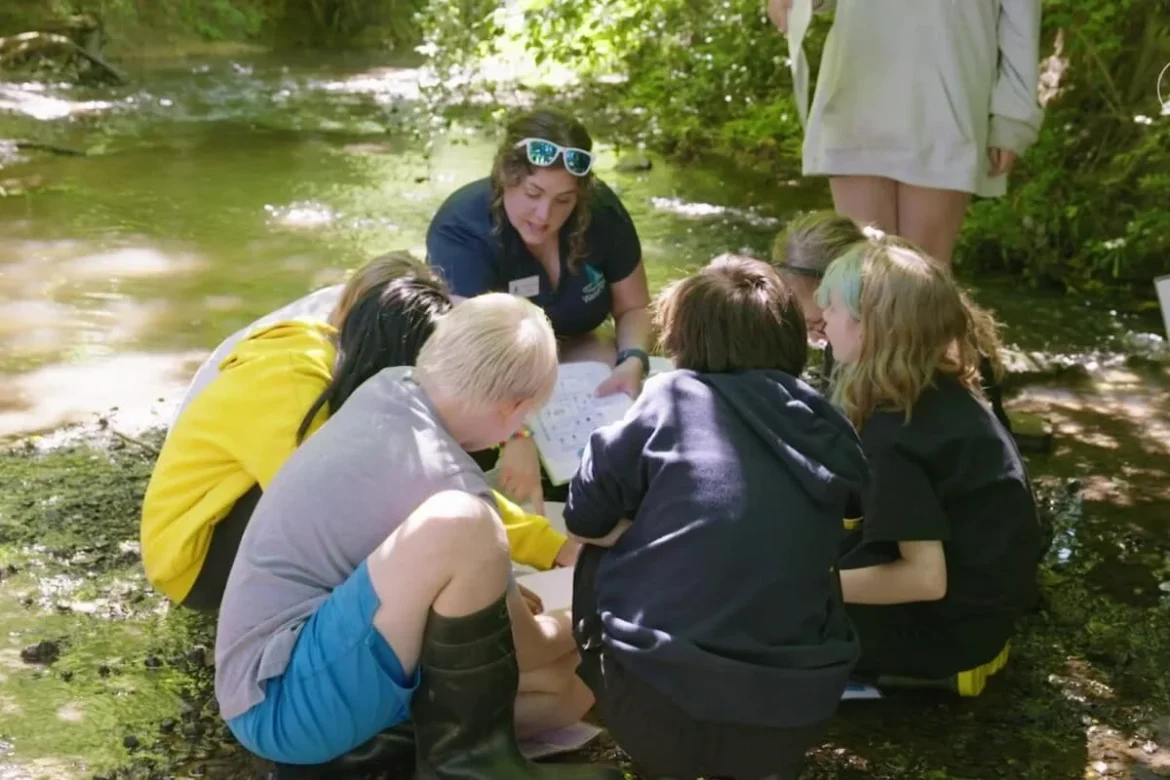
The North American focus takes students to Chattanooga, Tennessee, where the curriculum explores the local watershed. The health of these waterways is essential for biodiversity, particularly for species like the hellbender—a giant salamander that serves as an "indicator species." When the hellbender population thrives, it suggests that the water quality is sufficient for other organisms. By learning to monitor these streams, students gain a direct understanding of how urban development impacts freshwater ecosystems, a topic of growing importance as global water scarcity reaches record highs.
The Global Bee Population Crisis
The third module focuses on the often-overlooked world of wild bees. With over 20,000 species worldwide, these pollinators are fundamental to global food security. Recent studies by the Intergovernmental Science-Policy Platform on Biodiversity and Ecosystem Services (IPBES) have indicated that nearly 40% of invertebrate pollinator species—particularly bees and butterflies—are facing extinction. The Wild Guardians curriculum aims to debunk the myth that all bees produce honey, shifting the focus to their role as essential ecosystem service providers and the urgent need to protect their fragmented habitats.

Institutional Support and Professional Perspectives
The project is primarily funded by the Earth Focus Initiative of The Chuck & Ernestina Kreutzkamp Foundation. Mallory Lindsay, a representative of the initiative, noted that the project is designed to bridge the gap between abstract academic concepts and the visceral reality of ecological decline.
"One of the things I find most meaningful about Wild Guardians is its potential to help children move from simply learning about wildlife and ecosystems to understanding that they can play an active role in protecting them," Lindsay stated. "Children need opportunities to connect what they learn in the classroom with the places, species, and environmental challenges around them."
From the perspective of classroom integration, Emily Townsend, the education lead for the project, emphasizes the versatility of the modules. "The great thing about the Wild Guardians resources is that students are learning about conservation in their local community alongside math, English language arts, and social studies," Townsend explained. By mapping the lessons to standard academic requirements, the project ensures that educators do not have to choose between meeting state-mandated testing goals and teaching environmental stewardship.
The Broader Implications of Youth-Led Stewardship
The introduction of Wild Guardians reflects a broader shift in the environmental movement: the democratization of conservation. Traditionally, environmental policy and action have been the purview of government agencies and large NGOs. However, evidence suggests that localized, community-led initiatives—particularly those involving youth—have a higher success rate in long-term ecosystem preservation.
By fostering a sense of efficacy in students, the program addresses the psychological phenomenon of "eco-anxiety." Many young people report feelings of helplessness regarding climate change and biodiversity loss. Providing a "practical toolkit for kids to take action for nature," as described by Veila Makundi and Monica Bond of the Wild Nature Institute, gives students a sense of agency. When children participate in concrete tasks—such as planting trees or monitoring water quality—they shift from passive observers of an environmental crisis to active participants in environmental recovery.
Analytical Outlook: Future Challenges and Success Metrics
For a project of this nature to be effective, its reach must expand beyond affluent school districts. Mongabay Kids’ decision to provide these resources for free is a strategic move to ensure equitable access to environmental education. The long-term success of Wild Guardians will likely be measured not just by the number of downloads, but by the longitudinal impact on students’ engagement with their local environments.
Educational experts suggest that for such programs to be truly transformative, they must be integrated into the long-term culture of schools rather than treated as a one-off elective activity. If Wild Guardians can maintain its interdisciplinary relevance, it may well set a new standard for how environmental science is taught. By connecting the plight of the Tanzanian giraffe to the local stream in Tennessee, the program successfully demonstrates the interconnectedness of global ecosystems.
As the world continues to face the dual challenges of climate change and mass extinction, the generation currently in primary school will be the one tasked with implementing systemic change. Programs like Wild Guardians serve as a crucial, early-stage intervention, equipping these future leaders with both the scientific knowledge and the emotional resilience necessary to act as guardians of the natural world. By demystifying the conservation process, Mongabay Kids is providing more than just a lesson plan; it is fostering a generation that views stewardship not as a burden, but as a fundamental aspect of citizenship.
