
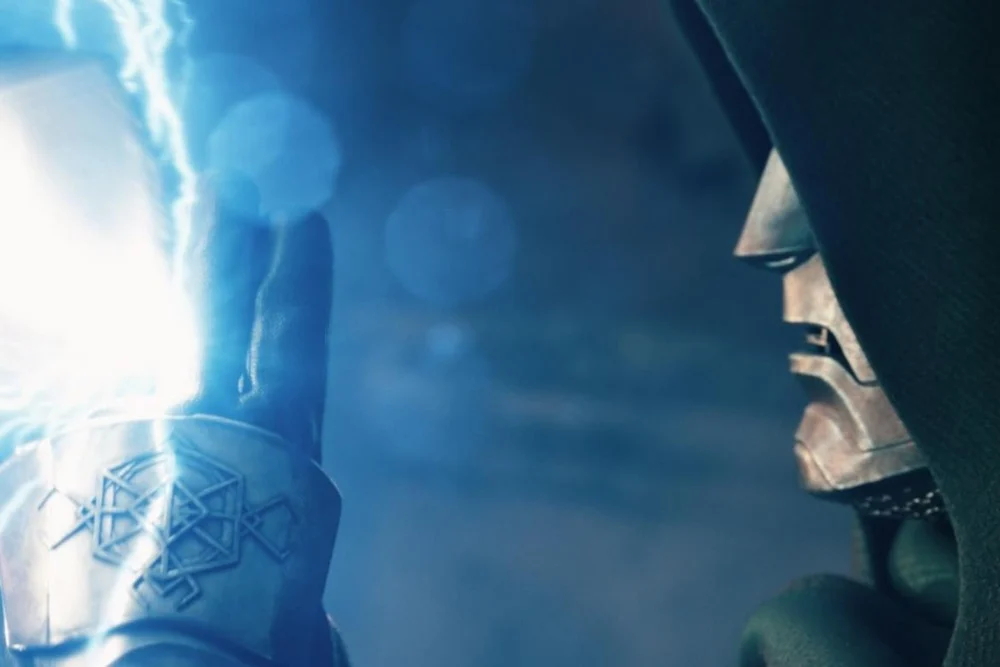
Earth’s Mightiest Heroes are bracing for their most formidable challenge yet in the upcoming cinematic event, Avengers: Doomsday, but the film is facing a different kind of battle behind the scenes. In an exclusive development that highlights the shifting priorities of modern blockbuster distribution, Marvel Studios has confirmed that the highly anticipated installment will not be screened for key awards voting bodies prior to its world premiere. This deliberate tactical decision is intended to safeguard the film’s narrative integrity, ensuring that its closely guarded plot twists—specifically the return of Robert Downey Jr. as the villainous Doctor Doom—remain shielded from the industry’s "spoiler ecosystem" until the general public has a chance to experience them.
The film is scheduled to hold its world premiere in Los Angeles on December 14, just four days before its widespread theatrical rollout on December 18. By withholding advance screenings from critics’ groups, guilds, and the press, Marvel is betting that the necessity of a spoiler-free theatrical experience outweighs the traditional benefits of an aggressive awards campaign during the critical pre-release window.
A Calculated Strategy for the Event Cinema Era
The "Doomsday" strategy is a refined iteration of a playbook successfully utilized by high-stakes event films over the past decade. Studios have increasingly realized that the value of an unspoiled narrative, particularly for films with massive cultural footprints, often exceeds the immediate visibility provided by early guild screenings. Precedent for this approach can be found in the rollouts of Star Wars: The Force Awakens and Spider-Man: No Way Home. Both films faced similarly compressed timelines, yet they managed to navigate the awards season successfully by relying on their sheer scale and cultural impact to capture the attention of voters once the film was finally accessible.
However, the risk inherent in this approach is substantial. By skipping the early precursor season, Avengers: Doomsday is effectively sitting out the first wave of industry recognition. The film will bypass critical benchmarks such as the New York Film Critics Circle, the National Board of Review, and the Los Angeles Film Critics Association. Furthermore, it will be absent from the ballot for the Critics Choice Association, as the film could not be screened in time for the committee’s deliberations.
The Academy Challenge and the Visual Effects Race
The most significant hurdle for Marvel Studios remains the Academy of Motion Picture Arts and Sciences. The preliminary voting window for the Oscar shortlists is remarkably narrow, opening on December 7 and closing on December 11—three days before the film’s premiere. This timeline creates an immediate logistical challenge for the studio, particularly regarding categories that rely on early consideration, such as cinematography, original score, and sound.
Despite these hurdles, Marvel has secured a path for potential recognition in the Visual Effects category. The Academy’s rules for this specific branch are designed with built-in flexibility to accommodate high-security productions. The executive committee of the Visual Effects Branch is authorized to request advance viewings or, in cases where a full film cannot be screened, to review curated excerpts. This allows the studio to maintain a presence in the VFX conversation—a category where Marvel has historically landed nominations for films like Avengers: Infinity War and Avengers: Endgame—without exposing the full narrative to hundreds of voters.
Industry analysts suggest that this specific path is crucial. Marvel Studios has yet to secure an Oscar win in the Visual Effects category, and Doomsday is currently viewed as a strong contender. Inclusion on the 10-film shortlist, which is slated for announcement on December 15, would serve as a vital signal that the film remains a technical standout, even if it has missed the broader discourse of the early awards season.
The Collateral Damage: Globes, BAFTAs, and Industry Awards
The decision to protect the film’s plot has caused a ripple effect across the global awards calendar. The Golden Globes, for instance, are essentially off the table. With voting closing on December 4, there is no physical way for the voting body to view the film. This is a notable exclusion, as the Golden Globes introduced the "Cinematic and Box Office Achievement" category specifically to honor high-grossing, high-impact films—a category for which Doomsday is a projected frontrunner.

Similarly, the BAFTA (British Academy of Film and Television Arts) awards have effectively removed the film from consideration for the current cycle. Because the film will not be available on the secure BAFTA viewing portal—a requirement for its nearly 14,000 global members—it cannot be included in the longlist for the 2027 awards. This withdrawal highlights the tension between global distribution strategies and the requirements of the European awards circuit, where digital access for members is standard practice.
A Spotlight on the Actor Awards
While the film will miss out on the majority of early honors, the door remains partially open for the Actor Awards, formerly known as the SAG Awards. Because the nominating committee for the SAG Awards does not begin its voting process until December 14, the film’s premiere date offers a slim window for members to see the movie in theaters. This is particularly important for the studio’s campaign, as it allows for potential recognition of the film’s massive ensemble cast and, most notably, Robert Downey Jr.’s return to the Marvel Cinematic Universe.
Downey’s role as Doctor Doom—a character portrayed as a variant of Tony Stark—is widely considered the film’s most significant narrative swing. Following his Academy Award win for Oppenheimer, the industry is closely monitoring how he navigates this return to the franchise. If the film’s reception matches the studio’s internal expectations, it is possible that late-stage advocacy could bring the film into the conversation for the Screen Actors Guild’s stunt ensemble awards, a category that often rewards the technical and physical coordination required in a project of this scale.
Contextualizing the Marvel Universe Expansion
Avengers: Doomsday is not merely a sequel; it is the culmination of a sprawling, multi-universe narrative that bridges the gap between the traditional MCU and the legacy of 20th Century Fox’s X-Men franchise. The recent re-release of Avengers: Endgame, which grossed $143 million globally and included new scenes directly leading into Doomsday, has successfully primed the audience for the upcoming release.
The cast list alone reflects the sheer ambition of the project. Beyond the return of Chris Evans, Chris Hemsworth, and the central cast of The Fantastic Four: First Steps, the film serves as a landmark crossover event. The inclusion of legacy actors such as Patrick Stewart as Professor Xavier, Ian McKellen as Magneto, and Channing Tatum as Gambit creates a bridge between disparate cinematic timelines. For a studio coming off the momentum of Spider-Man: Brand New Day, the financial stakes are massive, with the film projected to be the defining box office event of the 2026-2027 season.
Fact-Based Implications for the Industry
The "Doomsday" approach raises a broader question regarding the future of awards season: Is the traditional, months-long campaigning process becoming obsolete for the world’s largest blockbusters?
By prioritizing the theatrical experience over the awards circuit, Marvel is signaling that the sanctity of the premiere is their primary asset. For the Academy, the challenge lies in balancing the need for rigorous, informed voting with the reality of modern blockbuster distribution. If a film like Doomsday manages to secure major nominations despite missing the entirety of the precursor season, it could fundamentally alter how major studios approach their promotional schedules in the future.
Ultimately, the success or failure of this strategy will be measured not just in box office receipts, but in whether the film can overcome its self-imposed absence from the discourse. The industry is currently observing a high-stakes experiment: can a film be too big to spoil, yet still be relevant enough to be honored? As the December 18 release date approaches, the answer will likely lie in the hands of the audience, whose reactions will dictate whether the film’s technical achievements are deemed worthy of the industry’s highest accolades, despite the quiet, secretive road that brought them to the screen.

