
For decades, the standard barometer for early childhood success has been the mastery of the 3 Rs: reading, writing, and arithmetic. Educational systems globally have prioritized these foundational skills as the essential prerequisites for academic progression. However, a growing body of research in developmental psychology and pedagogical science suggests that this traditional sequencing may be fundamentally flawed. Educators and cognitive scientists are increasingly advocating for the 3 Cs—curiosity, creativity, and critical thinking—not as auxiliary skills to be introduced after academic competency is achieved, but as the primary engines that drive the learning process itself.
The Shift from Passive Absorption to Active Inquiry
The conventional model of early education, often characterized by scripted curricula, rote memorization, and worksheets designed for a single correct answer, is facing scrutiny. While the 3 Rs remain vital components of a child’s educational journey, they are arguably the outcomes of an inquisitive mind rather than the precursors to it. Curiosity acts as the initial spark that draws a child toward a book or a scientific concept. Creativity provides the mechanism to synthesize new information, while critical thinking serves as the cognitive filter that evaluates the validity and coherence of that information.
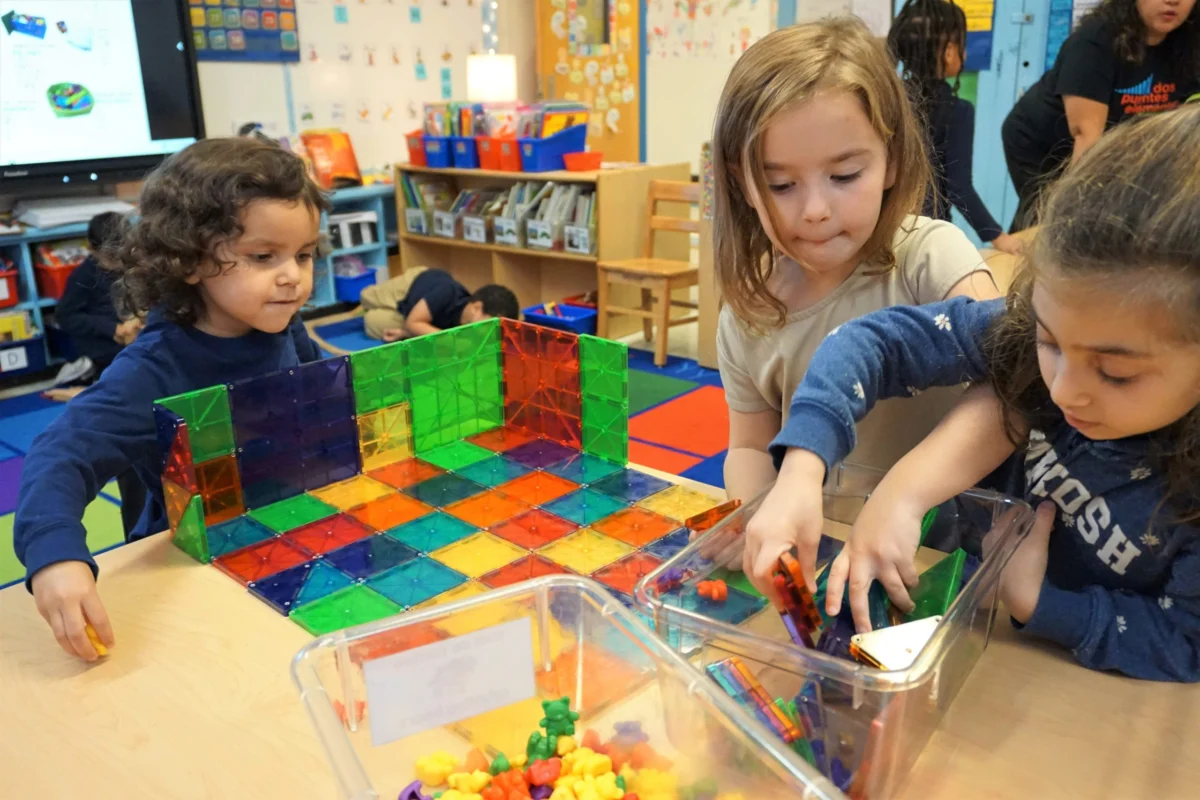
To understand the difference in pedagogical impact, researchers often contrast two classroom environments. In a traditional setting, a teacher might ask, "Which block tower is taller?"—a question that demands a binary, factual response. Once the child identifies the taller structure, the interaction concludes. Conversely, an inquiry-based approach involves a teacher asking, "Why did this tower fall while the other remained stable?" This shift transforms a simple observation into a practical application of the scientific method. By predicting, testing, and reconsidering their hypotheses, children learn that knowledge is not static but an iterative process of refinement.
Longitudinal Insights into Cognitive Development
Data from the University of Chicago’s Behavioral Insights and Parenting Lab underscores the necessity of this shift. In a study observing 17 pre-K and kindergarten classrooms, researchers discovered that teachers utilized closed-ended questions nearly three times as often as open-ended, inquiry-driven prompts. While the teachers surveyed unanimously identified "rich conversation" as a high priority for student development, many cited a lack of specialized training and significant time constraints as primary barriers to implementing these methods.
This gap in professional development is particularly concerning given the importance of executive-function skills—the mental processes that enable children to focus, plan, and organize behavior—which undergo critical development between the ages of 4 and 5. Research led by Kimberly Nesbitt and Dale Farran indicates that classrooms characterized by high levels of goal-directed, social, and engaged interaction correlate with significant gains in executive function. These gains are most pronounced in children who enter pre-K with lower baseline skill levels, suggesting that high-quality, conversation-based teaching can serve as a powerful equalizer in closing the achievement gap.
The Role of Technology and the "AI" Imperative
The urgency for fostering these skills has been intensified by the rapid proliferation of artificial intelligence. As AI systems become more adept at providing instant answers, the traditional value of rote memorization is diminishing. In an era where information is ubiquitous, the ability to formulate insightful questions and evaluate the credibility of machine-generated output has become a critical 21st-century skill.

Educators argue that this judgment is not innate; it must be constructed through years of active practice. A five-year-old lacks the cognitive framework to discern nuance or bias in information. By prioritizing the 3 Cs, schools can help students build a foundation of logical reasoning that will allow them to navigate a digital landscape where the ability to "think" is more valuable than the ability to "recall."
A Chronology of Pedagogical Evolution
The movement to re-center early childhood education on developmental inquiry has gained momentum over the last decade.
- 2015-2018: Early studies in classroom discourse began highlighting the "pre-K push," where academic pressure led to the removal of play-based learning in favor of standardized testing preparation.
- 2020: The COVID-19 pandemic necessitated a shift in home-school dynamics, forcing parents to take a more active role in the daily instruction of young children, which highlighted the efficacy of casual, home-based inquiry.
- 2023-2024: The widespread public adoption of generative AI tools sparked a national conversation about the need for "human-centric" skills, specifically critical thinking and complex problem-solving.
- 2026: Recent research, including the Chat2Learn initiative, has provided empirical evidence that structured, open-ended dialogue significantly improves vocabulary and reasoning skills in early learners.
Bridging the School-Home Divide
One of the most effective strategies for fostering the 3 Cs is the integration of school-based learning with home environments. Current school-family communication platforms are often relegated to logistical updates, such as schedule changes or event notifications. However, a more robust model involves "conversational continuity," where a teacher provides a prompt that parents can use to continue a classroom lesson at home.
For instance, a lesson on physics might involve a teacher asking students about the behavior of shadows. A parent, armed with a simple, open-ended prompt provided by the school, can engage the child in a real-world observation. When the child returns to class with their findings, the teacher can use that anecdotal evidence to facilitate a more complex discussion. This feedback loop validates the child’s curiosity, reinforcing the idea that their personal observations are a legitimate and valuable form of inquiry.
Implications for Educational Policy and Practice
The shift toward a more inquiry-based curriculum carries significant implications for educational policy. To move away from the "scripted" model, districts must prioritize:
- Teacher Professional Development: Moving beyond standardized training to focus on the art of questioning and the facilitation of classroom discourse.
- Curriculum Flexibility: Allowing for "teachable moments" where students can explore topics in depth rather than rushing to cover a predetermined list of standards.
- Parental Engagement: Providing accessible, low-barrier tools that empower parents to engage in high-quality conversations with their children without needing to be experts in the subject matter.
Experts, such as Dr. Ariel Kalil of the University of Chicago, emphasize that this transition does not require a complete abandonment of traditional academics. Rather, it requires a recalibration of priorities. Reading, writing, and arithmetic remain the tools of expression and quantification, but they are hollow without the curiosity to ask why, the creativity to imagine what could be, and the critical thinking to understand what is true.
Conclusion
The "real work" of early childhood education is not found in the mastery of worksheets or the rapid completion of drills. It is found in the moments when a child stops to ask a question, challenges an assumption, or builds an original idea. By fostering the 3 Cs, we are not just teaching children how to read and write; we are providing them with the tools to navigate a complex, uncertain future. As the landscape of work and society evolves, the most successful students will be those who have learned how to learn, how to question, and how to think for themselves. The challenge for policymakers and educators is to ensure that these foundational skills are treated with the same seriousness—and receive the same level of investment—as the traditional metrics of success.

