
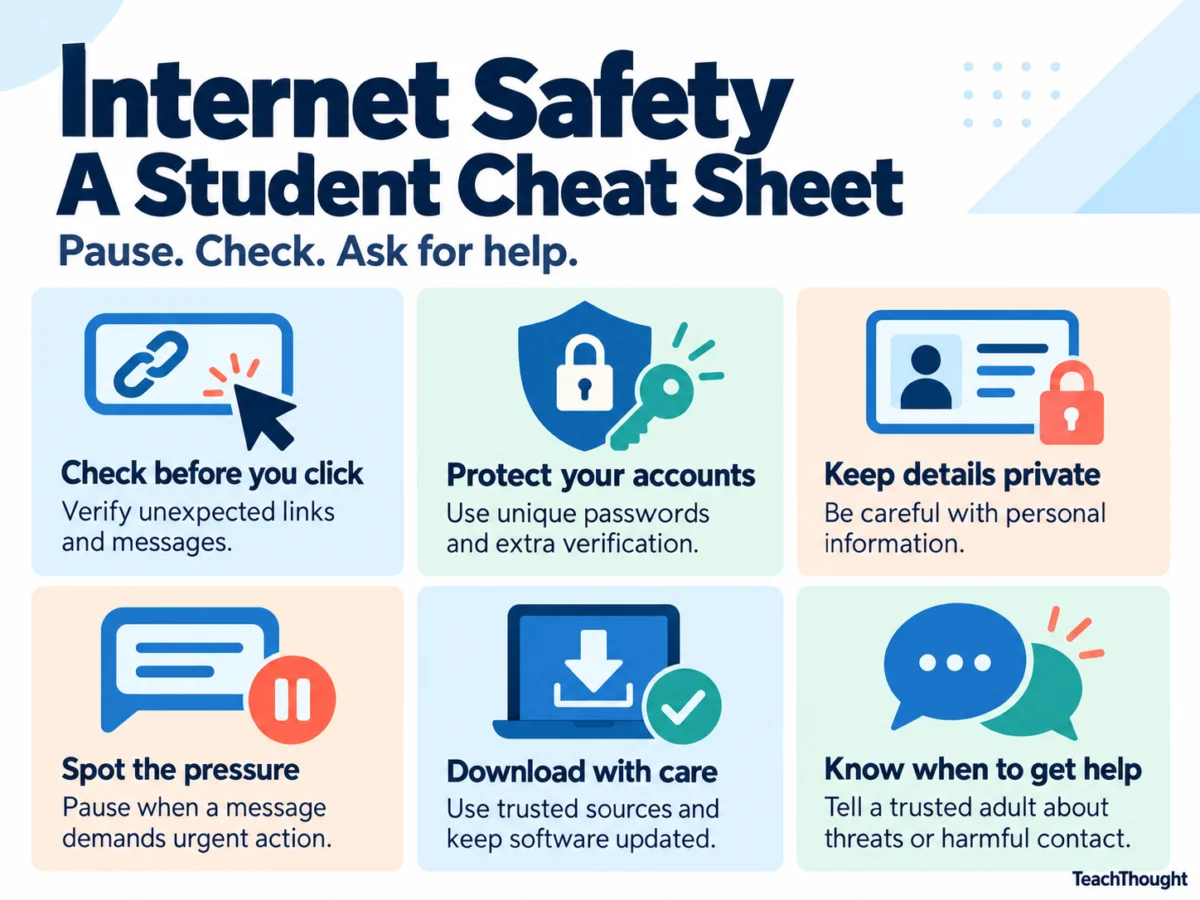
The landscape of modern education has shifted irrevocably toward the digital realm. As classrooms increasingly rely on cloud-based student accounts, interactive games, collaborative group chats, search engines, and artificial intelligence tools, the definition of student safety has expanded far beyond physical school grounds. Internet safety is no longer merely an abstract concept discussed in passing; it is the fundamental ability for students to recognize a risky situation, make a safer choice, and secure help when something goes wrong. Whether a student is questioning an unexpected login request, leaving an uncomfortable online conversation, or alerting an adult to targeted threats, these critical decisions happen continuously across personal and academic platforms. Knowing how to fluently navigate an application’s user interface does not inherently translate to knowing when to trust a person, a message, or a digital request embedded within it.
The Evolving Framework of Digital Citizenship
To address these vulnerabilities, educators, policymakers, and cybersecurity experts are urging schools to integrate rigorous internet safety frameworks into broader digital citizenship curricula. Historically, digital citizenship focused heavily on online etiquette, digital footprints, and how students participate, communicate, and contribute positively to online communities. However, the proliferation of sophisticated social engineering tactics, generative artificial intelligence, and decentralized online spaces demands a more protective, proactive approach.
Recent data from the Cybersecurity and Infrastructure Security Agency (CISA) and the National Center for Missing & Exploited Children (NCMEC) highlights a sharp rise in online exploitation, phishing schemes targeting minor accounts, and coercive sextortion cases over the past five years. As the digital age accelerates, schools find themselves on the front lines of defense. Educational institutions are moving away from restrictive, fear-based internet bans and toward competency-based training that empowers students to critically evaluate online risks in real-time.
Deceptive Requests: Checking the Intent, Not Just the Sender
One of the most pervasive challenges facing young internet users is the illusion of authenticity. A malicious digital message can easily appear to originate from a trusted authority figure, a classroom teacher, a close friend, a popular game platform, or an official school service. Cybercriminals frequently compromise legitimate accounts, copying usernames, display names, and profile pictures to lower a victim’s guard. Cybersecurity professionals emphasize that correct spelling, professional formatting, and familiar corporate or school logos do not establish trustworthiness.
Educational initiatives now stress the importance of analyzing the underlying action requested by a message. Phishing attempts—whether delivered through email, text messaging, direct messaging on social platforms, or malicious QR codes—typically compel a user to enter a password, share a multifactor authentication verification code, download an unverified file, purchase a product, or act hastily under a manufactured deadline.
To combat this, cybersecurity specialists advocate for a standardized, safer response protocol. Students are instructed to completely bypass the suspicious message by opening the relevant service through its official, bookmarked application or browser tab. If an urgent request allegedly comes from an educator or peer, students should verify the claim through an entirely separate, familiar communication channel rather than utilizing the contact information provided within the suspicious message itself.
Hardening Accounts and Protecting Personal Information
Account security forms the bedrock of individual digital hygiene. Cybersecurity guidelines recommend the implementation of long, unique passphrases for every significant account, aided by reputable password managers where appropriate. Furthermore, turning on multifactor authentication (MFA) drastically reduces unauthorized access, even if a password is inadvertently exposed.
A persistent misconception among adolescents is that sharing passwords serves as a symbol of trust or friendship. Educators must explicitly dismantle this notion, teaching students that knowing a peer’s password is a liability rather than a metric of loyalty. Moreover, students must understand proper account-recovery pathways so they can seek administrative help without disclosing credentials to classmates.
Parallel to account security is the nuanced management of personal data. Blanket warnings to "never share anything online" fail to prepare students for legitimate, necessary interactions with school-approved software and educational platforms. A far more effective pedagogical approach asks a critical framing question: Does this person or service actually need this specific information for the task at hand? By practicing with concrete scenarios—such as a mobile game requesting a home address, a public social media photo revealing a student identification card, or a casual online quiz asking for recovery-question details—students develop the critical thinking skills required to discern safe data sharing from dangerous surveillance.
Recognizing Psychological Pressure, Secrecy, and Manipulation
Unsafe online contact rarely begins with overt threats or hostility. More frequently, bad actors employ grooming techniques characterized by excessive compliments, unearned attention, gifts, in-game rewards, or simulated offers of mentorship and help. Consequently, relying solely on whether an online user is a "stranger" is an inadequate safety metric. Students must be trained to recognize shifts in the tone and boundaries of an interaction.
For older students, digital safety instruction must transparently address severe forms of online coercion, such as sextortion. This malicious practice involves threatening to expose intimate images to extract financial compensation or demand additional explicit media. Organizations like NCMEC stress that students must be given clear pathways to seek immediate adult help, even if they previously trusted the perpetrator or voluntarily shared the initial media.
Mitigating Harassment Without Amplifying Harm
Peer conflict frequently spills into digital spaces, with group chats serving as accelerators for harassment and bullying. The act of forwarding a humiliating screenshot, joining a digital pile-on, or broadcasting a classmate’s location drastically magnifies psychological harm, even if the student did not initiate the conflict.
Effective school safety protocols instruct students to actively avoid retaliation, halt the redistribution of harmful material, utilize platform-level reporting mechanisms, and immediately involve a trusted adult. While blocking a user can restrict direct contact, students must understand that blocking does not automatically neutralize threats that persist on alternative channels. When documenting cyberbullying or harassment for administrative review, students are advised to preserve relevant metadata—such as exact usernames, timestamps, and message links—while strictly avoiding the collection or downloading of illicit underage sexual imagery.
Managing Downloads, Permissions, and Artificial Intelligence
The appetite for customization often leads students to download third-party game modifications, browser extensions, study aids, and unverified software updates. These applications frequently request sweeping permissions to access microphones, cameras, local file storage, or real-time location data.
Educational institutions emphasize that installation permissions are critical security decisions. Students must utilize school-approved software repositories, keep operating systems updated, and immediately report unexpected installation prompts to IT administrators.
The integration of artificial intelligence into daily life introduces novel challenges. Beyond traditional phishing and harassment, generative AI enables bad actors to fabricate convincing deepfake images, audio clips, and text messages. Educators stress that creating or sharing a manipulated image of a classmate constitutes severe harassment. Affected students must receive immediate institutional support and validation without bearing the burden of proving the malicious content’s falsity.
Institutional Response Plans and the Path Forward
Preventative education remains incomplete without a standardized, reliable response plan. When security breaches occur—such as entering a credential on a phishing page, downloading a malicious file, or receiving explicit threats—students must know precisely whom to contact within the school administration or IT department.
Ultimately, fostering internet safety in schools requires moving beyond passive rule memorization and toward active, scenario-based decision-making. By practicing brief, five-minute discussions around fictional digital dilemmas, educators can help students identify risks, evaluate alternatives, and connect with trusted support systems. Cultivating this resilience ensures that students can navigate the digital world safely, responsibly, and with confidence.

