
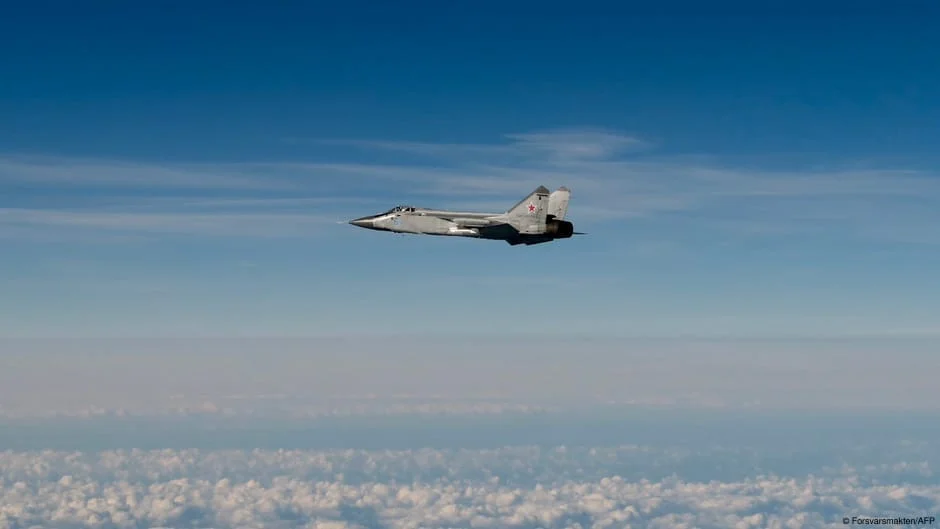
The security architecture of the Baltic Sea region faced a sharp escalation on Saturday as Finnish defense authorities reported a territorial airspace violation by a Russian helicopter, an incident occurring in the immediate wake of a drone attack that left a Russian-flagged cargo ship ablaze. The dual incidents have triggered an urgent response from Helsinki, raising concerns among NATO’s newest members regarding the potential for the ongoing conflict in Ukraine to spill over into Northern European waters.
According to the Finnish Ministry of Defense, the airspace incursion took place at 12:34 p.m. local time off the southern coastal town of Loviisa. Preliminary tracking data suggests the Russian aircraft penetrated up to 4.1 kilometers (approximately 2.5 miles) into Finnish territory. Defense Minister Antti Häkkänen has characterized the event as a significant provocation, noting that the timing of the flight—occurring while Finnish assets were conducting surveillance and rescue operations in the Gulf of Finland—warrants a rigorous investigation.
Chronology of a Volatile Saturday
The sequence of events began early Saturday morning in the easternmost reaches of the Baltic Sea. The vessel involved, identified as the Sparta II, was navigating toward the Russian exclave of Kaliningrad when it was struck by aerial drones. Finnish military intelligence and Border Guard reports indicate the initial strike occurred west of Gogland Island, situated roughly 40 kilometers from the Finnish mainland.
Following the impact, the ship suffered significant structural damage and caught fire. As the vessel lost power and control, it drifted into Finnish territorial waters, prompting an immediate mobilization of the Finnish Border Guard. Border Guard Commander Ilja Iljin confirmed that the crew initiated emergency evacuation procedures, utilizing life rafts and rescue boats to abandon the burning ship. It was during this period of heightened regional alertness, as Finnish authorities monitored the stricken vessel, that the Russian helicopter was detected crossing the maritime border.
The Sparta II: A Vessel Under Scrutiny
The Sparta II is not an unfamiliar name to international maritime monitors. Listed on various open-source sanctions databases, the vessel has long been associated with the transport of sensitive cargo and maintains documented links to the Russian military apparatus. Commander Iljin, speaking to the public broadcaster YLE, stated that while a definitive inventory of the ship’s cargo remains classified or unverified, the possibility that the vessel was carrying military materiel cannot be excluded.
The use of drones to strike a commercial vessel in the Baltic Sea represents a notable tactical shift in the conflict. While Ukraine has frequently targeted Russian logistics hubs and naval assets within the Black Sea, the Gulf of Finland is a significantly more sensitive theater due to the high density of NATO maritime traffic and the presence of critical subsea infrastructure, including energy pipelines and data cables.
Official Responses and Strategic Implications
Finnish Prime Minister Petteri Orpo addressed the incident with measured but firm rhetoric on social media, emphasizing that the war in Ukraine is no longer a distant conflict confined to the Black Sea basin. "The war is spilling over into our neighboring areas," Orpo wrote on X. He reaffirmed Finland’s support for Ukraine, stating clearly that Kyiv possesses the fundamental right to strike against an aggressor.
In response to the dual threats of the burning ship and the airspace violation, the Finnish government has implemented temporary restrictions on aviation and maritime traffic in the eastern Gulf of Finland. These "no-go" zones are designed to ensure the safety of civilian navigation while allowing the military to assess the environmental risk posed by the drifting, damaged ship.
The Ministry of Defense has confirmed that all relevant NATO allies have been briefed on the situation. This notification process is standard protocol for the alliance, which has been steadily reinforcing its "Northern Flank" since Finland’s accession in April 2023. The entry of Finland into NATO effectively turned the Baltic Sea into a "NATO lake," a geopolitical reality that has clearly increased the friction between Moscow and the alliance.
Analysis: The Risk of Regional Spillover
The incident highlights a growing danger for the Baltic states: the gray-zone conflict. By operating near the edges of sovereign territory and utilizing unconventional assets like drones against ships with dual-use potential, the parties involved are creating a volatile environment where miscalculation is a constant threat.
Analysts suggest that the Russian helicopter’s incursion may have been an attempt to monitor the recovery of the Sparta II or to project a sense of presence in a zone where Moscow is increasingly wary of Western surveillance. However, such actions carry the risk of escalation. Under NATO’s Article 4, members can consult when they feel their territorial integrity or security is threatened. While this incident does not currently meet the threshold for such a consultation, it places significant pressure on Finnish patrol forces to respond with a balance of firmness and restraint.

Furthermore, the environmental aspect of the burning ship cannot be ignored. The Gulf of Finland is a fragile ecosystem. A large fire on a vessel potentially laden with hazardous materials poses a threat to the maritime corridors that support the economies of Finland, Estonia, and Latvia. The Finnish Border Guard is currently coordinating with maritime safety agencies to contain the fire and prevent a potential ecological disaster.
Broader Geopolitical Context
This incident occurs against a backdrop of increasing Russian rhetoric regarding the Baltic Sea. Moscow has periodically signaled its displeasure with the expansion of NATO in the region, often resorting to aggressive posturing, such as GPS jamming or unauthorized aircraft maneuvers, to signal its dissatisfaction.
For Finland, which shares an 832-mile land border with Russia, the events of Saturday serve as a reminder of the proximity of the conflict. The integration of Finnish defensive systems into the NATO Integrated Air and Missile Defense System (NATINAMDS) means that any violation of Finnish airspace is now a matter of collective alliance interest. The speed with which the Finnish government communicated the violation suggests a policy of radical transparency—a strategy intended to deter future incursions by ensuring that any violation is immediately publicized and documented for international scrutiny.
As the situation evolves, the primary focus for Helsinki will be the stabilization of the maritime sector. The restriction on navigation is expected to remain in place until the status of the Sparta II is resolved, either through salvage operations or the ship being towed to a safe harbor.
The incident serves as a stark reminder that as long as the war in Ukraine persists, the "peripheral" theaters—the Baltic Sea, the Arctic, and the Black Sea—will remain subject to sudden, high-stakes incidents. Finland, now firmly anchored in the Western security architecture, faces the challenge of managing these provocations while maintaining the stability of the Baltic region. The international community, led by NATO, will likely monitor the next 48 hours with extreme caution, looking for signs of further escalation or a cooling of tensions following the removal of the damaged cargo ship.
In the final assessment, the events of this Saturday represent a transition point in Baltic security. The involvement of drones in the Gulf of Finland marks the opening of a new, potentially dangerous front in the shadow war between Russia and the West. Whether this will lead to a broader hardening of maritime borders or a period of uneasy de-escalation remains to be seen, but for the residents of Finland’s southern coast, the proximity of the war has never felt more tangible.

