
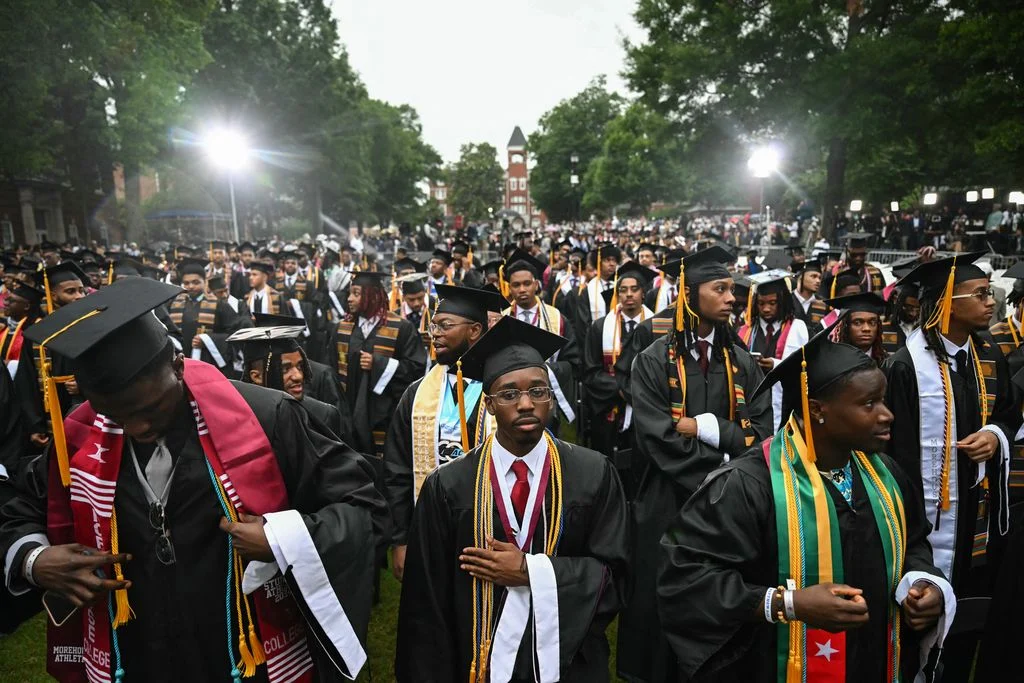
Trinity Williams, a junior and dedicated tour guide at Howard University, stands on the manicured grounds of the historic Washington, D.C. campus and offers a consistent message to prospective students navigating an increasingly uncertain academic landscape: "Always choose an HBCU." Her advice, delivered with the conviction of someone who sees the tangible benefits of a supportive, culturally resonant educational environment, comes at a pivotal juncture in American higher education. Following the 2023 Supreme Court decision to strike down race-conscious admissions, the traditional pathways to prestige, networking, and professional entry are undergoing a profound and potentially permanent transformation.
The landmark ruling in Students for Fair Admissions v. Harvard effectively ended the decades-long practice of allowing universities to consider race as one of many factors in the admissions process. While the decision strictly applied to the collegiate admissions phase, its ripple effects have surged far beyond the campus quad, fundamentally altering the recruiting strategies of corporate America and the career expectations of students from historically underrepresented backgrounds.
A Chronology of Policy Shifts and Institutional Retrenchment
The erosion of race-conscious policies did not happen in a vacuum, nor was it limited to the courtroom. The timeline of this shift reflects a broader, highly coordinated effort to dismantle Diversity, Equity, and Inclusion (DEI) initiatives across both public and private sectors.
In June 2023, the Supreme Court’s majority opinion signaled the end of affirmative action, arguing that such programs violated the Equal Protection Clause of the 14th Amendment. Almost immediately, the academic world began to brace for impact. By late 2025, the landscape had shifted further as executive actions, most notably from the Trump administration, accelerated the dismantling of DEI programs in federal agencies and signaled a broader intolerance for race-conscious institutional support.
By 2026, the impact on enrollment was no longer theoretical. Data from elite institutions, including Harvard University, revealed that the percentage of Black students in the incoming class had plummeted from 18 percent in 2023 to 9.3 percent in 2026. This trend has been mirrored at other highly selective universities, leading to what education experts call a "cascade effect." High-achieving minority students who previously would have been accepted into elite, highly selective institutions are now finding themselves redirected to less competitive schools, which in turn displaces other underrepresented applicants who would have traditionally attended those institutions.
The Corporate Retreat from Diversity Pipelines
The most striking development in the post-ruling era is the abrupt change in corporate recruiting behavior. Despite the Supreme Court’s ruling technically leaving hiring laws and private employer diversity initiatives untouched, the legal climate of fear has led to a significant contraction in outreach.
According to research from the Burning Glass Institute, companies that once prioritized diversity in their recruitment efforts are now retreating. In 2022, nearly 60 percent of 150 large employers surveyed by Veris Insights identified diversity as a primary metric for determining where to send recruiters. By 2025, that figure had been cut nearly in half, falling to 31 percent.
This withdrawal has been felt acutely on the ground. Career centers at institutions like Occidental College have reported that pipelines for Black, Hispanic, and first-generation students have effectively "dried up." Jamila Chambers, executive director of the career center at Occidental, notes that the loss of these corporate internships—which often serve as the bridge to full-time employment—is a significant blow to social mobility.
The fear of litigation has led to a systematic scrubbing of diversity-related language from corporate websites, internship postings, and scholarship criteria. The recent settlement by the Hispanic Scholarship Fund, which agreed to open its historically targeted scholarships to all races, serves as a bellwether for how private organizations are preemptively adjusting their policies to avoid the scrutiny of activist legal groups and the current political administration.

The HBCU Advantage in an Uncertain Market
Amidst this contraction, Historically Black Colleges and Universities (HBCUs) have emerged as both a sanctuary and a strategic asset. Howard University, established in 1867, has long been a center for Black excellence, but its role has become increasingly vital as mainstream institutions struggle to maintain diversity.
Trinity Williams points to the "built-in" network at Howard as a competitive advantage. When companies visit Howard, they are not merely recruiting students; they are engaging with a demographic that has been "primed, mentored, and crafted" by a supportive faculty and a rigorous professional environment. This sentiment is echoed by Jonathan E. Collins, a professor at Teachers College, Columbia University, and an alumnus of Morehouse College. He recalls how major consulting firms and graduate programs historically used HBCUs as essential hubs to access talented Black students who were often invisible to recruiters at larger, predominantly white institutions.
However, relying on the 3 percent of U.S. higher education institutions that are HBCUs to solve a systemic diversity crisis is, by all accounts, insufficient. These institutions are frequently underfunded and currently face their own significant financial challenges, making them unable to absorb the thousands of students who have been displaced from the top-tier institutions that previously served as the primary engines of professional advancement.
Political Realignment and Future Implications
The recent political "blue wave" that swept through the 2026 midterm elections has provided a glimmer of hope for some advocates, but skepticism remains regarding the longevity of these shifts. The election of a diverse slate of leaders—including Hakeem Jeffries as Speaker of the House and the election of Native American and openly gay senators—has led some experts to believe the momentum of anti-DEI attacks might be slowed.
Natasha Warikoo, a professor at Tufts University, suggests that a new Congress could potentially stem the tide of legislative attacks on campus supports. Yet, others remain cautious. David Hinojosa of the National Center for Youth Law argues that the core mission of the current administration remains focused on dismantling the very structures that provide a "leg up" to marginalized groups.
The implications of this environment are long-term. As Professor Julie Park notes, the "chilling effect" on recruitment and institutional programming is far more widespread than researchers initially predicted. Because the first generation of students affected by the 2023 ruling will not graduate until 2028, the true economic impact on the American labor market is still on the horizon.
Fact-Based Analysis: The "Ivy-Plus" Equalizer
The loss of diversity at highly selective institutions, often categorized as "Ivy-Plus" schools, carries a steep price. Research by Opportunity Insights confirms that students who attend these institutions are 60 percent more likely to enter the top 1 percent of the graduate earnings distribution. They are also twice as likely to attend an elite graduate school and three times as likely to secure positions at prestigious firms compared to their peers at non-selective schools.
If the current trend of declining diversity at these "equalizer" institutions persists, the United States risks creating a hardened class structure where the path to professional power is increasingly restricted to those who were already positioned to succeed. The professional pipeline, once bolstered by intentional, race-conscious efforts, is now being governed by a "cautious neutrality" that, in practice, favors the status quo.
Conclusion: The Road Ahead
As the dust settles on the post-affirmative action landscape, the dichotomy between the optimism of students like Trinity Williams and the systemic data provided by research institutions remains stark. While HBCUs continue to provide a vital, high-quality path forward, the broader, systemic issues regarding equity in professional entry remain unresolved.
The focus has shifted from internal university policy to the external realities of the labor market. Recruiters will continue to seek high-potential candidates, but they will do so in an environment where the definition of "high potential" is being redefined by fear and political pressure. For students entering the workforce in the coming years, the ability to leverage existing networks and find institutions that prioritize their development will be more critical than ever. The full extent of the Supreme Court’s 2023 ruling will not be understood for another decade, but the initial data suggests that the American dream of meritocratic upward mobility is currently facing its most significant stress test in the modern era.

