The geopolitical architecture of Europe is currently facing its most significant stress test since the end of the Cold War, as leaders of 47 nations convened at the European Political Community summit in Dublin to address a growing sense of diplomatic marginalization. At the heart of the crisis is a struggle for agency: while the United States, through the administration of President Donald Trump, accelerates back-channel negotiations to resolve the conflict in Ukraine, the European Union finds itself sidelined, grappling with internal divisions and a lack of a unified diplomatic voice.
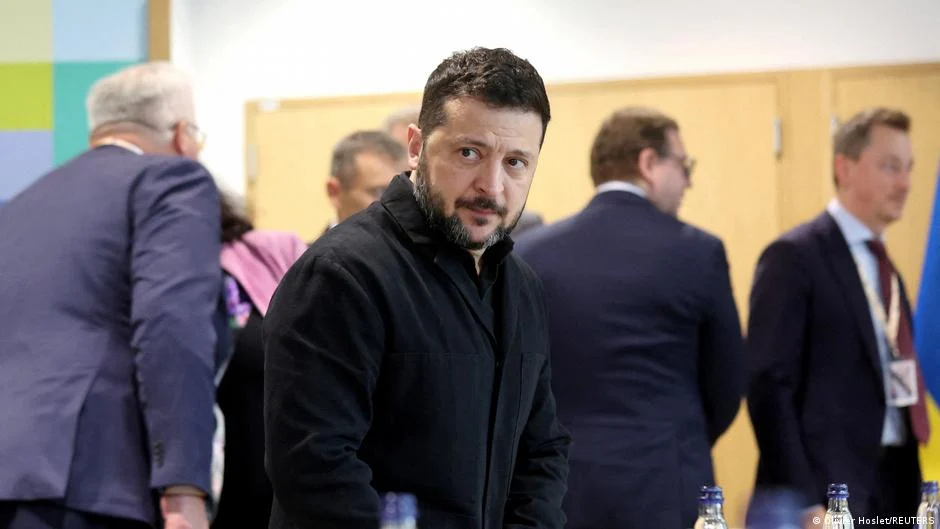
The urgency of the situation was underscored by recent developments involving Jared Kushner and US special envoy Steve Witkoff. Following a series of high-stakes discussions in Abu Dhabi and a direct meeting with Russian President Vladimir Putin in Moscow, the two envoys arrived in Dublin to brief Ukrainian President Volodymyr Zelenskyy. Their message—that Europe would be granted a seat at the upcoming negotiating table—was met with a mixture of relief and profound skepticism. For European leaders, the central question is not merely whether they will be invited, but whether they will have any genuine influence over a peace framework that may fundamentally alter the continent’s security architecture.
A Chronology of Diplomatic Maneuvers
The current diplomatic flurry follows a rapid sequence of events that have caught European capitals off guard. The timeline of the last fortnight reveals a deliberate US-led outreach strategy that largely bypassed traditional EU diplomatic channels:
- November 5–8: US envoys Jared Kushner and Steve Witkoff conduct intensive shuttle diplomacy in Abu Dhabi, engaging with regional stakeholders to outline potential ceasefire parameters.
- November 10: The delegation arrives in Moscow for a direct dialogue with Vladimir Putin, where the Russian leader articulated a stringent set of demands, including the neutralization of Ukraine and a potential rollback of NATO’s presence in Northern Europe.
- November 12: The US team arrives in Dublin to present their findings to the gathered European leadership and President Zelenskyy, triggering an immediate and tense debate regarding European representation.
- November 13: Public frustration erupts at the Dublin summit, with various leaders demanding a clear mandate for the EU to represent its own strategic interests rather than serving as a passive observer to US-Russian bilateralism.
The Problem of Representation and Internal Discord
The EU’s failure to appoint a singular, authoritative envoy to these talks has exposed a deep-seated institutional weakness. While figures such as EU foreign policy chief Kaja Kallas and EU Council President Antonio Costa are frequently cited as potential representatives, the bloc has struggled to reach a consensus. The obstacle is not a lack of qualified personnel, but rather the competing national interests of member states, many of whom insist that their own heads of state should represent European interests directly.
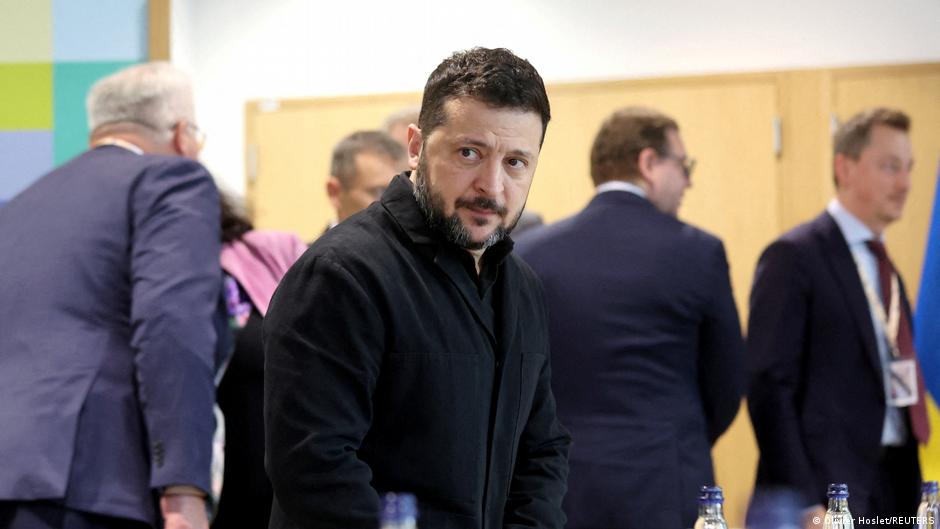
This disarray has not gone unnoticed by regional partners. Italian Prime Minister Giorgia Meloni recently issued a stark warning in a letter to Council President Antonio Costa, arguing that the projection of a divided Europe serves only those who wish to prolong the conflict. "By projecting the image of a Europe that is in disarray, we are merely serving the interests of those who want this war to continue," Meloni wrote, highlighting a growing consensus that the EU’s lack of a unified diplomatic front is becoming a strategic liability.
The internal tension is palpable. While some leaders, such as Slovenian Prime Minister Janez Jansa, have openly lamented the "bad mood" and discord permeating the summit, others, like Latvian Prime Minister Andris Kulbergs, have attempted to project an image of solidarity, suggesting that the public debate over representation is being overstated. However, the underlying reality remains: until the EU can speak with one voice, it will continue to struggle for parity in negotiations where the stakes for European security are absolute.
Historical Context and the Shadow of Broken Accords
The hesitation among European leaders to trust the current diplomatic process is rooted in a history of failed agreements with the Kremlin. Leaders in Dublin frequently invoked the 1994 Budapest Memorandum, which provided security assurances to Ukraine in exchange for the surrender of its nuclear arsenal—an agreement Moscow has fundamentally violated.
Furthermore, the 1975 Helsinki Accords and the 1990 Paris Charter are viewed by many as the bedrock of European stability, a foundation they fear is currently being dismantled. The fear among Eastern European members, in particular, is that a "big, beautiful agreement"—as President Trump has described his goal—may be predicated on concessions that sacrifice the sovereignty of buffer states to satisfy Russian security anxieties.
Financial Challenges: The €70 Billion Funding Gap
Beyond the diplomatic theater, a more immediate crisis looms regarding the sustainability of European financial and military support for Kyiv. In October, the European Commission identified a €70 billion shortfall in promised funding for the Ukrainian economy. This financial chasm has become a weaponized issue in internal EU politics.

German Chancellor Friedrich Merz has taken a hardline stance, suggesting that he may block the next seven-year EU budget unless member states demonstrate a renewed, binding commitment to funding Ukraine’s recovery and defense. This position has been labeled "blackmail" by some critics, while others see it as a necessary realization of the "cost of inaction." Simultaneously, opposition from leaders such as Slovakian Prime Minister Robert Fico—who continues to advocate for a cessation of military aid—creates a fractured landscape that complicates the EU’s ability to project power or influence the terms of a future peace settlement.
Strategic Implications and Security Risks
The security implications of the current trajectory are profound. Vladimir Putin’s rhetoric regarding the potential deployment of European troops in Ukraine following a hypothetical peace agreement serves as a warning of his intent to restrict European security autonomy. By threatening to treat such deployments as legitimate targets, the Kremlin is effectively attempting to dictate the terms of NATO’s posture in Eastern Europe.
Estonian Prime Minister Kristen Michal’s assessment that Europe is currently caught in a "Russian trap" resonates with many in the Baltic and Nordic regions. The fundamental question for European leaders is whether it is possible to negotiate security arrangements with an entity that, by its own admission, views European defensive coordination as a justification for further escalation.
Conclusion: A Critical Juncture for the EU
The Dublin summit has highlighted that for Europe, the war in Ukraine is not merely a regional conflict—it is an existential crisis regarding the continent’s role in the global order. If the European Union cannot overcome its internal divisions to present a unified, coherent strategy, it risks being marginalized in the very negotiations that will define its security landscape for the next several decades.
The path forward requires more than just a seat at the table; it requires a collective commitment to a diplomatic strategy that balances the necessity of peace with the non-negotiable principles of territorial integrity and sovereign defense. As the US moves toward a potential settlement, the clock is ticking for European leaders to transcend their national interests and define what a European, rather than merely a Western, peace looks like. Whether they can achieve this before the next round of talks remains the defining challenge of their tenure.