
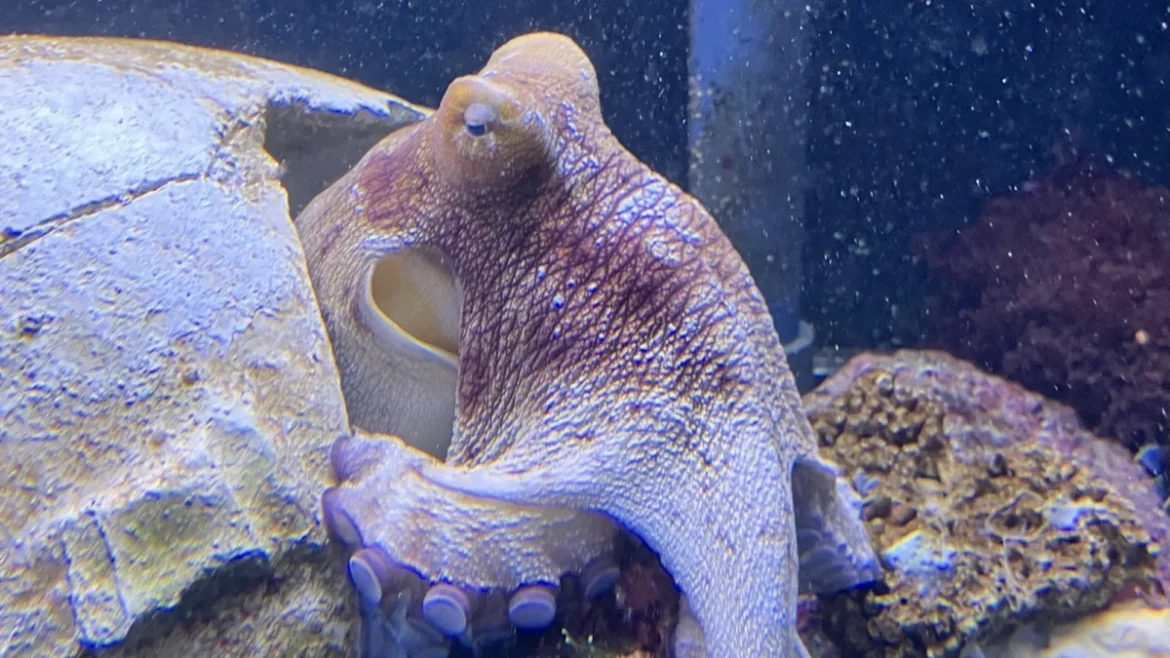
For decades, marine biologists have been captivated by the seemingly liquid-like dexterity of octopuses, creatures capable of contorting their soft, boneless bodies through narrow gaps that appear far too small to accommodate their mass. This phenomenon, which has long been a staple of viral videos and aquarium observations, has remained a subject of intense scientific scrutiny. Recent research conducted by a team at the National University of Singapore, led by marine biologist Wenci Xin, has finally begun to demystify the biomechanics behind these impressive maneuvers, revealing that the process is far more nuanced and species-dependent than previously assumed.
The study, published in the Journal of Experimental Biology, represents a significant leap forward in understanding the physical limitations and cognitive strategies of cephalopods. By systematically observing the Mayan octopus (Octopus maya) and the common octopus (Octopus vulgaris), researchers have debunked the notion of a universal "squeeze" technique, highlighting instead a sophisticated, multi-stage approach to spatial navigation.
The Biological Constraints of the Cephalopod Body Plan
To understand how an octopus navigates a restrictive opening, one must first consider its anatomy. Unlike vertebrates, which rely on a rigid skeletal framework, the octopus possesses a hydrostatic skeleton. The only truly hard part of their body is the beak, a chitinous structure used for feeding, and a cartilaginous cranial case that protects the central nervous system.
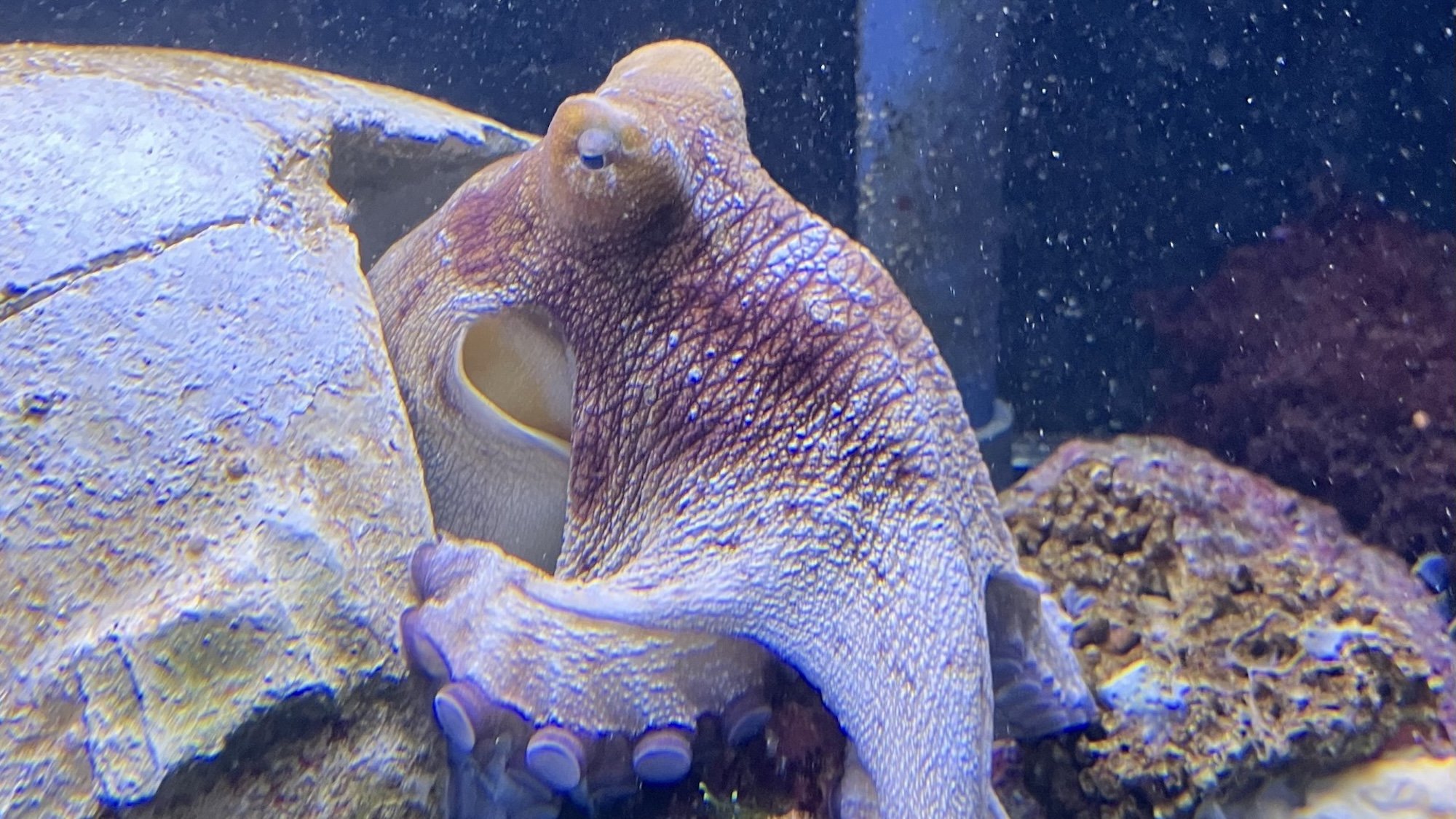
Historically, scientists operated under the hypothesis that the size of this cranial case served as the absolute physical threshold for an octopus’s mobility. Because the cartilage is non-compressible, it was assumed that if an opening were smaller than the width of the octopus’s head, the animal would be unable to pass through. Wenci Xin’s team sought to test this hypothesis by measuring the interocular distance—the space between the eyes—as a proxy for the width of the cranial sheath. In the specimens studied, this distance ranged between 0.6 and 1.3 inches. By creating experimental apertures both larger and smaller than these measured widths, the researchers were able to observe how the animals adjusted their strategies when faced with physical barriers that approached their theoretical limit.
A Chronology of the Experimental Process
The research team designed a series of controlled experiments using customized, clear plastic aquarium boxes connected by apertures of varying diameters. The use of clear materials allowed for high-resolution video capture from multiple angles, ensuring that the researchers could track every movement of the arms, mantle, and head.
The process unfolded in distinct phases:
- The Probing Phase: Upon encountering a barrier, the octopus did not attempt to force its entire body through immediately. Instead, it engaged in an exploratory phase, using its arms to probe the opening. This tactile assessment appears to serve as a risk-assessment tool, allowing the animal to determine if the passage is traversable.
- The Insertion Phase: Once the octopus decided to proceed, it typically threaded one or two arms through the aperture. In the majority of cases, the animals favored their left front arms for this initial insertion.
- The Anchoring Phase: As more arms were threaded through, the octopus utilized its suckers to grip the walls of the entry box. By extending and stiffening these anchored limbs, the animal created a mechanical leverage point. This allowed the octopus to pull the remainder of its body, including the bulky mantle, through the hole.
- The Completion Phase: This transition, when successful, typically occurred in approximately 20 seconds.
Species-Specific Behavioral Divergence
Perhaps the most compelling finding of the study was the behavioral difference between the two species observed. While the common octopus exhibited a high degree of persistence and adaptability—often modifying its approach when facing tighter, more challenging holes—the Mayan octopus demonstrated a more cautious temperament.

When confronted with apertures that were significantly narrower than their body width, the Mayan octopuses consistently opted to retreat rather than engage. They would explore the opening with their arms but, upon sensing that the passage was too restrictive, would simply abandon the attempt and move to another part of the enclosure. Conversely, the common octopus was observed utilizing a two-phase "shimmying" technique for narrower holes, wherein it would fully extend its arms to clear the opening before compressing its mantle to slide the rest of its body through in a subsequent, secondary motion. This suggests that cognitive factors, such as individual risk tolerance or species-specific behavioral traits, play as large a role in navigation as physical capacity.
Implications for Soft Robotics and Biomimicry
The findings of this research extend far beyond marine biology. The field of soft robotics, which seeks to design machines that can mimic the flexibility and adaptability of biological organisms, stands to benefit significantly from these insights. Engineers are currently working to develop search-and-rescue robots that can navigate disaster zones, such as collapsed buildings or narrow pipes, where rigid robots would fail.
Understanding the "anchoring" and "pulling" mechanics identified in this study provides a blueprint for how to program robotic actuators. By mimicking the way an octopus uses its arms as both sensors and levers, researchers hope to create machines capable of traversing complex, cluttered environments with greater efficiency.
"The strategy is about more than just flexibility; it is about the intelligent application of force," noted an independent observer familiar with the study. "The fact that these animals know exactly when to push, when to pull, and when to give up is a testament to their complex neural processing."

Broader Context and Future Research
The study raises intriguing questions about the evolution of cephalopod intelligence. If an octopus can assess the diameter of an opening using only its arms and decide on a course of action, it implies a high level of proprioception—the ability to perceive the position and movement of one’s own body parts.
Furthermore, the data collected by Xin and her team provides a baseline for future studies on how environmental enrichment and past experiences might influence an octopus’s willingness to tackle difficult spatial puzzles. As human-induced changes to marine environments continue, understanding how these animals utilize their surroundings for protection and hunting becomes increasingly vital for conservation efforts.
While this study focused on two specific species, the academic community anticipates that future research will examine a broader range of cephalopods, including deep-sea species that navigate extreme pressure environments. Such studies will be essential in confirming whether the behaviors observed in the lab are universal or if they have evolved in response to specific ecological niches.
Conclusion
The work of Wenci Xin and her colleagues serves as a critical bridge between simple observation and empirical understanding. By stripping away the mystery of the "impossible squeeze," the research highlights the remarkable marriage of biological form and cognitive function. It confirms that while the octopus’s body is designed for unparalleled flexibility, its success in the wild is driven by a sophisticated, calculated approach to movement. As we continue to unlock the secrets of these intelligent invertebrates, we not only gain a deeper appreciation for the wonders of the ocean but also gather the foundational knowledge necessary to push the boundaries of human technology and design. The next time an octopus emerges from an impossibly small crevice, it will no longer look like a magic trick—it will look like a masterclass in biomechanical engineering.
