
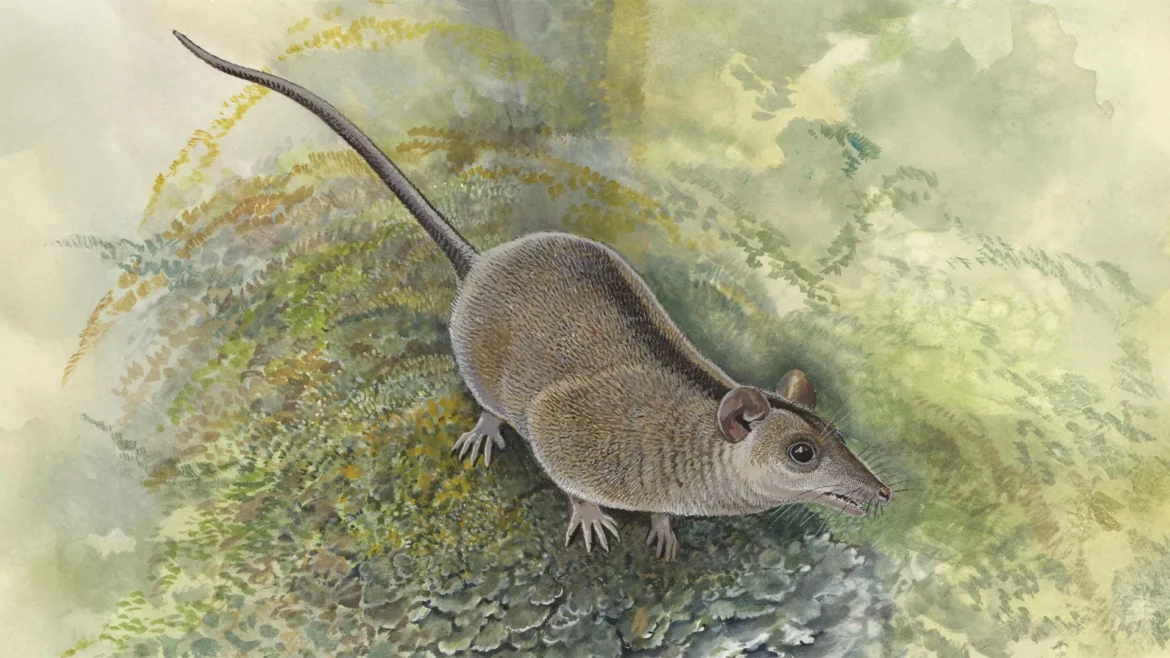
The evolutionary saga of Australia’s iconic marsupials has taken a surprising turn with the identification of a previously unknown branch on their ancient family tree. This groundbreaking discovery, detailed in a recent publication in the Journal of Paleontology, suggests that the diversification of these unique mammals on the Australian continent was a far more intricate and enigmatic process than scientists had previously understood. The finding challenges long-held assumptions and opens new avenues for research into the deep past of one of the planet’s most remarkable faunal assemblages.
Unraveling the Ancient Marsupial Migration
Marsupials first established a foothold in Australia over 55 million years ago, a period coinciding with the fragmentation of the supercontinent Gondwana. Their subsequent evolutionary journey on this isolated landmass has resulted in an astonishing array of species, adapted to an incredibly diverse range of environments. From the diminutive, hibernating possums of the Australian Alps to the subterranean, eyeless moles of the arid Red Centre, marsupials exemplify evolutionary success. Despite this impressive diversification, the precise mechanisms and timeline of their spread and differentiation across Australia have remained a significant scientific puzzle, largely due to substantial gaps in the fossil record.
The prevailing scientific consensus has posited that marsupials reached Australia after migrating from South America, traversing Antarctica before the final separation of the continents. This broad outline is widely accepted, but the finer details of this ancient journey and the subsequent evolutionary pathways have been shrouded in mystery. Fossil evidence from approximately 55 million years ago suggests that the initial marsupial colonists may have originated from a single ancestral lineage that subsequently branched out to give rise to the diverse marsupial groups present today. These groups are currently organized into five distinct orders within the superorder Australidelphia, which encompasses all living and extinct Australian marsupials, along with one South American representative.
Introducing Keeunamorphia: A New Ancient Lineage
Now, a team of researchers from the University of New South Wales (UNSW) has proposed the existence of a sixth order, which they have named Keeunamorphia. This newly identified group, based on the analysis of three previously undocumented species, may represent the most ancient lineage of all Australian marsupials, potentially serving as the ancestral root for all extant marsupial carnivores. Dr. Tim Churchill, a paleontologist at UNSW and lead author of the study, explained the significance of this discovery: "Not only is it a new order, it could also be the most ancient lineage of all Australian marsupials. It may be the early ancestor of all our marsupial carnivores."
According to Dr. Churchill’s research, members of Keeunamorphia likely existed for an extended period, possibly around 35 million years. These ancient creatures were probably small insectivores, weighing between 25 and 200 grams. Their habitat was the dense forests of what is now northern Queensland, a landscape vastly different from the open woodlands and grasslands prevalent in the region today. This ancient environment, characterized by its wet, dense rainforests, was a cradle for many animal lineages that have persisted in Australia to the present day. The climate shift around 14 million years ago, leading to drier conditions and the expansion of open woodlands and grasslands, is thought to have contributed to the eventual disappearance of Keeunamorphia.
Riversleigh’s Fossil Treasures: Unlocking the Past
The three Keeunamorphia species identified in the study date back approximately 18 million years. Their fossilized remains were discovered in shallow cave pools within the Riversleigh World Heritage Area in Queensland, a site renowned for its exceptionally rich and well-preserved fossil deposits. Riversleigh is globally recognized as one of the most important fossil sites for understanding mammalian evolution in Australia. The remarkable preservation conditions at Riversleigh have yielded invaluable insights into ancient ecosystems and the creatures that inhabited them.
Complete marsupial skeletons are relatively rare in the fossil record. Consequently, paleontologists often rely on more fragmentary evidence, such as teeth and jaw fragments, to reconstruct the evolutionary history of extinct species. The UNSW team meticulously analyzed these small but crucial fossil clues. To determine the phylogenetic placement of these new species, they employed a sophisticated methodology that combined direct fossil evidence with genetic data from living marsupial species. This integrated approach allowed them to construct a phylogenetic tree, a visual representation of evolutionary relationships that estimates the timing of lineage divergences. "We’re essentially trying to create a tree that shows both the relationships of all the different species in the tree, while also calculating when those branches probably diverged," Dr. Churchill elaborated.
Dental Clues Point to an Ancient Divergence
The detailed analysis of the fossilized teeth revealed an evolutionary puzzle. These three newly identified species coexisted with several other marsupials that had been previously studied. However, their dental morphology was distinctive and did not indicate a close relationship with their contemporary marsupial neighbors. Instead, the structure of their teeth bore a striking resemblance to those of Djarthia murgonensis, an extinct marsupial that lived approximately 35 million years earlier. Djarthia murgonensis is often considered a "prototype" for Australian marsupials, representing an early and generalized form.
This similarity strongly suggests a distinct marsupial lineage that had remained unrecognized until now. Dr. Churchill posits that this lineage may have diverged very early in marsupial history and persisted for millions of years, evolving independently alongside other more specialized marsupial groups. "Whatever these things were, they seemed to be primitive compared to other marsupials at the time, and they seem to have been doing their own thing and surviving well enough alongside them," Dr. Churchill remarked. While phylogenetic trees traditionally depict a single, early ancestral group giving rise to the full spectrum of modern Australian marsupials, the fossil evidence uncovered by this study presents a more complex picture.
Rethinking the Marsupial Origin Story
The implications of the Keeunamorphia discovery are profound, suggesting a more complicated origin story for Australia’s marsupials. If, as Dr. Churchill’s research indicates, early members of Keeunamorphia appeared shortly after the initial marsupial arrival in Australia around 55 million years ago, then this order could represent one of the earliest branches to diverge from the main marsupial lineage. This challenges the simpler model of marsupial evolution, which posits a single ancestral group as the sole progenitor of Australia’s diverse marsupial fauna.
This scenario raises a fascinating evolutionary question: how did such a primitive group survive for such an extended period while remaining relatively unchanged, especially in the face of evolving and diversifying contemporary marsupials? Dr. Churchill suggests that the evolutionary history of Australian marsupials is likely far more complex than a straightforward progression from a single isolated lineage. "Evolutionary history is a lot more complex than just one group leading to all of Australia’s marsupials after being left behind when the continent broke off from Antarctica," he stated. "It’s more likely that when Australia was part of Gondwana it was swarming with all sorts of bizarre, primitive marsupial-like things, and that several of them survived and led to our modern lineages." This perspective implies that the early Australian landscape may have harbored a greater diversity of marsupial-like forms than previously assumed, with multiple lineages contributing to the modern marsupial fauna.
The Enduring Mystery of the Fossil Record
A significant challenge in reconstructing the early evolutionary history of Australian marsupials is the substantial gap in the fossil record, spanning nearly 20 million years. This hiatus leaves ample room for numerous undiscovered lineages and evolutionary pathways. It is plausible that many ancient marsupials, some sharing common ancestors and others originating from separate lineages that were isolated on the Australian landmass as continents drifted apart, have yet to be unearthed.
While scientists may never be able to fully reconstruct the precise routes and timelines of early marsupial dispersal and evolution across the ancient Australian continent, each new fossil discovery serves as a vital piece of the puzzle. The meticulous excavation and analysis of fossil teeth and other skeletal fragments from Australia’s ancient geological deposits continue to enrich our understanding of marsupial evolution. The identification of Keeunamorphia is a testament to this ongoing scientific endeavor, revealing a more intricate, dynamic, and ultimately more captivating narrative of how Australia’s most distinctive mammals came to be. The discovery underscores that the evolutionary tapestry of marsupials is woven with threads of unexpected complexity, continuing to surprise and intrigue the scientific community.
