
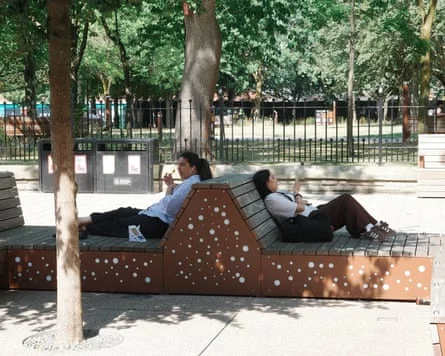
For decades, the gradual decline of the British high street has remained a persistent and seemingly intractable challenge for successive governments. As out-of-town retail parks, shifting consumer habits, and the relentless rise of e-commerce hollow out traditional town and city centres, policymakers have frequently turned to heavy financial interventions. Multi-million-pound regeneration grants, complex building transformations, and sweeping architectural overhauls have long been the default policy response to urban decay. However, a compelling new paradigm suggests that the most effective solution to this enduring crisis may not require vast sums of capital, but rather a fundamental shift in philosophy: doing it all on the cheap.
This counterintuitive thesis forms the core of a comprehensive new report published by the urban thinktank Create Streets, produced in collaboration with the bicycle infrastructure company Cyclehoop. Rather than focusing exclusively on the internal restructuring of vacant retail properties, the study argues that the secret to revitalising town centres lies in minor, low-cost modifications aimed at making public spaces intrinsically more appealing to human beings rather than motor vehicles. At the heart of this proposal is a concerted effort to tame or outright banish vehicular traffic, addressing the reality that too many modern urban centres have been engineered primarily as thoroughfares to be driven through rather than destinations to be experienced and enjoyed.
The Flawed Architecture of the Default High Street
According to the findings of the Create Streets report, the standard British high street suffers from a systemic lack of imagination deeply embedded within contemporary planning regulations. Current bureaucratic frameworks routinely favour rigid conformity, unnecessary street clutter, and an automobile-centric design ethos that treats speeding motor traffic as an immutable baseline to which all other urban elements must adapt.
The report paints a stark picture of this prevailing design philosophy, characterising the default high street as a space engineered entirely for vehicular flow and furnished directly from municipal procurement catalogues. A typical scene involves monotonous tarmac pavements, restrictive guardrails penning pedestrians against the kerb, generic utility waste bins, and sterile rows of plastic planters. Critics argue that this form of public investment is not only profoundly joyless but actively hostile to human habitation, transforming vibrant community spaces into hostile corridors of asphalt and concrete.
Urban planners have historically relied on vehicular access and automobile parking metrics as primary indicators of a thriving commercial district. However, the economic calculations presented in the Create Streets report challenge this long-held orthodoxy. By analyzing the commercial yield of kerbside space, the study reveals that replacing traditional parking bays with alternative community and active travel infrastructure can generate significantly higher economic value for surrounding local businesses.
Economic Yield: Parking Spaces Versus Kerbside Alternatives
To quantify the financial impact of urban space reallocation, the report examines the productivity of a standard 12-square-metre parking space located in a typical British market town high street. Statistically, such a parking bay is utilised by approximately 3.5 vehicles per day, resulting in roughly £73,000 in annual retail spending directed toward nearby shops.
In contrast, if that exact same 12-square-metre footprint is repurposed to house nine shared e-bikes, the economic dynamics shift dramatically. Even when accounting for a lower average spend per individual transaction, the higher turnover of users generates an average of 13 trips per day. This usage model drives more than £146,000 in annual retail spending—double the economic output of the single car parking space it replaced.
In denser, busier metropolitan environments where shared micro-mobility services experience much higher frequency of use, the estimated total annual retail spend climbs to in excess of £300,000 per converted space. Similarly, repurposing equivalent kerbside real estate for outdoor dining and hospitality seating yields substantial, albeit less dramatic, commercial gains, routinely generating approximately £120,000 in additional annual consumer expenditure within city centres.

These figures illustrate a fundamental misallocation of urban assets. By prioritizing the storage of private motor vehicles over infrastructure that facilitates active transport and social interaction, local authorities may be inadvertently stifling the commercial potential of their own high streets.
The Chronology of High Street Decline and Policy Responses
The crisis facing Britain’s high streets is not a recent phenomenon; it represents a decades-long erosion accelerated by structural economic shifts.
During the late 20th century, the proliferation of out-of-town shopping centres equipped with vast, free parking facilities began drawing consumer footfall away from traditional urban cores. This trend was further compounded in the 21st century by the exponential growth of online retail, which reduced the necessity for physical retail footprints. Successive governments attempted to combat these pressures through various funding mechanisms, business rate reliefs, and town-planning reforms, often yielding limited or temporary results.
In September, the political focus on high street regeneration intensified when the government announced a substantial £210m regeneration fund aimed at reversing commercial decline. While this capital injection was welcomed by local leaders, critics and urbanists noted that the vast majority of these funds are earmarked for physical building interventions. Plans typically focus on converting defunct department stores and vacant shops into shared workspaces, cultural hubs, or community cafés, alongside targeted efforts to keep traditional pubs and independent clubs solvent.
The Create Streets report argues, however, that renovating buildings from the inside out is fundamentally futile if the immediate public realm outside remains hostile, uninviting, and choked with traffic. A beautiful café or a restored community centre will struggle to attract sustainable footfall if patrons must navigate heavy traffic, ugly barriers, and sterile pavements to reach the front door.
The "Wrist Test" and the Philosophy of Low-Cost Permanence
To evaluate the true health and liveability of an urban centre, the report introduces a simple yet evocative metric known as "the wrist test." Defined as whether a parent feels sufficiently secure to let go of a young child’s wrist and allow them to roam with a degree of freedom, this test serves as an indicator species for a healthy high street.
Achieving an environment where children can safely explore requires the complete removal of the threat posed by speeding motor vehicles, rather than superficial attempts to mitigate their impact through warning signs or painted asphalt. To this end, the report identifies the removal of pedestrian guardrails alongside roadways as the single most cost-effective upgrade that the majority of high streets can undertake. These metal barriers, frequently installed under the guise of safety, are dismissed as unnecessary eyesores that offer negligible protection while psychological partitioning the streetscape.
Furthermore, the report highlights the counterproductive nature of modern public realm management guidelines, such as the police-backed "Secured by Design" policy framework. While designed to reduce neighborhood crime, critics note that these guidelines have historically been interpreted to advise the removal of public benches, trees, and greenery under the assumption that such amenities encourage antisocial behavior. The unintended consequence of this approach is the sterilisation of public spaces, driving away families, elderly residents, and casual visitors who provide the vital eyes on the street necessary for genuine community safety.
David Milner of Create Streets underscored the systemic flaws in current municipal accounting practices, noting that aesthetic failures are rarely the result of council apathy.
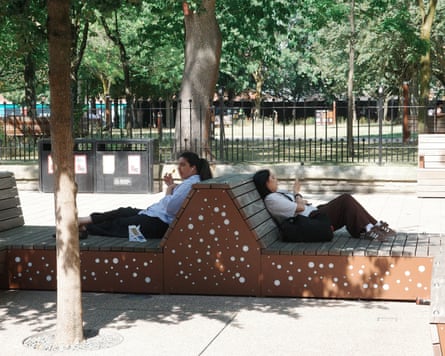
"Streets that are ugly are not so because councils lack the desire to change them, but because the system is counting the maintenance liabilities, not the benefits," Milner explained. "What works is cheap: trees in the ground, benches people want to sit on, clutter taken away. So much of what is built now seems to be temporary, looking more like road works than public realm improvements, so we encourage the concept of permanence; more trees in the ground, not in giant plant pots, for example."
Case Studies: Walking the Walk in Altrincham and Grimsby
Proponents of low-cost, pedestrian-focused urban interventions point to tangible real-world success stories across the United Kingdom where these principles have already been successfully applied.
In Altrincham, Cheshire, a strategic municipal shift toward creating a walkable, highly permeable, and largely car-free urban core transformed the local commercial landscape. Within less than a decade of implementing these pedestrian-friendly changes, retail vacancy rates in the town plummeted from over 30% down to a remarkably healthy 7%, proving that improving the public realm directly translates into commercial resilience.
Crucially, such transformations do not necessitate astronomical budgets. In Grimsby, an unused, derelict patch of land situated adjacent to a local church was successfully converted into a welcoming public park for a total expenditure of less than £20,000. By relying on simple horticultural additions and basic seating rather than capital-intensive civil engineering projects, the local community reclaimed a neglected space with minimal financial outlay.
Official Responses and Broader Implications
In response to the findings of the Create Streets report, representatives from the Ministry of Housing, Communities and Local Government defended the government’s current policy framework while emphasising local autonomy in urban planning decisions.
"We support local leaders to make decisions on pedestrianisation based on their communities’ needs," a ministry spokesperson stated. "Our Hope on the High Street strategy will help local people revive town centres by protecting community assets, bringing derelict buildings back into use, and tackling the spread of vape and gambling shops."
The spokesperson added that substantial funding remains accessible for local authorities to allocate toward their specific regional priorities, explicitly including the pedestrianisation and regeneration of high streets for municipalities choosing to pursue those pathways.
As British towns and cities continue to grapple with the structural transformation of commerce in the 21st century, the debate over high street regeneration is shifting. While capital investment in physical buildings remains a vital pillar of economic recovery, the growing body of evidence surrounding low-cost, pedestrian-first urban design suggests that the ultimate salvation of the high street may not lie in grand architectural statements. Instead, it may be found in the quiet, inexpensive removal of concrete clutter, the taming of motor traffic, and the conscious creation of spaces designed for human beings to linger, connect, and thrive.
