
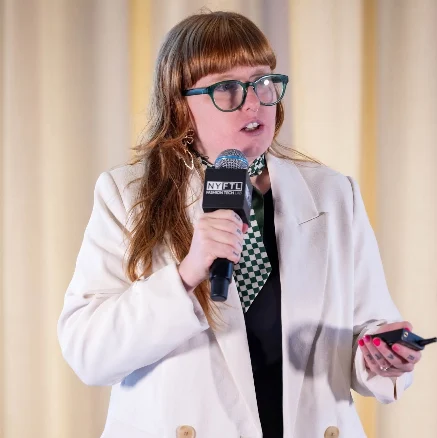
The global retail landscape is currently grappling with a logistical and environmental challenge of unprecedented proportions, characterized by an $890 billion returns crisis that threatens both profit margins and sustainability goals. As e-commerce continues to dominate the consumer experience, the sheer volume of returned merchandise has created a bottleneck in traditional supply chains, leading to a systemic failure that often ends in landfills. However, Disney Petit, the founder and CEO of Liquidonate, is spearheading a transformative approach that seeks to replace flawed logistics with superior logic. By integrating technology directly into the reverse logistics process, Liquidonate is proving that the most sustainable and economically viable return path is not a trip back to a centralized warehouse, but a direct delivery to a community in need.
The scale of the problem is staggering. In the United States alone, consumers returned nearly 17% of all retail purchases over the past year. This behavior is not merely a financial burden for corporations; it is an environmental catastrophe. The current return cycle generates approximately 2.6 million tons of landfill waste and 16 million tons of carbon dioxide emissions annually. For retailers, the financial math is equally grim. Processing a single return can cost between $25 and $35 when accounting for shipping, labor, inspection, and restocking. In many cases, the cost of processing exceeds the value of the item, leading to the environmentally disastrous practice of discarding perfectly functional goods.
The Genesis of a Circular Solution
Disney Petit’s journey to solving this crisis began in the high-growth environment of Silicon Valley’s gig economy. As employee number 15 at Postmates, Petit was instrumental in building the company’s customer service infrastructure and eventually founded Civic Labs, the company’s social responsibility division. It was here that she developed a deep understanding of how logistics could be harnessed for social good. Her previous innovation, Bento—a food security platform that utilized text messaging to help people without smartphones access free meals—earned her the prestigious Time Magazine Invention of the Year Award in 2021.
This background in logistical optimization and social impact provided the foundation for Liquidonate. Petit recognized that the "broken" nature of retail returns was not a lack of effort, but a lack of specialized infrastructure. Retailers were using systems designed for forward logistics (moving goods to customers) to handle the chaotic and unpredictable flow of reverse logistics. By the time an item is returned, inspected, and deemed "unsellable" due to an open box or minor cosmetic defect, the retailer has already lost money. Liquidonate was conceived as a way to intercept these items at the point of return and redirect them to high-impact destinations.
The Mechanics of Redirected Logistics
Liquidonate operates by integrating directly with a retailer’s existing warehouse and return management systems (RMS). This seamless integration is critical for adoption, as it does not require warehouse staff to learn entirely new workflows. When a product is returned and flagged as ineligible for resale—whether it is an "open box" item, slightly damaged, or simply a seasonal product that no longer has shelf space—the Liquidonate platform automatically identifies a local nonprofit or school that has expressed a need for that specific item.

The platform manages the entire lifecycle of the donation. This includes generating shipping labels, coordinating carrier pickups, and, perhaps most importantly for the retailer’s bottom line, automating the tax documentation required for corporate write-offs. By donating the items, retailers can recover a portion of their logistics costs through tax benefits while simultaneously meeting their Environmental, Social, and Governance (ESG) targets. This "triple win" scenario benefits the corporation, the community, and the environment.
Combatting the Rise of Return Fraud
A significant and often overlooked component of the returns crisis is the prevalence of consumer fraud. Recent data suggests that 52% of consumers admit to participating in some form of return fraud, such as "wardrobing" (buying an item to use once and then returning it) or claiming an item never arrived. To mitigate the costs of processing these returns, many retailers have adopted a "keep it" policy, where a customer is refunded but told to keep or discard the item because shipping it back is too expensive.
While "keep it" policies save the retailer immediate shipping costs, they often encourage fraudulent behavior and do nothing to ensure the product is used sustainably. Petit explains that Liquidonate effectively eliminates the "keep it" loophole. "One hundred percent of the time we’re producing a shipping label for a nonprofit who wants that product," Petit noted. By requiring the item to be sent to a verified third-party nonprofit, retailers can verify that the return is legitimate, thereby discouraging casual fraud while ensuring the product reaches someone who truly needs it.
Quantifiable Environmental and Social Impact
The impact of Liquidonate’s model is already visible in the data. To date, the platform has successfully diverted over 12 million items from landfills. By working with a network of more than 4,000 nonprofits across the United States, the company has facilitated the distribution of everything from furniture and electronics to clothing and educational supplies.
The environmental implications of this diversion are profound. When an item is kept in the circular economy rather than being landfilled, the "embodied carbon"—the energy and resources used to manufacture and transport the item—is preserved. Furthermore, by shipping items directly from a return center to a local nonprofit, Liquidonate reduces the total mileage an item travels, further lowering the carbon footprint associated with traditional multi-stage reverse logistics.
For the nonprofits involved, the platform offers access to high-quality goods that would otherwise be outside their budgetary reach. Schools can receive laptops and tablets, shelters can receive bedding and hygiene products, and community centers can be furnished with high-end retail items. This democratization of resources is a core tenet of Petit’s philosophy of environmental justice.

The Economic Reality of Doing Well by Doing Good
Liquidonate is structured as a for-profit company, a deliberate choice by Petit to prove that sustainability can be a primary driver of corporate profitability. The retail industry is sitting on an estimated $900 billion worth of inventory that could potentially be redirected. By framing Liquidonate as a logistics and tax-optimization tool, Petit has made it easier for C-suite executives to buy into the vision.
Industry analysts suggest that the "circular economy" is no longer a niche interest but a business necessity. As regulations regarding waste and carbon reporting become more stringent in both the U.S. and Europe, retailers will be forced to find alternatives to landfilling. Liquidonate provides a "plug-and-play" solution that aligns with these looming regulatory requirements. The company’s recent recognition as one of Time’s Best Inventions of 2025 underscores the growing realization that technology-driven donation is a viable cornerstone of modern retail strategy.
Future Outlook and Scalability
Looking ahead, the challenge for Liquidonate will be scaling its nonprofit network to match the massive influx of retail returns. As more retailers join the platform, the diversity and volume of goods will increase, requiring an even more sophisticated matching algorithm to ensure that the right products reach the right communities.
The potential for expansion is vast. Beyond traditional retail, the Liquidonate model could be applied to corporate office clean-outs, hospitality industry refreshes, and even industrial surplus. Petit’s approach suggests a shift in how society views "waste." Instead of seeing a returned item as a liability to be disposed of, Liquidonate views it as an asset to be reallocated.
In a world where consumerism often feels at odds with environmental preservation, Liquidonate offers a bridge. By leveraging the same logistics that fueled the e-commerce boom, Disney Petit is creating a system where the "end of life" for a product is actually just a new beginning for a community. The success of the platform serves as a powerful case study in how social entrepreneurship can tackle some of the most complex problems of the 21st century by simply applying better logic to existing systems.
Nonprofits and educational institutions interested in joining the network can register for free at the company’s website, while retailers looking to optimize their reverse logistics and ESG impact are encouraged to establish partnerships to begin diverting their "unsellable" inventory. As the retail industry continues to evolve, the integration of social good into the supply chain may well become the standard rather than the exception.
