
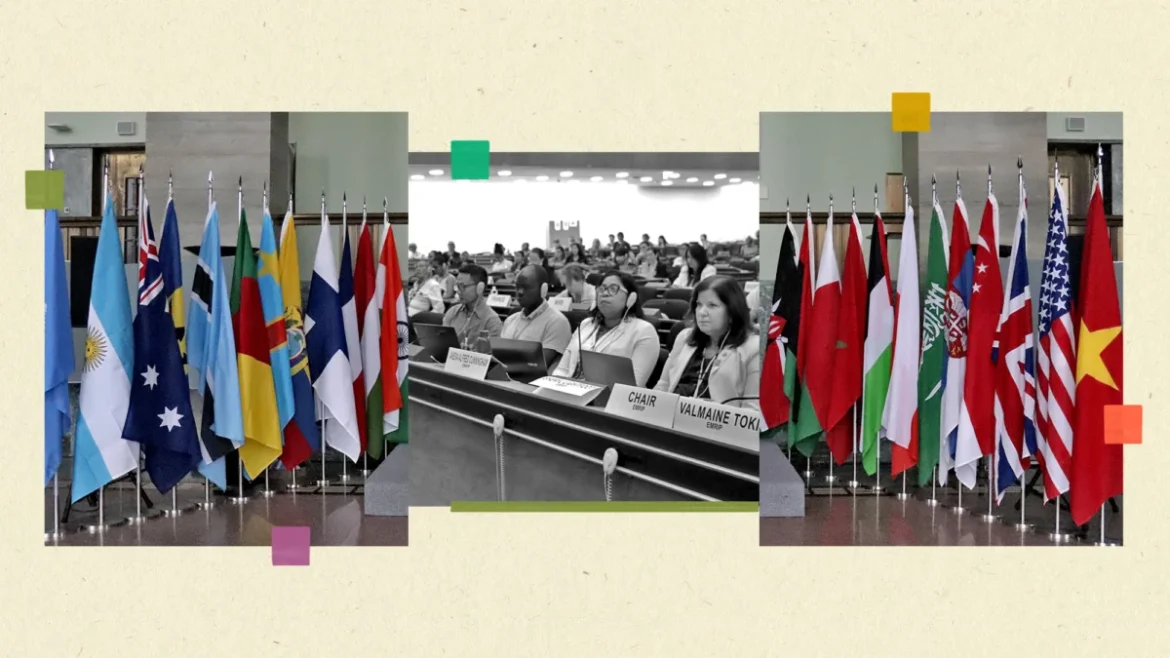
Indigenous leaders and representatives from across the globe have formally presented a strategic 12-point action plan to the United Nations, demanding immediate and sweeping reforms to protect Indigenous lands, rights, and lives. The proposal, finalized by the seven Indigenous members of the United Nations Expert Mechanism on the Rights of Indigenous Peoples (EMRIP), comes at a critical juncture as these communities face a "colliding" set of crises, ranging from the accelerating impacts of climate change and systemic violence to emerging threats posed by unregulated artificial intelligence. The document is slated for presentation to the UN Human Rights Council, serving as a roadmap for how international governance must evolve to prevent the continued marginalization of the world’s approximately 476 million Indigenous people.
The urgency behind this proposal is underscored by a growing sense of frustration among Indigenous delegates, who argue that while international forums provide a platform for dialogue, they have failed to produce the tangible "on-the-ground" changes necessary for survival. Cora McGuire-Cyrette, a member of the Bingwi Neyaashi Anishinaabek and a representative for the Ontario Native Women’s Association, emphasized that the time for rhetoric has passed. She noted that Indigenous women, children, and families have an inherent right to action that is currently not being met by global institutions. The sentiment was echoed by Sheryl Lightfoot, an Anishinaabe expert serving as EMRIP’s North America representative, who highlighted that the scale of current threats—including environmental degradation and the erosion of legal protections—makes these international platforms more vital than they have ever been in history.
The Twelve Pillars of the Indigenous Action Plan
The 12-point plan serves as a comprehensive policy framework designed to address both historical grievances and 21st-century challenges. While the full technical details of the document are being refined for the Human Rights Council, the core recommendations focus on strengthening the legal and operational standing of Indigenous peoples within the UN system.
One of the most critical recommendations involves the protection of remote Indigenous peoples living in voluntary isolation or initial contact. These groups are among the most vulnerable on the planet, often facing existential threats from illegal logging, mining, and the transmission of diseases to which they have no immunity. The plan calls for international recognition of their right to remain isolated and the enforcement of "no-go" zones to protect their territories.
Additionally, the proposal emphasizes the necessity of Indigenous data sovereignty. In an era where data is frequently described as the "new oil," Indigenous leaders are concerned that their traditional knowledge and biological data are being harvested by corporations and research institutions without consent or compensation. The plan advocates for legal frameworks that allow Indigenous nations to control, protect, and manage data regarding their peoples, lands, and resources.
Other key pillars of the plan include:
- The full and immediate implementation of the United Nations Declaration on the Rights of Indigenous Peoples (UNDRIP).
- The preservation and revitalization of Indigenous languages, many of which are at risk of extinction.
- Increased Indigenous participation and permanent seating within the UN Human Rights Council.
- Enhanced legal recognition of Indigenous rights as distinct and collective rights, rather than merely a subset of individual human rights.
- Mandatory inclusion of Indigenous women and girls in all decision-making processes that affect their communities.
A History of Advocacy: The Path to EMRIP
To understand the weight of this current proposal, it is necessary to view it through the lens of a century-long struggle for international recognition. The journey began in earnest in 1923, when Cayuga Chief Deskaheh traveled to the League of Nations in Geneva to defend the right of his people to live under their own laws on their own lands. Although he was denied a hearing, his efforts laid the groundwork for future generations.
In 1982, the UN established the Working Group on Indigenous Populations, which eventually led to the drafting of UNDRIP. It took 25 years of intense negotiation before the General Assembly finally adopted the Declaration in 2007. That same year, EMRIP was established by the Human Rights Council to provide the UN with expertise on the rights of Indigenous peoples. However, despite these milestones, the transition from "recognition" to "implementation" remains stalled. The current 12-point plan is seen by many as the "second phase" of the UNDRIP era—moving from defining rights to enforcing them through concrete global mechanisms.
The Stagnation and Regression of Human Rights
The presentation of the 12-point plan coincides with a sobering assessment from Albert Barume, the UN Special Rapporteur on the Rights of Indigenous Peoples and former EMRIP chairperson. Barume warned delegates of a "widespread trend of stagnation and regression" in the global human rights landscape. He observed that in recent years, almost no member states have introduced new measures to protect Indigenous rights. More alarmingly, Barume pointed out that several states with existing legal and policy frameworks are actively dismantling those protections.
This regression is visible in various geopolitical contexts. Macy Duxfield, representing the Ngaa Rauru, Te Ātihaunui-a-Pāpārangi, and Ngāi Tahu nations, pointed to the current political climate in Aotearoa New Zealand. She described a shift toward policies that undermine the progress made in previous decades regarding Māori rights and the Treaty of Waitangi. Duxfield noted that the struggle is generational, stating that current leaders have inherited the work of their ancestors and are obligated to pass a stronger foundation to their descendants.
The UN Liquidity Crisis: A Threat to Indigenous Representation
While the 12-point plan outlines a vision for the future, the very platforms intended to facilitate this change are facing a financial existential crisis. The UN is currently grappling with a severe "liquidity crisis" caused by the failure of several member states to pay their assessed contributions in full and on time. This has direct implications for Indigenous-specific bodies, which are often the first to face budget cuts.
EMRIP, the Permanent Forum on Indigenous Issues, and the Special Rapporteur—the three pillars of Indigenous representation at the UN—all face an uncertain future due to dwindling financial support. Marjolaine Étienne, an Innu from the Pekuakamiulnuatsh community in Quebec, highlighted the precarious state of the UN Voluntary Fund for Indigenous Peoples. This fund is essential for covering the travel and accommodation costs of Indigenous representatives who would otherwise be unable to attend international meetings in Geneva or New York.
The statistics regarding the fund are stark:
- Only eight countries currently contribute to the Voluntary Fund for Indigenous Peoples.
- The total budget for the fund is less than $2 million annually.
- Only three countries have contributed to the UN Trust Fund for Indigenous Peoples.
- Major global powers, including the United States, do not contribute to either fund.
Without these resources, the "Indigenous voice" at the UN risks becoming an "elite voice," limited only to those from wealthy nations or those with corporate backing. McGuire-Cyrette warned that the liquidity crisis must not be used as an excuse by the UN to limit EMRIP’s mandate or reduce the frequency of country engagements.
Emerging Threats: Climate Change and Artificial Intelligence
The 12-point plan is unique in its explicit mention of artificial intelligence (AI). As AI models are trained on massive datasets, there is growing concern about the "digital colonization" of Indigenous knowledge. Traditional ecological knowledge (TEK), which has been refined over millennia, is increasingly being utilized by pharmaceutical and technology companies without the consent of the knowledge holders. The EMRIP proposal argues that without strict international regulations, AI could become a tool for further dispossession.
Simultaneously, the climate crisis continues to disproportionately impact Indigenous communities. While Indigenous peoples protect an estimated 80% of the world’s remaining biodiversity, they are often the first to be displaced by climate-induced disasters and the least likely to receive international climate financing. The 12-point plan calls for a direct pipeline of climate funding to Indigenous-led conservation efforts, bypassing national governments that may have conflicting interests.
UN80 and the Future of International Mechanisms
The proposed reforms come as the United Nations prepares for "UN80," a comprehensive agency-wide reform effort aimed at making the organization more efficient and responsive to modern challenges. Sheryl Lightfoot noted that while there are many "unanswered questions" regarding how these reforms will impact Indigenous-specific mechanisms, the EMRIP team is preparing to defend their role.
The concern among delegates is that "efficiency" might become a euphemism for "consolidation," which could result in Indigenous issues being folded into broader human rights categories, thereby losing their distinct focus. The 12-point plan serves as a preemptive strike against such a move, asserting that Indigenous rights are unique, collective, and require specialized bodies to oversee their protection.
Analysis of Implications: The Cost of Inaction
The presentation of this 12-point plan to the Human Rights Council is more than a procedural step; it is a challenge to the legitimacy of the international rules-based order. If the UN and its member states fail to adopt these recommendations or provide the necessary funding to sustain Indigenous platforms, they risk alienating a significant portion of the global population whose stewardship is essential for meeting global climate and biodiversity goals.
The "regression" noted by Barume suggests that the era of symbolic gestures is ending. Indigenous nations are increasingly turning to domestic litigation and direct action when international mechanisms fail. However, a functional UN framework remains the only venue for addressing trans-border issues like AI regulation, international trade, and global climate policy.
The 12-point plan provides a clear choice for the international community: engage in a genuine partnership that recognizes Indigenous sovereignty and provides the resources for its exercise, or continue a path of stagnation that threatens to render international Indigenous advocacy obsolete. As the Human Rights Council reviews these recommendations, the eyes of Indigenous communities worldwide remain fixed on Geneva, waiting to see if "action" will finally follow the decades of "talk."
