
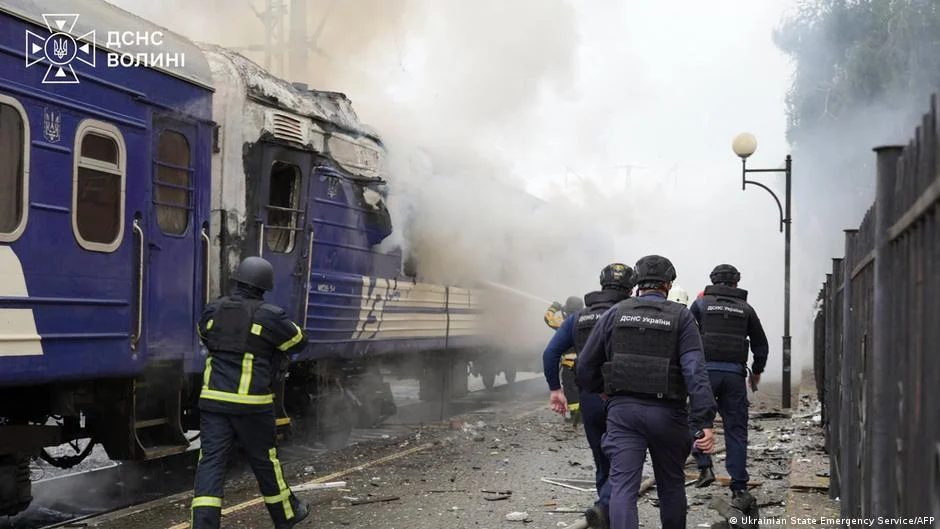
The Ukrainian railway system, often described as the country’s "lifeline," has become the primary theater for a sustained campaign of attrition by Russian forces. In the first eight months of 2026 alone, state rail operator Ukrzaliznytsia recorded over 1,600 drone strikes directed at locomotives, passenger stations, and associated transit infrastructure. This surge in tactical targeting represents a strategic shift in the Kremlin’s war effort, moving beyond frontline combat to dismantle the logistical backbone that sustains both the Ukrainian economy and its civilian population.
The attacks have reached a level of intensity that threatens to paralyze the nation’s internal connectivity. On September 16, a passenger train operating on the critical corridor between Kyiv and Mykolaiv was targeted by a Russian unmanned aerial vehicle (UAV). This incident occurred less than 24 hours after a separate strike disrupted transit in the Volhynia region, near the border with Poland. The proximity of these strikes to NATO territory underscores the heightened security risks posed by Russia’s tactical shift.
A Chronology of Escalating Logistics Sabotage
The targeting of railway infrastructure is not a new development in the Russo-Ukrainian war, but the scale and precision of the 2026 campaign are unprecedented. Since the onset of the full-scale invasion in 2022, Russia has successfully damaged or destroyed more than 500 locomotives. Notably, more than 50 percent of this destruction has occurred within the current calendar year, signaling a deliberate effort by Russian command to deplete Ukraine’s rolling stock faster than it can be replaced.
The most provocative incident in recent weeks occurred at the Yahodyn border crossing. On September 14, a drone struck the locomotive of a passenger train just two kilometers from the Polish border. Had it not been for the advanced monitoring systems employed by Ukrzaliznytsia, which detected the incoming threat and initiated an evacuation 15 minutes prior to impact, the attack likely would have resulted in significant civilian casualties. Intelligence reports suggest that this specific train was a secondary target; a diplomatic transport carrying former British Prime Minister Boris Johnson and various security advisors had departed the same station only minutes earlier, suggesting that Russian targeting systems may be actively monitoring high-profile diplomatic movements.
Technical Vulnerabilities and the Mechanics of Destruction
The vulnerability of Ukraine’s rail system is rooted in both geography and engineering. Vasyl Shevchenko, a former Ukrainian deputy transport minister, emphasizes that the thermal signature of a modern locomotive is immense, making it a "near-impossible target to miss" for modern thermal-imaging drones.
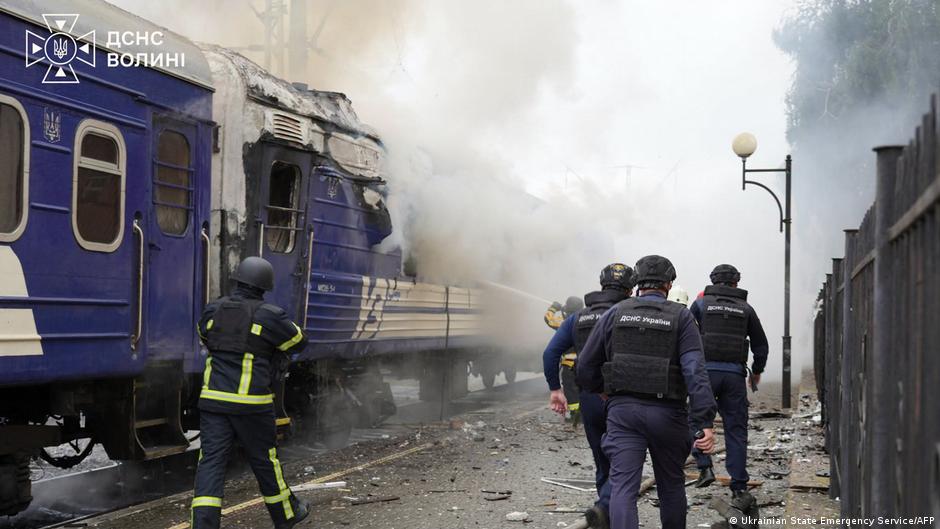
The technical impact of these strikes is devastatingly efficient. A diesel locomotive, housing approximately 50 kilograms of explosives within its fuel reserves, can trigger a secondary detonation of several metric tons of fuel upon impact. For electric locomotives, a strike often results in sustained electrical fires that effectively paralyze an entire stretch of track for days or weeks. Because the Ukrainian railway utilizes a unique Soviet-era broad-gauge track (1,520 millimeters), rolling stock is not easily interchangeable with Western European systems. Replacing these specialized units involves multi-year procurement cycles, creating a supply chain crisis for the Ukrainian government.
To mitigate this, Ukrzaliznytsia has entered into strategic partnerships, including a procurement contract with the French industrial giant Alstom. While these new units are slated to begin arriving in 2027, the current reality remains one of improvised repairs and extreme caution. "Our priorities have shifted entirely," noted Oleh Holovashchenko of Ukrzaliznytsia. "We are no longer concerned with passenger comfort or aesthetic maintenance. Our singular focus is technical viability—ensuring the locomotive can move people and critical cargo from point A to point B without catastrophic failure."
Institutional Responses and Defensive Adjustments
In response to the mounting pressure, President Volodymyr Zelenskyy convened an emergency meeting of the Supreme Commander-in-Chief’s staff on September 15. The agenda focused on the immediate hardening of critical infrastructure. The government has prioritized the production of indigenous protective shielding for locomotives and the reorganization of mobile fire teams equipped with portable air defense systems.
Furthermore, the Ukrainian Finance Ministry has been tasked with identifying emergency funding to bolster the logistics sector. Beyond physical defense, the focus has shifted to the expansion of Electronic Warfare (EW) capabilities, which aim to jam the navigation signals of Russian Shahed-type drones. The introduction of jet-powered, high-speed UAVs into the Russian arsenal has severely compressed the decision-making window for railway dispatchers, forcing a transition toward more frequent "precautionary stops" and the adoption of a "train-plus-bus" intermodal transport strategy in high-risk zones.
The Human Cost and Winter Preparedness
As the conflict stretches into another winter, the challenges facing Ukrzaliznytsia are compounded by the climate. The railway remains the only viable method for large-scale civilian evacuation from frontline regions. Dispatchers now rely on real-time maps of shelters located along transit routes, attempting to synchronize stops with proximity to subterranean protection. However, as Holovashchenko admits, this is not always feasible.
"We are preparing for the worst-case scenario," Holovashchenko stated. "Staff are being trained in psychological first aid to manage passenger panic, and we are distributing emergency kits—blankets, rain gear, and thermal supplies—to ensure that if a train is forced to halt in the middle of a snowstorm due to an air raid, the passengers do not succumb to the elements."

Strategic Implications for the War Effort
The systematic destruction of Ukraine’s railway network is a clear attempt by the Russian Federation to decouple the Ukrainian frontline from its rear-area industrial and agricultural base. By forcing the transport of grain and critical defense materials onto trucks, Russia aims to increase the cost of logistics, heighten the probability of disruption, and exacerbate the strain on Ukraine’s already burdened national budget.
Ukrainian Foreign Minister Andrii Sybiha has been vocal in his calls for the international community to tighten sanctions on the components used in Russian drones, many of which continue to be sourced from Western markets via third-party intermediaries. He argues that the financial assistance provided by partners must be explicitly tied to the procurement of rolling stock to ensure that the "arteries of the nation" remain functional.
From an analytical perspective, the campaign against the rail network is a test of resilience. While the loss of 500 locomotives is a significant blow to the national economy, the rail operator has demonstrated an uncanny ability to clear debris, repair tracks, and restore service with remarkable speed. Nevertheless, the transition to jet-powered drones and the targeting of diplomatic-grade infrastructure indicate that Russia views the rail system not merely as an economic target, but as a symbolic and strategic objective intended to break the morale of the Ukrainian state.
As the war enters its next phase, the survivability of the Ukrainian railway will likely serve as a leading indicator of the country’s ability to sustain its war effort. Whether through the delivery of advanced air defense systems to protect major junctions or the rapid integration of Western-standard equipment, the logistical struggle remains a defining, albeit often overlooked, element of the ongoing conflict. The "unbreakable line," as it is colloquially known by rail workers, is currently undergoing its most severe stress test since the initial weeks of the 2022 invasion.
