
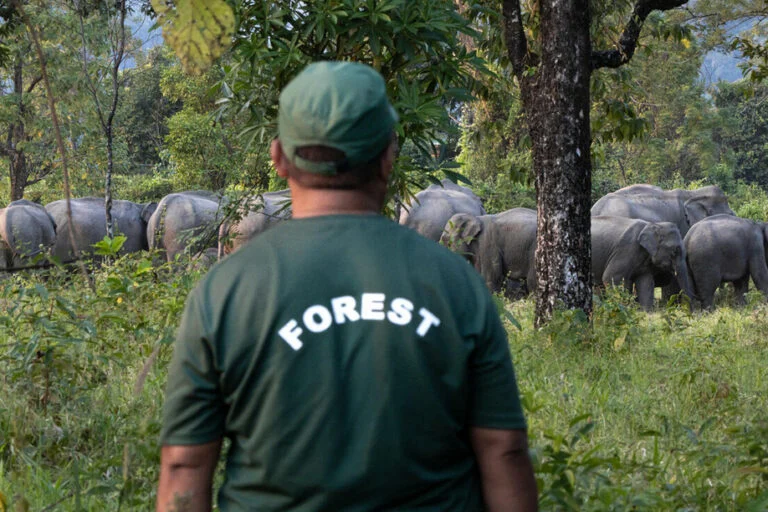
As global delegates gather in Yerevan, Armenia, for the COP17 biodiversity summit, the conversation is dominated by the ambitious targets set during the 2022 Kunming-Montreal Global Biodiversity Framework (KMGBF). At the heart of these deliberations is Target 3, a monumental pledge to protect 30% of the Earth’s land and marine environments by 2030, commonly referred to as the "30×30" initiative. However, beneath the high-level policy discussions lies a glaring omission that threatens to undermine these goals before they are even fully implemented: the systematic neglect of the frontline workforce responsible for turning environmental policy into tangible results.
Rangers—the forest guards, game scouts, marine patrollers, and wildlife wardens who serve as the eyes and ears of the planet’s protected areas—remain largely invisible in the global policy architecture. A recent study published in the journal Ambio highlights a significant "ranger blind spot" in current conservation frameworks. While the world debates funding mechanisms and spatial mapping, the human capital required to maintain these areas is being treated as an afterthought.
The Evolution of the 30×30 Mandate
The 30×30 goal is not merely a quantitative target; it is a qualitative requirement for planetary health. Since its adoption in 2022, the framework has guided nations to rethink their land-use strategies. In the years following, the focus shifted from simple designation—marking areas on a map as "protected"—to the logistical reality of enforcement.

The timeline of global conservation policy has evolved rapidly since the adoption of the Convention on Biological Diversity (CBD) goals. By 2024, many nations began submitting their updated National Biodiversity Strategies and Action Plans (NBSAPs). Yet, analysis of 45 major policy documents reveals that "area" and "finance" are mentioned with staggering frequency compared to "rangers." In many of these documents, references to protected territory appear 70 times more often than references to the personnel tasked with protecting them, suggesting a fundamental misalignment in how conservation success is measured.
Defining the Frontline Force
The International Ranger Federation (IRF) provides a broad definition for this essential workforce. A ranger is any individual working in situ to safeguard nature, biodiversity, and cultural heritage. This encompasses a diverse group, including government-employed park guards, members of Indigenous and local communities (IPLCs), and conservation officers working for non-governmental organizations.
Data from the IRF and the Universal Ranger Support Alliance (URSA) indicates that 36% of the global ranger workforce is comprised of local residents living within a 20-kilometer radius of the ecosystems they protect. This creates a critical intersection between conservation, local economic stability, and community-led management. Despite this, the professionalization of the sector remains inconsistent, leaving many rangers in precarious positions.
The Statistical Reality of Ranger Risk
The human cost of conservation is profound. Global surveys show that, on average, two rangers lose their lives in the line of duty every week. These casualties are the result of an increasingly hostile environment, characterized by confrontations with organized wildlife criminal networks, human-wildlife conflict, and the rising unpredictability of climate-driven natural disasters.

Despite these risks, only 47% of rangers report having access to basic life or health insurance. Furthermore, nearly half of the workforce across Asia, Africa, and Latin America reports a lack of essential equipment—such as communication devices, protective gear, and transport—as well as insufficient formal training. This lack of institutional support creates a structural vulnerability. When an area is declared a "protected zone" without the provision of a properly equipped and compensated workforce, it risks becoming a "paper park"—a region that exists as a protected entity in legal terms but offers no actual defense against encroachment, poaching, or habitat degradation.
Comparative Policy Analysis: Conservation vs. Public Health
The conservation community frequently draws parallels between environmental health and human medicine, yet it fails to adopt the foundational logic of the latter. In the World Health Organization’s (WHO) "Operational Framework for Primary Health Care," the human workforce—nurses, doctors, and community health workers—is central to the strategy. In the study conducted for Ambio, researchers found that health workers were mentioned 48 times more frequently in health policy documents than rangers were in equivalent conservation plans.
This comparison serves as a diagnostic tool for the conservation sector. Policymakers in the health sector understand that a hospital building is useless without the medical staff to operate it. Conversely, the conservation sector has spent years investing in "capital and space"—the land and the funding—while decoupling those investments from "labor." The result is a system that invests billions of dollars annually, yet falls significantly short of the estimated $68 billion needed to effectively manage existing protected areas.
Institutional Responses and The Way Forward
As the COP17 summit proceeds in Yerevan, calls for a "Ranger-Inclusive Policy" have intensified. Advocates, including the IUCN World Commission on Protected Areas (WCPA), are urging delegates to integrate the workforce into core negotiations. The implications of failing to do so are clear: if the 30×30 target is to be achieved, the "how" of conservation must be prioritized alongside the "how much."

Institutional changes being proposed include:
- Formal Recognition: Explicitly naming the ranger workforce in national biodiversity plans and international treaties.
- Standardization: Adopting universal benchmarks for ranger training, professional conduct, pay scales, and working conditions that adhere to international human rights standards.
- Inclusive Financing: Ensuring that innovative finance mechanisms, such as carbon credits and biodiversity offsets, explicitly allocate funds for personnel and operational management, rather than just land acquisition.
- Gender Parity: Addressing the persistent gender gaps in the field, as evidenced by initiatives like Zimbabwe’s all-women ranger force, which has demonstrated that equitable employment leads to more resilient conservation outcomes.
The Broader Economic and Environmental Stakes
The economic argument for investing in rangers is robust. Beyond the immediate protection of biodiversity, well-managed protected areas provide ecosystem services essential to the global economy—including carbon sequestration, water filtration, and climate regulation. When rangers are absent, these ecosystem services are compromised, leading to long-term costs that far exceed the price of professionalizing the conservation workforce.
Furthermore, as climate change accelerates, the role of the ranger is shifting from traditional patrolling to dynamic ecosystem monitoring. Rangers are increasingly responsible for data collection that informs climate adaptation strategies, acting as the primary source of ground-truth data for global biodiversity monitoring.
Implications for Future Summits
The Yerevan summit represents a turning point. If the global community leaves without a structural commitment to the workforce, the 2030 targets will likely remain aspirational rather than operational. The "ranger blind spot" is not merely a policy failure; it is a threat to the integrity of the global biodiversity framework.

As negotiations finalize, the message from conservation experts is clear: an ambitious target without a supported workforce is a hollow promise. By treating the ranger profession with the same gravity and structural support as essential public health services, governments can move beyond the era of "paper parks" and toward a future where the 30×30 commitment is backed by the boots on the ground necessary to make it a reality.
The success of the Kunming-Montreal Global Biodiversity Framework will ultimately be judged not by the hectares marked on a map, but by the capacity, safety, and recognition afforded to the men and women who patrol the world’s most vital ecosystems. Without them, the most sophisticated conservation strategies remain, at best, a theory, and at worst, a missed opportunity for the planet’s future.
