
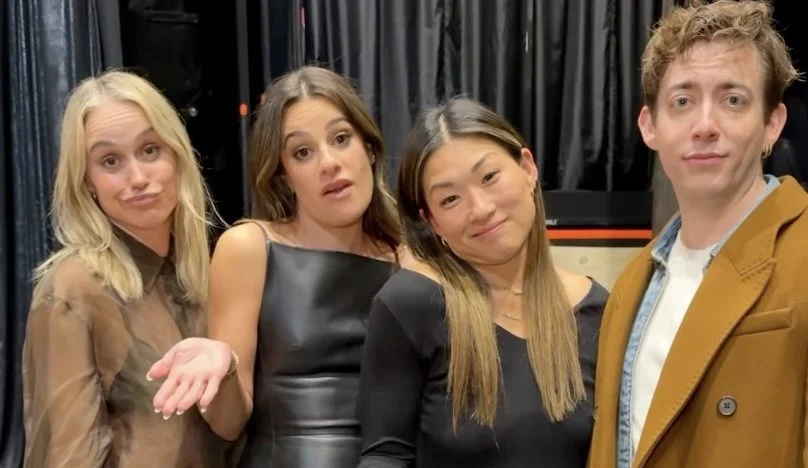
The curtains at New York’s Broadway stage recently parted to reveal more than just the cult classic spectacle of The Rocky Horror Show; they served as the backdrop for a nostalgic convergence of the television landscape’s most iconic singing ensemble. Lea Michele, Jenna Ushkowitz, and Becca Tobin were spotted in the audience, offering their support to former Glee co-star Kevin McHale. McHale, who joined the Broadway production on August 25, has taken on the mantle of Brad Majors, stepping into a role that holds significant weight within the Glee fandom and the personal history of the show’s cast.
The reunion, documented through shared social media content, saw the four actors gathered backstage to recreate a moment of levity from their time on the Fox musical dramedy. In a short, viral video clip, the group lip-synced the memorable line, "You’re all minorities. You’re in the glee club," a nod to the satirical, often sharp-tongued humor that defined the Ryan Murphy-created series. The event was not merely a social call; it underscored the enduring camaraderie between the actors, even as they stand on the precipice of a new, highly anticipated chapter for the franchise.
A Meaningful Performance: Kevin McHale’s Broadway Debut
Kevin McHale’s entry into the Broadway circuit is a milestone in his career, yet the gravity of his role as Brad Majors is amplified by his connection to the late Cory Monteith. On the original Glee series, Monteith’s character, Finn Hudson, portrayed Brad during the show’s memorable "The Rocky Horror Glee Show" episode. In a poignant tribute, McHale dedicated his Broadway run to his fallen friend. His Playbill bio features the simple, heart-wrenching dedication: "For Cory. His Forever Brad."
This gesture has resonated deeply with the original audience of the show, bridging the gap between the theatrical production and the televised legacy of the characters. While McHale played the Narrator during the Glee version of the musical, he has seamlessly transitioned into the lead, now performing alongside Margaret Cho, who currently inhabits the role of the Narrator in the Broadway production.
The Looming Shadow of the Glee Reboot
The timing of this reunion has fueled intense speculation regarding the forthcoming Glee reboot, which was officially ordered to series by Disney+ and Hulu last month. The original series, which aired from 2009 to 2015, fundamentally changed the trajectory of musical television, spawning numerous chart-topping covers and becoming a cultural touchstone for a generation of viewers.
Ryan Murphy, the mastermind behind the original series, has indicated that the development of the new project is well underway. Industry reports suggest that the production team has approached as many as 10 original cast members to gauge their interest in returning. The prospect of a revival has moved from theoretical discourse to active negotiation, with several key players confirming their involvement in preliminary talks.
Chronology of Recent Developments
The narrative surrounding the revival has accelerated rapidly over the past few weeks:
- Late September 2026: Initial reports confirm that Disney+ and Hulu have greenlit a Glee reboot, marking a major investment in established intellectual property.
- Early October 2026: Chris Colfer, who portrayed the fan-favorite character Kurt Hummel, publicly confirmed that he has engaged in "nice conversations" regarding a potential return to the franchise.
- Mid-October 2026: Confirmation arrives that Lea Michele is currently in talks to reprise her role as the ambitious Rachel Berry.
- Late October 2026: Reports surfaced detailing that Becca Tobin, who played the sharp-witted Kitty Wilde, and Heather Morris, known for her portrayal of Brittany S. Pierce, are in similar stages of negotiation. Chord Overstreet, who played the charismatic Sam Evans, is also reportedly among those in discussions.
Implications of the Revival
The decision to revisit Glee is indicative of a broader industry trend toward "legacy sequels" and high-profile reboots, which rely on the built-in audience of established hit shows. However, the Glee reboot presents unique challenges. The original show was defined by its specific cultural moment and its ensemble-driven narrative. Reconstructing that dynamic while addressing the absence of key cast members—most notably the late Cory Monteith and Naya Rivera—will require a delicate balance of respect for the past and innovation for the future.
For the actors involved, the reboot offers a chance to revisit roles that defined their early careers. Lea Michele’s potential return as Rachel Berry would be the centerpiece of the revival, given the character’s centrality to the original plot. Meanwhile, the interest expressed by supporting cast members suggests that the reboot aims to capture the "ensemble" spirit that made the original series a success.
Fact-Based Analysis: The Legacy Factor
The commercial viability of a Glee revival is rooted in the longevity of its streaming performance. Even years after its conclusion, the show remains a staple of binge-watching culture. By moving the project to the Disney+/Hulu ecosystem, the production gains access to a global platform that is actively seeking to expand its library of musical-centric programming.
However, the creative risk remains high. The original Glee was a product of the late 2000s and early 2010s, a period marked by a specific musical landscape. A reboot will need to reconcile the nostalgia of the original tracks with the current trends in music and media consumption. Furthermore, the show’s legacy is complex, having faced both immense critical acclaim and intense public scrutiny regarding its production environment and the tragic losses within its cast.
Stakeholder Perspectives
While official statements from the production companies remain guarded, the enthusiasm expressed by the actors during their recent meetup suggests a genuine willingness to engage with the project. Jenna Ushkowitz, who has remained a vocal proponent of the show’s legacy, has consistently highlighted the importance of the cast’s bond. For many of the actors, Glee was their "home" for six seasons, and the prospect of returning to that environment is clearly a significant factor in their current negotiations.
Industry analysts suggest that the success of the reboot will largely hinge on how much of the original "DNA" is preserved. If the production can secure a critical mass of the original cast, it could satisfy the long-held demands of the fanbase. If it chooses to skew toward a younger, newer cast, it risks alienating the very audience it intends to capture.
The Path Forward
As negotiations continue, the focus will remain on which of the 10 approached cast members will officially sign on the dotted line. The reunion at The Rocky Horror Show serves as a visual reminder of the bonds that persist long after the cameras stop rolling. While the world waits for definitive casting news, the casual, backstage gatherings of these stars provide a glimpse into the ongoing conversation about what the next chapter of Glee might look like.
Whether the reboot will attempt to pick up the threads of the original story or reinvent the concept for a new generation remains the central question. As Ryan Murphy and his team move through the pre-production phase, the involvement of actors like McHale, Michele, and Colfer will be the defining metric of the project’s authenticity. For now, the "Glee club" remains in a state of transition—caught between the memories of the past and the uncertainty of the future. The Broadway stage, with its echoes of the past, was a fitting setting for this latest chapter, proving that even as the performers move on to new roles, the influence of their shared history remains a central force in their careers.
