
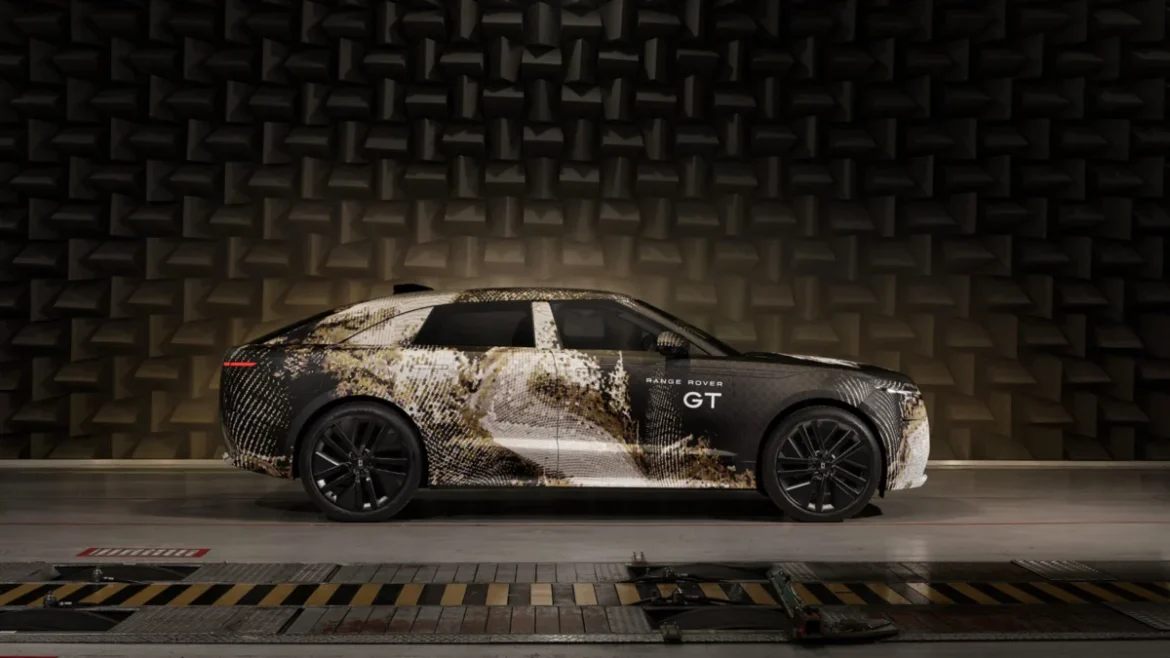
The automotive world is abuzz with the revelation of Range Rover’s ambitious new GT model, a vehicle poised to redefine the concept of a modern grand tourer. This forthcoming model, built on the company’s innovative EMA electrified architecture, represents a significant departure from Range Rover’s traditional SUV lineage, emphasizing a more car-like driving experience without compromising its renowned all-terrain capabilities. Martin Limpert, managing director of Range Rover, articulated the brand’s meticulous approach, stating, "We have spent the last few years working obsessively on the fundamentals of the GT formula, reinterpreted in a sophisticated, uniquely Range Rover way." He further elaborated on the vehicle’s dual nature: "The result is the most car-like, yet unmistakably capable, Range Rover ever created, now possible on our electrified EMA architecture – complementing our existing powertrain portfolio to deliver a complete set of options for every customer need. Its blend of effortless EV performance, first-class long-haul refinement and all-terrain capability is pure Range Rover; while its calming interior previews our vision of a modern grand tourer." This strategic pivot underscores Range Rover’s commitment to embracing electrification and expanding its product portfolio to cater to evolving consumer preferences.
A New Platform for a New Era: The EMA Architecture
The introduction of the Range Rover GT is intrinsically linked to the development and deployment of the EMA (Electrified Modular Architecture) platform. This marks Land Rover’s third dedicated electrifiable platform, joining the established MLA (Modular Longitudinal Architecture) that underpins current Range Rover models and the JEA platform, currently being developed by Jaguar for its forthcoming Type 01, another four-door grand tourer slated for debut later this year. The EMA platform is specifically engineered to facilitate the integration of advanced electric powertrains, offering a scalable and adaptable foundation for future electrified vehicles. Its design prioritizes a lower center of gravity, crucial for enhancing on-road dynamics and the car-like feel Range Rover aims to achieve with the GT. The platform’s flexibility is key to accommodating various battery sizes and electric motor configurations, allowing Range Rover to offer a diverse range of powertrain options that cater to different performance and range requirements, from swift urban commuting to extended cross-continental journeys.
Interior Design: A Sanctuary of Minimalism and Technology
A glimpse into the Range Rover GT’s interior, revealed to select media outlets, showcases a radical departure from the familiar, robust cabins of the brand’s SUV offerings. The design philosophy leans heavily towards an "ultraminimalist" aesthetic, at least on initial observation. This minimalist approach, however, has been carefully balanced with the stringent safety regulations prevalent in Europe and other global markets, which mandate the retention of physical controls for critical functions. Range Rover’s designers have consciously eschewed the trend of a third screen for the front passenger, opting instead for a more focused driver and passenger experience. The primary interface comprises two sophisticated OLED screens: one serving as the main instrument display, providing vital driving information, and the other as the central infotainment touchscreen, controlling a comprehensive suite of features. Furthermore, Range Rover has made a head-up display (HUD) a standard feature for the GT, projecting essential data directly into the driver’s line of sight, thereby minimizing distractions and enhancing safety. This strategic interior design choice reflects a growing trend among luxury automakers to create cabins that are both technologically advanced and intuitively navigable, fostering a sense of calm and focus during travel. The use of premium materials, ambient lighting, and refined finishes are expected to further enhance the sense of sanctuary within the GT, reinforcing its position as a true grand tourer.
Strategic Significance and Market Positioning
The introduction of the Range Rover GT is a calculated move by Jaguar Land Rover (JLR) to solidify its position in the burgeoning luxury grand touring segment, a market segment historically dominated by marques such as Bentley, Aston Martin, and Mercedes-Benz. By leveraging its established reputation for luxury, capability, and off-road prowess, Range Rover aims to carve out a unique niche within this competitive landscape. The GT is not merely an extension of its existing SUV lineup; it represents a strategic diversification, targeting a discerning clientele who value performance, comfort, and sophisticated design for long-distance travel. The emphasis on electrification through the EMA platform signals JLR’s commitment to its "Reimagine" strategy, which aims to electrify the entire JLR portfolio by 2030. The GT will serve as a flagship model, showcasing the brand’s technological advancements and design vision for the electric era.
The GT’s positioning as a "car-like" grand tourer suggests a departure from the more utilitarian, albeit luxurious, nature of its SUV siblings. This implies a focus on enhanced aerodynamics, a lower driving position, and a more engaging driving experience on paved roads. However, the "unmistakably capable" qualifier indicates that the GT will not entirely abandon its Range Rover heritage, hinting at the possibility of some level of off-road or all-weather capability, albeit perhaps less extreme than its SUV counterparts. This dual capability could prove to be a significant differentiator in a segment often characterized by road-focused performance.
Timeline and Future Outlook
While specific launch dates and detailed specifications for the Range Rover GT remain under wraps, the company has indicated that more information, including visual reveals of the production-ready vehicle, will be forthcoming later this year. This suggests a potential debut at a major automotive event in the latter half of 2024 or early 2025. The development timeline, spanning "the last few years" of "obsessive" work on the GT formula, indicates a significant investment in research and development. The parallel development of Jaguar’s Type 01 on the JEA platform suggests a coordinated effort within JLR to leverage shared technological advancements and manufacturing efficiencies across its brands.
The success of the Range Rover GT will hinge on its ability to deliver on the promises of effortless EV performance, first-class refinement, and genuine all-terrain capability, all wrapped in a package that embodies the sophistication and luxury synonymous with the Range Rover brand. The competitive landscape is fierce, with established players continuously innovating and new entrants emerging. However, Range Rover’s unique blend of heritage, luxury, and, now, forward-thinking electrification positions it as a formidable contender.
Broader Implications for the Automotive Industry
The Range Rover GT’s development and impending launch have broader implications for the automotive industry. It signals a continued shift towards electrification within the luxury segment, demonstrating that even historically performance-oriented and off-road-focused brands are embracing electric powertrains as the future. The emphasis on sophisticated interior design and the integration of advanced technology, while adhering to safety regulations, also sets a benchmark for future vehicle interiors. The successful integration of the EMA platform across different models within JLR’s portfolio will be a key indicator of the company’s ability to execute its electrification strategy efficiently.
Furthermore, the GT’s positioning as a grand tourer with inherent capability could inspire other manufacturers to explore similar multi-faceted vehicles that blend comfort, performance, and versatility. As consumer expectations evolve, the demand for vehicles that can seamlessly transition between different driving environments and purposes will likely increase. Range Rover’s proactive approach with the GT suggests an understanding of these evolving trends and a commitment to shaping the future of automotive luxury. The industry will be watching closely to see how the Range Rover GT performs in the market, as it represents not just a new model, but a significant statement about the brand’s future direction and its ambitions in the evolving automotive landscape. The promise of a vehicle that is both "car-like" and "unmistakably capable," powered by advanced electric technology, sets a high bar for what consumers can expect from the next generation of luxury grand tourers.
