
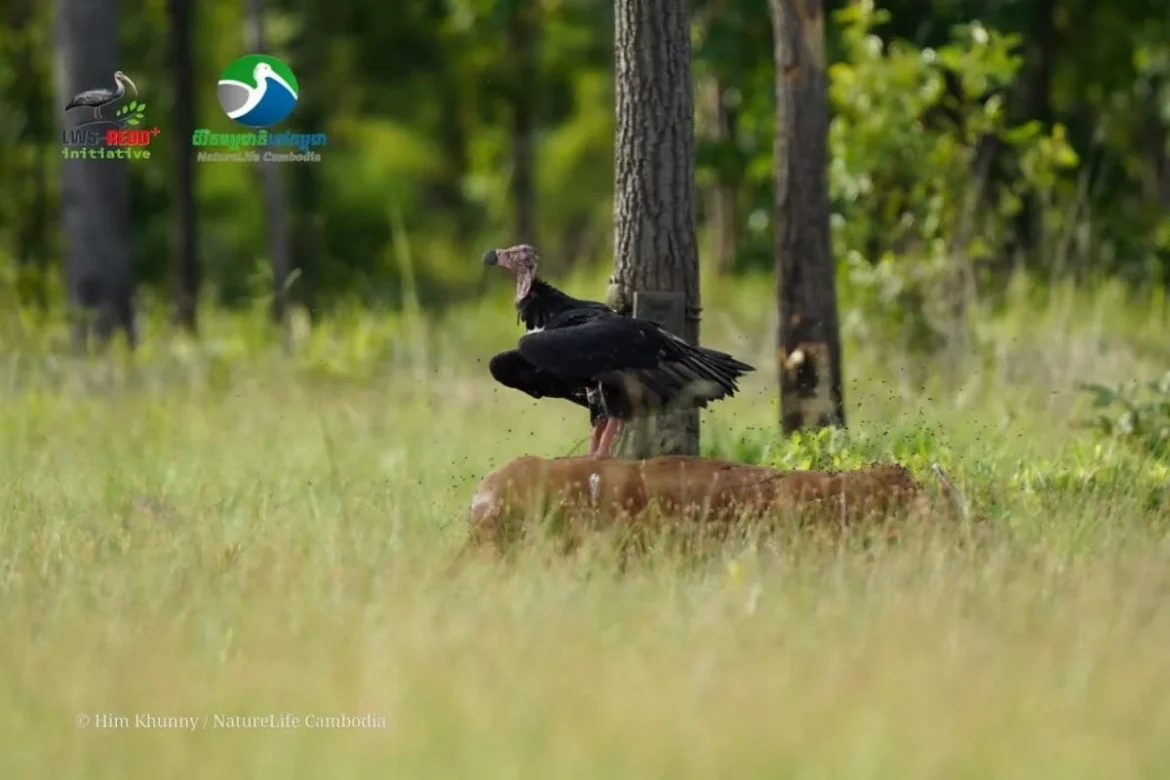
For the first time in a decade, conservationists have confirmed the presence of a critically endangered white-rumped vulture in Cambodia’s Lomphat Wildlife Sanctuary, marking a significant biological milestone for a species that has teetered on the brink of extinction. The sighting, which occurred during a June 2026 census, has sparked a mixture of celebration and profound concern among environmentalists. While the return of the vulture suggests that localized habitat management is yielding results, the sanctuary itself is facing an unprecedented onslaught from industrial mining operations and large-scale hydropower development that threatens to erase these hard-won gains.
The white-rumped vulture (Gyps bengalensis) was recorded at a supplementary feeding station, colloquially known as a “vulture restaurant,” which is managed by the non-governmental organization NatureLife Cambodia. These stations are critical interventions in Southeast Asia, where natural food sources for scavengers have dwindled due to the decline of wild ungulates and changes in livestock management. The June census did not only bring news of the white-rumped vulture; it also confirmed the presence of five red-headed vultures (Sarcogyps calvus). Notably, two of these were juveniles, providing concrete evidence of successful breeding within the sanctuary’s borders.
Bou Vorsak, the CEO of NatureLife Cambodia, emphasized the weight of this discovery in a statement to local media. He noted that the return of the white-rumped vulture after a ten-year absence is a testament to the efficacy of consistent conservation efforts. According to Vorsak, the presence of these birds indicates that the sanctuary’s habitat conditions have stabilized enough to support top-tier scavengers, provided a reliable food source is maintained. However, the optimism surrounding this ecological recovery is tempered by the rapidly changing landscape of the Lomphat Wildlife Sanctuary, where the legal protections afforded to the land are being systematically undermined by industrial interests.
The Fragile Recovery of a Scavenger Icon
The white-rumped vulture was once one of the most common large birds of prey in the world, but its population underwent a catastrophic collapse across South and Southeast Asia starting in the 1990s. While the primary cause in India and Nepal was the use of the veterinary drug diclofenac, in Cambodia, the threats have been more diverse, including habitat loss, the depletion of large mammal populations, and accidental poisoning.
The Lomphat Wildlife Sanctuary, spanning 356,087 hectares across the Ratanakiri and Mondulkiri provinces, represents one of the last remaining strongholds for Cambodia’s "Big Five" vulture species. The "vulture restaurant" program is a cornerstone of the national vulture conservation strategy. By providing carcasses of domestic cattle that are certified free of harmful chemicals, conservationists ensure that the birds have a safe, predictable food supply. The sighting of a white-rumped vulture after ten years suggests that the species may be expanding its range back into former territories, or that individuals are migrating from other known colonies in the Preah Vihear or Stung Treng provinces.
The presence of juvenile red-headed vultures is equally significant. Red-headed vultures are notoriously shy and have specific nesting requirements, often preferring tall trees in undisturbed deciduous forests. Their successful breeding in Lomphat indicates that despite the encroachment of human activity, there remain pockets of high-quality primary forest that are essential for the survival of the species.
Industrial Encroachment and the Erosion of Protection
Despite these biological successes, the integrity of the Lomphat Wildlife Sanctuary is under severe pressure. The Veal Kambor Community Protected Area (CPA), a 2,835-hectare zone within the sanctuary, is currently the focal point of a clash between conservation and industrialization. CPAs are designed to allow local indigenous communities to manage forest resources sustainably while acting as a buffer for the sanctuary’s core zones. However, reports indicate that this balance is being discarded in favor of extractive industries.
Since 2020, the Cambodian government has granted at least five mining concessions to various firms within or adjacent to the sanctuary’s community-managed zones. One of the most prominent actors is CHHC Investment Co., which has been involved in marble quarrying within these protected boundaries. Satellite imagery and field reports suggest that quarrying activities have persisted even after the reported expiration of operating licenses in 2022.
The impact on local communities has been devastating. Residents who were granted 15-year management rights over these lands have reported the loss of fallow rice fields and restricted access to non-timber forest products. For many, the arrival of heavy machinery and the destruction of forest corridors have occurred with little to no prior consultation or compensation. The loss of these community lands does more than just harm local livelihoods; it fragments the habitat that the vultures and other endangered species, such as the Giant Ibis, rely on for survival.

The Looming Shadow of the Lower Srepok 3 Dam
While mining poses a localized threat to the sanctuary’s fringes, a much larger infrastructure project threatens to submerge its heart. The proposed 376-megawatt Lower Srepok 3 hydropower dam is a massive undertaking that has drawn sharp criticism from environmental groups and international observers. If the project proceeds as planned, the resulting reservoir would flood a significant portion of the sanctuary’s core zone.
The inundation would not only destroy the terrestrial habitat of the newly returned vultures but would also submerge the Veal Kambor CPA entirely. Perhaps most critically from a global climate perspective, the dam would flood areas currently protected under a REDD+ (Reducing Emissions from Deforestation and forest Degradation) carbon credit project. These projects are designed to incentivize forest preservation by selling carbon offsets to international buyers. The destruction of a REDD+ site for a hydropower reservoir represents a significant policy contradiction, potentially undermining Cambodia’s credibility in international carbon markets and resulting in a massive release of stored carbon dioxide as the submerged vegetation decomposes.
The Srepok River is a vital artery of the Mekong River system, and its damming has broader implications for fish migration and sediment flow. For the Lomphat Wildlife Sanctuary, the dam represents an existential threat that could render the "vulture restaurant" and other conservation infrastructures obsolete by physically removing the land they sit upon.
A History of Exploitation: From ELCs to Modern Threats
The current crisis in Lomphat is the latest chapter in a long history of land-use conflicts. In the 2010s, the sanctuary was a primary target for Economic Land Concessions (ELCs). During this period, the Cambodian government awarded at least six major concessions within the protected area, totaling more than 47,500 hectares. These lands were largely converted into industrial rubber and palm oil plantations.
The legacy of these ELCs is a sanctuary that is highly fragmented and easily accessible. Because Lomphat consists primarily of lowland deciduous forest, it lacks the natural geographic barriers—such as steep mountains—that protect other Cambodian sanctuaries. This accessibility has made it a prime target for illegal logging and land grabbing. The conversion of nearly 50,000 hectares to industrial agriculture a decade ago set the stage for the current industrial push, as it established roads and infrastructure that now facilitate mining and dam construction.
Analysis: The Cost of "Development" vs. Ecological Heritage
The return of the white-rumped vulture to Lomphat presents a stark choice for Cambodian policymakers. On one hand, the country is pursuing an aggressive energy and mineral development strategy to fuel economic growth and achieve "upper-middle-income" status by 2030. Projects like the Lower Srepok 3 dam are framed as essential for national energy security.
On the other hand, the return of a critically endangered species after a decade of absence is a rare "second chance" for biodiversity. Vultures play an irreplaceable role in the ecosystem as "nature’s clean-up crew." By consuming carcasses, they prevent the spread of diseases such as anthrax, tuberculosis, and rabies, which can jump from wildlife to livestock and humans. The economic value of these ecosystem services, while difficult to quantify, is substantial.
Furthermore, the destruction of REDD+ zones for industrial projects suggests a lack of alignment between Cambodia’s environmental commitments and its industrial planning. If protected areas can be de-gazetted or flooded at will, the long-term viability of conservation financing through carbon markets becomes tenous.
Conclusion and Future Outlook
The sighting of the white-rumped vulture in June 2026 is a beacon of hope, but it is a flickering one. For NatureLife Cambodia and other stakeholders, the priority remains the continued operation of feeding stations and the protection of nesting sites. However, without a high-level reassessment of the mining and hydropower projects slated for Lomphat, these efforts may eventually be in vain.
The fate of the Lomphat Wildlife Sanctuary will serve as a litmus test for Cambodia’s environmental policy in the coming decade. As the white-rumped vulture circles the skies above the Veal Kambor CPA, it flies over a landscape in transition—a sanctuary that is simultaneously proving its ecological worth and fighting for its legal existence. The coming years will determine whether the return of this iconic scavenger was a fleeting visit or a permanent homecoming.
