President Trump formally enacted the Lindsey O. Graham Sanctioning Russia and Iran Act of 2026 on Friday, establishing a robust new framework for U.S. foreign policy that targets the economic lifelines of both the Russian Federation and the Islamic Republic of Iran. The legislation, which moved through Congress with significant bipartisan backing, grants the executive branch sweeping new powers to impose tariffs of up to 100% on the world’s five largest importers of Russian energy products. This move signals a significant escalation in Washington’s strategy to stifle the financial resources fueling the ongoing conflict in Ukraine.
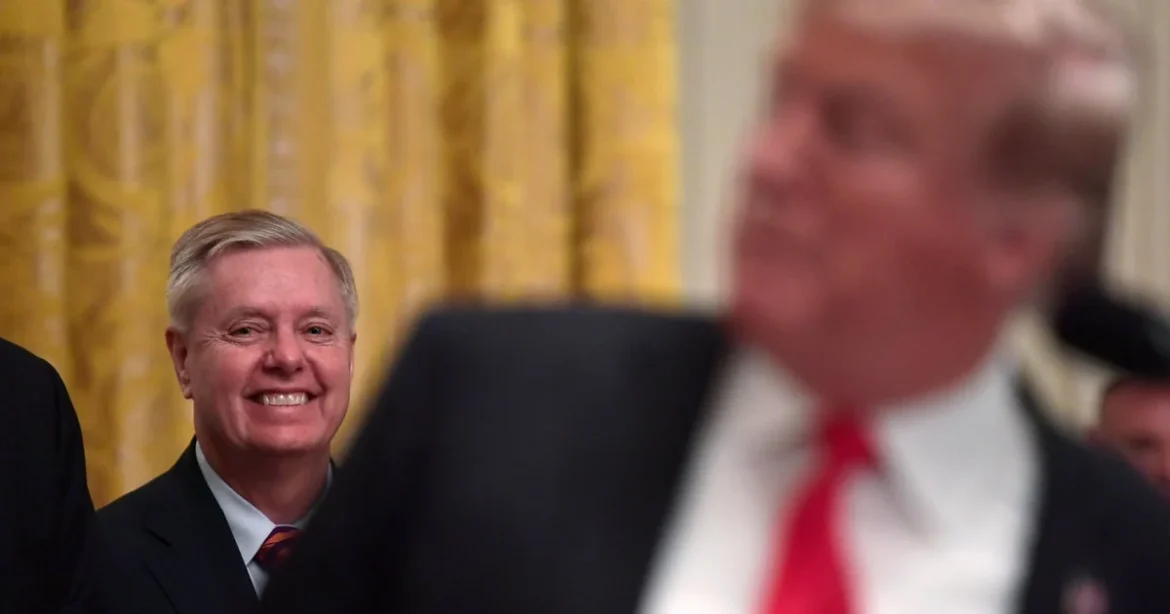
The signing of this bill represents a poignant moment for the current administration, as the legislation bears the name of the late South Carolina Senator Lindsey Graham, a staunch hawk who passed away suddenly in July 2026. President Trump, who delivered the eulogy at Graham’s funeral, has framed the act as both a necessary instrument of national security and a tribute to the late senator’s lifelong dedication to robust American global influence.
Legislative Genesis and Congressional Path
The path to the Oval Office desk was marked by complex negotiations and intense debate. Following Senator Graham’s passing—a result of a sudden aortic tear at age 71—the bill gained momentum as a memorial effort to honor his legislative priorities. The Senate approved the measure in August, though the path was not without dissent. While Republican support remained largely unified, a coalition of Democrats expressed skepticism regarding the expansion of presidential tariff authority, fearing the potential for long-term executive overreach in trade policy.
Despite these reservations, the House of Representatives solidified the bill’s passage earlier this week with a strong bipartisan vote. Proponents argued that the urgency of the war in Ukraine and the escalating regional instability in the Middle East necessitated immediate, aggressive action. The act serves as a comprehensive sanctions package that targets not only the Russian state apparatus but also its financial institutions, high-ranking officials, and the inner circle of oligarchs surrounding President Vladimir Putin.
Economic Implications: Targeting Global Energy Flows
The core of the new law lies in its capacity to disrupt the global energy market. By threatening to impose punitive 100% tariffs on the five largest buyers of Russian oil and gas, the U.S. is effectively putting a massive economic target on countries like China and India. These nations have historically served as primary outlets for Russian crude, helping Moscow maintain state revenues despite existing Western sanctions.
The timing of this legislation is particularly sensitive, as President Trump is scheduled to host Chinese leader Xi Jinping at the White House on September 24. Analysts suggest that the legislation will loom large over these discussions, providing the President with significant leverage. However, economists warn that such aggressive tariffs could trigger a volatile response in global energy prices and complicate the already delicate diplomatic relationships between Washington and the major Asian economies.
Beyond the Russian energy sector, the act formalizes an expansion of sanctions against Iran, specifically focusing on its weapons proliferation programs and energy exports. By tying the two nations together in this legislative package, the United States is signaling a unified approach to what many in the intelligence community describe as an "axis of convenience" between Moscow and Tehran.
The Conflict in Ukraine: A Diplomatic Impasse
The enactment of these sanctions arrives at a time when the conflict in Ukraine remains deadlocked. Despite campaign promises made during the 2026 election cycle to resolve the war within his first day in office, President Trump has faced the stubborn reality of deep-seated animosity between the combatants.
Recent diplomatic efforts have yielded little progress. Earlier this month, a high-level delegation led by Jared Kushner and special envoy Steve Witkoff traveled to both Moscow and Kyiv to gauge the potential for a ceasefire. Upon their return, President Trump expressed his frustration with the lack of movement, characterizing the conflict as a personal impasse between two leaders who "hate each other."
This assessment reflects the broader frustration within the White House regarding the limitations of traditional diplomacy in the current geopolitical environment. The administration appears to have concluded that if words cannot end the war, then severe economic pressure—as outlined in the Graham Act—must be applied to force a change in the strategic calculus of the Russian leadership.
Historical Context and the Legacy of Senator Graham
The late Senator Lindsey Graham was instrumental in crafting the legislation during the final months of his life. Following a trip to Ukraine, where he witnessed the devastation of the war firsthand, Graham became increasingly vocal about the need for a more muscular U.S. response. His death in July deprived the Senate of one of its most prominent voices on foreign policy, but his colleagues moved quickly to ensure that his final legislative priority reached the President’s desk.
The act is seen by many political observers as a synthesis of the "Peace through Strength" doctrine often championed by the late senator. By targeting the financial assets of the Russian elite and the banking institutions that facilitate their activities, the bill seeks to create a cost-benefit analysis for the Russian government that makes the continuation of the war untenable.
Strategic Outlook: Looking Ahead
The implementation of the sanctions will be a closely watched process in the coming months. The Treasury Department, in coordination with the State Department, is expected to begin the process of identifying the entities to be sanctioned and the specific energy purchasers to be targeted.
For the international community, the primary concern remains the potential for retaliation. Russia has historically responded to sanctions with counter-measures, including the restriction of gas supplies to Europe and the manipulation of energy markets. Furthermore, the potential for a trade dispute with China—the world’s second-largest economy—presents a significant risk to global economic stability.
However, the administration’s focus remains squarely on the geopolitical objective. With the signing of this bill, President Trump has secured a significant legislative victory that aligns with his stated goal of asserting American economic power to achieve foreign policy objectives. Whether this strategy will finally crack the stalemate in Ukraine or lead to a new era of global trade volatility remains to be seen.
As the calendar turns toward the end of September and the high-stakes meetings with global leaders approach, the Lindsey O. Graham Sanctioning Russia and Iran Act of 2026 stands as a defining piece of legislation for the second term of the Trump presidency. It marks a transition from a posture of cautious observation to one of direct, punitive engagement, ensuring that the legacy of Senator Graham continues to influence the trajectory of American foreign policy long after his passing.