
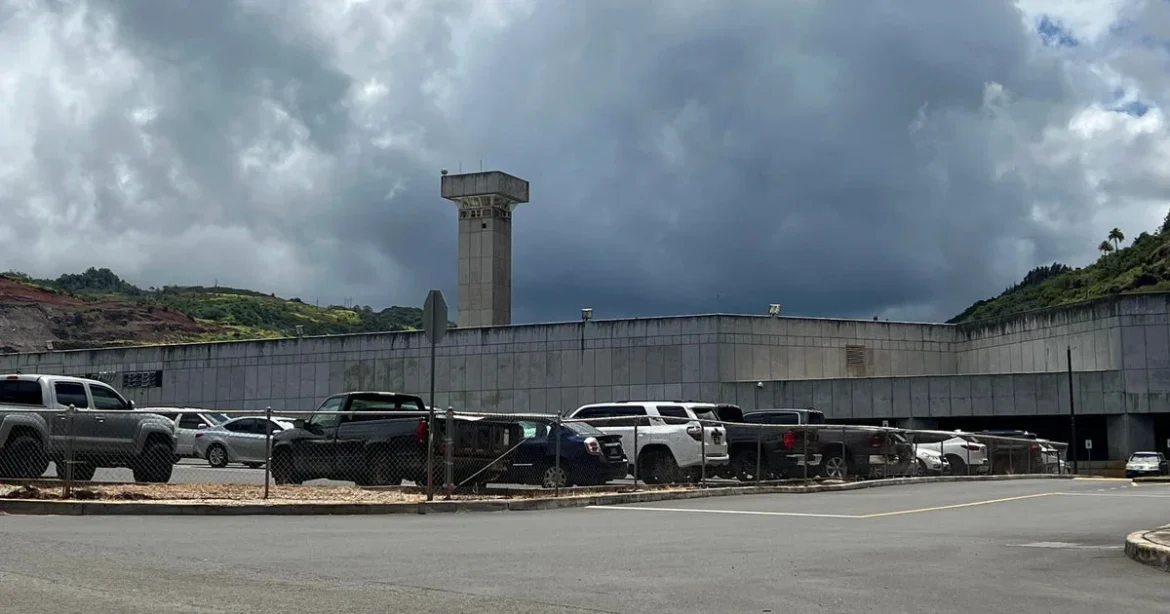
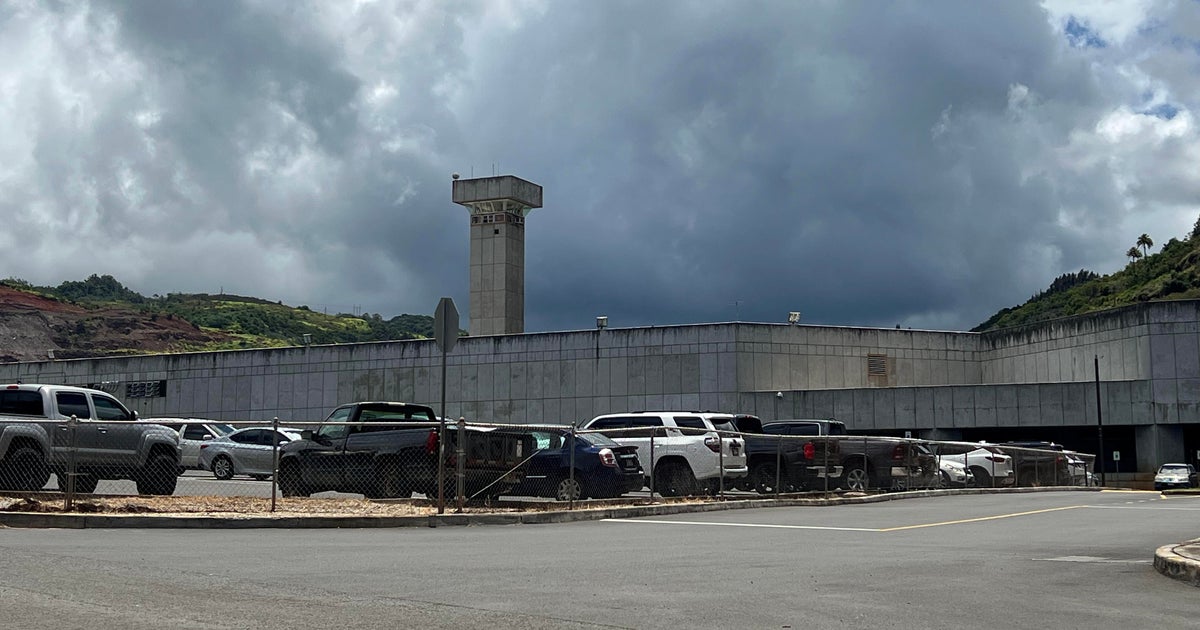
HONOLULU, Hawai’i – Christian Alameda, 52, pushes himself out of bed in his cell at Halawa Correctional Facility, a cane his only aid. Recovering from a January stroke that left the right side of his body largely paralyzed, Alameda’s situation at the prison’s medical infirmary encapsulates a growing national crisis: severely ill prisoners granted compassionate release remain incarcerated indefinitely due to the inability to secure placement in long-term care facilities. Despite being granted early probation by Hawai’i’s parole board in February to seek medical attention for his severe condition, Alameda, like many others, finds himself in a bureaucratic limbo, unable to leave prison because no long-term care facility is willing to accept him.
As of June, at least three other prisoners in Hawai’i, similarly granted release for urgent medical needs, were living indefinitely within the confines of the Halawa infirmary. Their primary obstacle? The persistent refusal of long-term care facilities to accept individuals with criminal backgrounds. This challenge is not unique to the Aloha State, but rather a systemic issue reverberating across the United States, highlighting profound ethical, financial, and humanitarian dilemmas within the criminal justice and healthcare systems.
A National Predicament: Compassionate Release Denied by Systemic Gaps
Compassionate release, a mechanism designed to allow terminally ill or incapacitated prisoners to spend their final days or convalescence outside prison walls, exists in some form in every U.S. state. However, Hawai’i stands as an outlier, lacking a specific statute and instead relying on an internal policy. Prisoners typically eligible for this early release are those who can no longer care for themselves or suffer from terminal illnesses, requiring specialized care often provided by assisted living centers, nursing homes, or hospice facilities. Yet, across the nation, these vital institutions frequently decline to admit former inmates, leaving individuals incarcerated for months, or even years, beyond their official release date.
Advocacy groups like FAMM (Families Against Mandatory Minimums), which champions fairness in prison policies, have underscored the pervasive nature of this problem. Molly Crane, an attorney for FAMM, emphasizes that this is "a challenge across the country," with states grappling with the ethical implications and financial burdens of this gridlock.
The Chronology of a Crisis: Policy Shifts and Mounting Evidence
The roots of this crisis are multifaceted, intertwining policy, public perception, and economic pressures on healthcare providers.
- Pre-2020s: While compassionate release policies existed, the challenges of placement were less acutely documented or understood. Cases were often handled on an individual, ad-hoc basis, with little centralized data on rejections.
- 2020-2024: Growing Awareness and Data: Studies began to emerge, shedding light on the scale of the problem.
- In Rhode Island, research revealed a significant spike in nursing home rejections once facilities were informed a patient was transferring from prison. This indicated a clear bias against individuals with carceral histories, regardless of their current medical state or non-violent past.
- Colorado witnessed prisoners with extensive medical needs remaining incarcerated for an average of 200 days after being granted parole, purely due to denials from long-term care centers. This extended detention not only exacted a human toll but also incurred substantial public expense.
- New York saw prisoners, already granted parole, resort to legal action against the state when they were unable to secure placement in nursing homes, highlighting the state’s failure to provide an adequate pathway for release.
- A 2024 report by the American Health Care Association and the National Center for Assisted Living revealed that most nursing homes nationwide already operate with waiting lists, exacerbating the difficulty of placing any new residents, let alone those with a stigmatized background.
- Summer 2025: "One Big Beautiful Bill Act" and Medicaid Strain: President Donald Trump’s "One Big Beautiful Bill Act," enacted in the summer of 2025, further compounded the issue. This legislation significantly reduced the window for facilities to receive retroactive Medicaid reimbursement for new patients. Previously, facilities could be reimbursed for up to three months prior to a Medicaid application; the new law cut this to as little as 30 days. Since prisoners do not qualify for Medicaid while incarcerated, parolees must apply upon release. This shortened window places immense financial risk on facilities, as delays in application processing could mean they are not paid for crucial care provided during the initial weeks of a patient’s stay. The Centers for Medicare & Medicaid Services (CMS) acknowledged this, with spokesperson Timothy Foster stating that CMS "encourages providers and beneficiaries to prioritize timely application submission to maximize coverage," a sentiment that, while practical, overlooks the systemic hurdles faced by a vulnerable population.
- 2026: Continuing Crisis in Hawai’i and Beyond: Christian Alameda’s ongoing plight in July 2026, alongside at least three other prisoners in Hawai’i, illustrates the enduring nature of this unresolved crisis. The death of Paul Kupihea in 2025, just days after his compassionate release, underscores the tragic consequences of these delays.
Barriers to Placement: The Healthcare Facilities’ Perspective
Long-term care facilities, while critical for post-incarceration medical care, articulate several reasons for their reluctance to accept former prisoners, primarily centering on safety concerns, resource limitations, and capacity issues.
Sean Sanada, CEO of the Oʻahu Region with the Hawaiʻi Health Systems Corp., oversees two state-funded long-term care facilities, Leahi Hospital and Maluhia. Sanada confirmed that while his health system has reviewed dozens of compassionate release referrals, none have ever been accepted. He stressed that facilities do not discriminate based on origin but cited primary concerns about staff safety and the lack of specialized resources to adequately care for patients with complex backgrounds. "The risk is just too high in most of those instances," Sanada stated.
This apprehension is not unfounded within the broader healthcare context. Violent incidents in long-term care facilities have been extensively documented. A 2024 study published in JAMA Network Open, observing 14 assisted living facilities, found that 15% of residents experienced resident-to-resident aggression in just one month. While these incidents are often linked to cognitive impairments like dementia, the perception of increased risk from individuals with a criminal history, regardless of the nature of their offenses or current medical state, often leads to blanket rejections.
Furthermore, Bob Merce, a former attorney turned advocate for prisoners’ compassionate release, points out that existing waitlists at most nursing homes, as highlighted by the 2024 AHCA/NCAL report, present an additional hurdle. Even if facilities were willing, the immediate availability of beds is often limited. Merce often reassures nursing homes that many of the individuals seeking placement are severely incapacitated and pose no threat, stating, "We tell the nursing homes that most of the people who we are talking about cannot hurt somebody." Yet, the institutional fear persists.
The Financial and Ethical Burden
The inability to place severely ill prisoners in appropriate care facilities imposes a significant financial burden on state taxpayers. In Hawai’i, the annual cost to incarcerate an individual with complex medical needs can be up to eight times the average cost of housing a person in prison, which stands at $112,505. This disparity is stark when compared to the average Medicaid reimbursement for long-term care patients at a Hawaiʻi Health Systems Corp. facility, which is approximately $135,000 per year. Effectively, states are spending vastly more to keep critically ill, often non-dangerous, individuals in prison infirmaries than it would cost to place them in specialized care, while simultaneously denying them the dignity of proper medical attention outside a correctional setting.
The "One Big Beautiful Bill Act" further exacerbates this financial strain by increasing the risk of uncompensated care for facilities, making them even less likely to accept patients who require complex administrative processes for Medicaid enrollment. This policy, intended perhaps to streamline administrative processes, inadvertently creates a barrier to care for one of the most vulnerable populations.
Policy Responses and Advocacy Efforts
Despite the widespread nature of this problem, concrete policy solutions remain elusive in most states. Only four states—Connecticut, Georgia, Massachusetts, and Vermont—have established contracts with nursing facilities specifically to accept prisoners granted compassionate release. This model offers a potential blueprint for other states. For instance, iCare Health Network’s MissionCare Health operates nursing homes designed for individuals transitioning from incarceration, securing contracts in three of these states. David Skoczulek, iCare’s vice president of business development and communication, estimates their rates are $100 to $350 a day higher per patient than average nursing home rates in those states, reflecting the specialized care and potentially higher administrative overhead involved. However, even with these higher costs, such arrangements are often more humane and cost-effective than prolonged incarceration in prison infirmaries.
In Hawai’i, the correctional department makes recommendations to the parole board, which then decides on compassionate release. However, the onus falls on parole authorities or family members to find suitable long-term care placements. Corey Reincke, head of the Hawaiʻi Paroling Authority, recounted calling over 100 care homes for a single parolee, only to be met with universal rejection due to safety concerns. This highlights a critical bottleneck: even with available bed capacity (Hawai’i’s long-term care facilities use about 80% of their bed capacity according to a 2024 state report), workforce strains and facility apprehension make placement difficult. Reincke noted that in his 24-year career, he could not recall anyone being successfully placed in a long-term care facility without family intervention.
Advocacy groups like FAMM are actively working to expand and formalize compassionate release laws across states. Molly Crane stresses that without a clear statute outlining a formal process and explicit qualification criteria, even strong family support may not be enough to prevent life-threatening delays. Hawai’i lawmakers have repeatedly attempted to pass compassionate release bills, but none have succeeded, leaving the state reliant on an internal policy that proves insufficient in practice. "The absence of a compassionate release statute means that people who need compassionate release languish and even die in prison," Crane asserted.
The Human Toll: Stories of Despair and Hope
The systemic failures manifest most acutely in the lives of individuals and their families. Paul Kupihea’s story is a poignant example. In July 2025, 69-year-old Kupihea, battling an incurable form of cancer, was granted compassionate release to his family. Tragically, he died at a hospital five days later, before he could even board a flight to his home island of Hawai’i. His daughter, who had not had a relationship with him for most of her life, agreed to take him into her home in Hilo, prompted by a late notification from a Honolulu hospital about his severe condition. Lahela Kruse, Kupihea’s former partner and mother of their child, expressed the profound shock and grief: "She knew he was sick… I told her that, but she didn’t know the severity of it. I didn’t truly know." Kupihea’s death underscores the urgent need for timely intervention and placement.
Christian Alameda, incarcerated since 2024 for drug possession, driving a stolen vehicle, and jumping bail—non-violent offenses—holds onto the hope of seeing his daughter, who recently turned five. In his stark cell, with two beds, a seatless metal toilet, and a window looking out onto a concrete wall, the smell of bleach is a constant reminder of his institutional confinement. "I made some mistakes in my life," Alameda reflected. "I tried when my daughter was born, but I know I’ll change, because she needs me out of here."
Bob Merce, who became aware of prisoners’ struggles through his work as a trial lawyer, continues his tireless efforts to find placement for Alameda and others. He has successfully helped about 15 prisoners leave Hawai’i correctional facilities for medical treatment, but the cases that haunt him are "the ones that I never found placements for," some of whom waited years. These individual tragedies underscore the profound human cost of a fragmented system that prioritizes perceived risks over fundamental human dignity and care.
The ongoing struggle to secure adequate post-release care for severely ill prisoners in Hawai’i and across the nation represents a critical failing at the intersection of justice, healthcare, and public policy. Addressing this complex issue requires not only legislative reform to formalize compassionate release processes but also innovative collaborations between correctional systems, healthcare providers, and community organizations to ensure that a grant of freedom does not remain an empty promise.
