
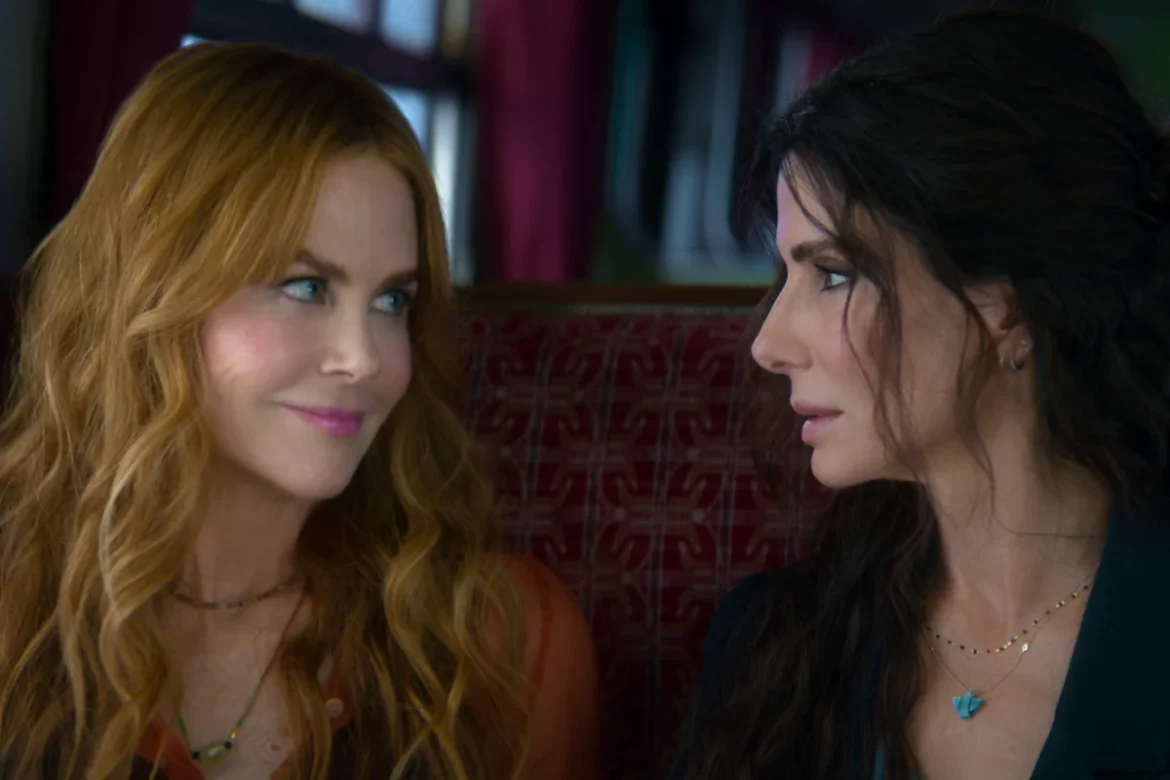
The cinematic landscape often struggles to reconcile commercial entertainment with critical acclaim, a dynamic vividly illustrated by the theatrical rollout of Practical Magic 2. Debuting on Rotten Tomatoes with a modest 34 percent approval rating among professional critics, the long-awaited sequel has reignited industry conversations regarding the disconnect between institutional film evaluation and enduring audience affection. Directed by Susanne Bier and reuniting principal cast members Sandra Bullock and Nicole Kidman nearly three decades after the release of the 1998 original, the film arrives burdened by high expectations, heavy scrutiny, and a vocal critical contingent questioning the necessity of its existence.
Yet, despite harsh reviews targeting its pacing, visual aesthetic, and narrative detours, the production was conceived less as an exercise in high-art filmmaking and more as a cultural touchstone celebrating female solidarity, family legacy, and communal nostalgia. To understand the trajectory of Practical Magic 2, one must examine the complex history of its predecessor, the evolution of its source material, and the passionate demographic that continues to sustain its commercial viability.
Background Context and Production Evolution
The journey toward Practical Magic 2 spans nearly three decades, rooted in the 1998 adaptation of Alice Hoffman’s bestselling novel. Directed by Griffin Dunne, the original film followed Sally and Gillian Owens, two witch sisters burdened by a centuries-old familial curse that ensured any man they loved would meet an untimely demise. Upon its initial theatrical release, the 1998 feature faced severe critical backlash, hampered by tonal ambiguities that confused contemporary reviewers trying to categorize the project as strictly a romantic comedy, a drama, or a supernatural horror film.
In subsequent years, however, the original film underwent a significant rehabilitation, transitioning from a commercial disappointment into a recognized cult classic. Its longevity was fueled by home video releases, memorable set designs, and iconic pop-culture moments—most notably the midnight margarita sequence featuring supporting performances by Dianne Wiest and Stockard Channing.
The impetus for a sequel gained momentum following the publication of Hoffman’s 2021 sequel novel, The Book of Magic. This literary continuation provided the narrative framework for the new film, focusing on Sally’s daughters, Kylie and Antonia—portrayed in the sequel by Joey King and Maisie Williams, respectively—as they discover their own magical heritage and confront the reality of the family curse. The adaptation process required significant logistical adjustments, including the recasting of roles originally played by Evan Rachel Wood and Alexandra Artrip to align with the characters’ ages as college graduates in the source material.
Chronology of the Sequel’s Release and Critical Reception
The rollout of Practical Magic 2 has unfolded across several distinct phases, marked by high anticipation, production adjustments, and polarized public discourse:
- Late 2021: Alice Hoffman publishes The Book of Magic, reigniting fan interest in a cinematic continuation of the Owens family saga.
- 2024–2025: Production commences under the direction of Susanne Bier, with Sandra Bullock and Nicole Kidman officially confirmed to reprise their roles. Casting announcements reveal the inclusion of Joey King, Maisie Williams, Xolo Maridueña, and Lee Pace.
- Early 2026: Casting controversies emerge regarding the recasting of the Owens daughters, drawing commentary from original cast members and industry observers.
- September 2026: Practical Magic 2 premieres in theaters, generating immediate polarization between professional critics and general audiences.
- Opening Weekend 2026: Despite a 34 percent critic score on Rotten Tomatoes, the film outperforms expectations at the box office, tracking toward an estimated $30 million opening weekend alongside a 92 percent audience approval rating.
Critical Complaints Versus Audience Engagement
Professional reviewers have raised numerous concerns regarding the execution of Practical Magic 2. Chief among the criticisms is the film’s visual style, which features brighter, harsher lighting that contrasts sharply with the moody, autumnal atmosphere established by Griffin Dunne in 1998. Furthermore, critics have pointed to a bloated 130-minute runtime—nearly thirty minutes longer than the original—as well as narrative detours that shift the primary action away from the iconic New England family estate to locations overseas.
Additional commentary has centered on character utilization. Xolo Maridueña, cast as Kylie’s boyfriend, spends a substantial portion of the narrative incapacitated in a coma, a creative choice that reviewers argue underutilizes the actor’s on-screen presence. The absence of cameo appearances from the original cast members who portrayed the younger generation has also drawn scrutiny from dedicated fans.
Conversely, the audience response has underscored a fundamentally different evaluative metric. While critics evaluate the project through technical parameters such as pacing, CGI integration, and script cohesion, the fanbase approaches the film as an immersive exercise in nostalgia and thematic comfort. The high audience score on review aggregators reflects an appetite for character continuity, the celebration of complex female relationships, and the continuation of a fictional universe that has held personal significance for viewers over the past twenty-eight years.
Industry Implications and Box Office Performance
The commercial trajectory of Practical Magic 2 offers a compelling case study in modern box office dynamics, where IP familiarity and targeted demographic appeal frequently outweigh negative critical consensus. Industry analysts note that the film’s projected $30 million opening weekend demonstrates the enduring purchasing power of millennial and Gen X audiences who formed an emotional attachment to the original property during its post-theatrical lifecycle.
This phenomenon mirrors the reception of the 1998 film, where producer Denise Di Novi and lead actress Sandra Bullock recalled facing systemic industry skepticism regarding female-led ensemble casts. Reflecting on past critical evisceration, contemporary discussions surrounding the franchise highlight a persistent friction between conventional critical frameworks and content specifically tailored to female-centric narratives, community rituals, and emotional escapism.
Ultimately, Practical Magic 2 operates outside the traditional rules of blockbuster evaluation. By prioritizing fan service, thematic consistency with the original’s core message of sisterly devotion, and the comforting aesthetics of cinematic witchcraft, the production has secured its financial footing regardless of institutional disapproval. As audiences continue to fill auditoriums, the film stands as a testament to the fact that cultural impact is frequently measured not by critical consensus, but by the enduring loyalty of the communities it serves.
