
The National Aeronautics and Space Administration faces a decisive transitional era in human spaceflight as it navigates the impending retirement of SpaceX’s venerable Crew Dragon spacecraft, slated for the end of this decade or shortly thereafter. With the International Space Station projected to remain operational until at least 2032 following recent life-extension agreements among international partners, and with a nascent ecosystem of commercial low-Earth orbit destinations currently in active development, the United States space agency must secure a reliable, long-term transportation architecture for its astronauts.
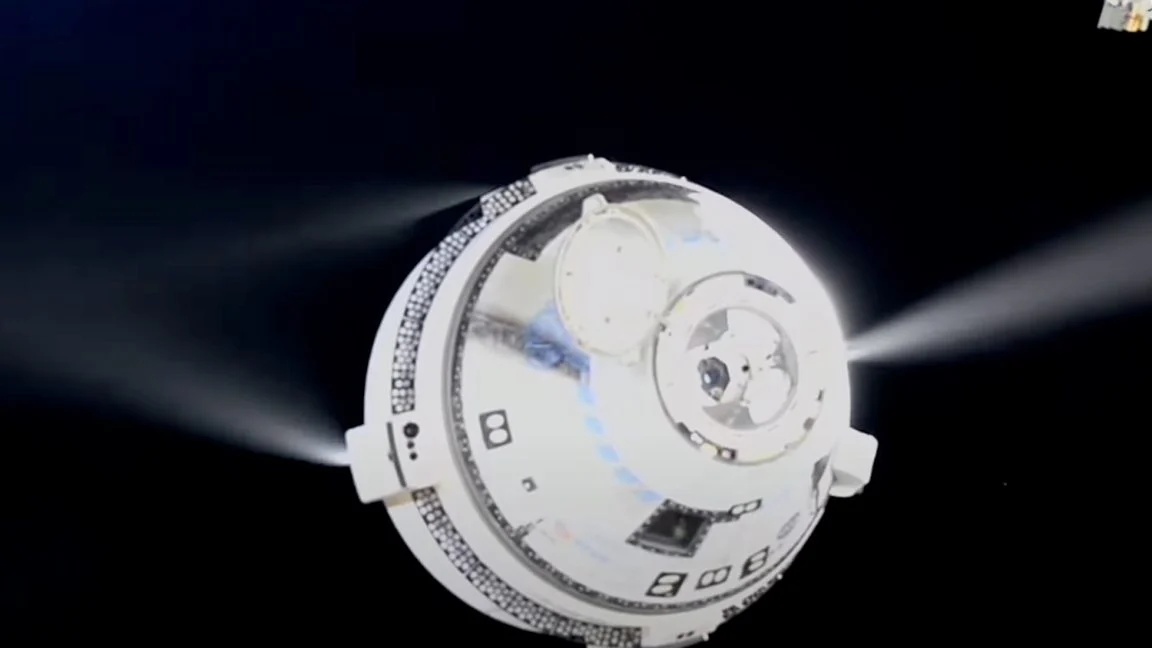
This pressing operational requirement has forced a pragmatic reevaluation of Boeing’s troubled CST-100 Starliner program. Despite encountering a series of technical hurdles, schedule delays, and substantial cost overruns since its inception under the Commercial Crew Program, Starliner remains the space agency’s most viable and immediately actionable option to maintain an independent, redundant domestic capability for ferrying human crews to orbit.
The decision to lean into the Boeing platform rather than immediately funding a costly secondary crew transportation competition underscores a complex balancing act between fiscal stewardship, geopolitical necessity, and the realities of modern aerospace manufacturing. As NASA looks past the horizon of the International Space Station and toward future commercial outposts, the pathway forward involves high stakes, considerable financial investments, and critical questions regarding market monopolies and pricing transparency in the burgeoning commercial space economy.
Background Context of the Commercial Crew Program
To fully understand the current dilemma facing NASA leadership, it is necessary to examine the genesis of the Commercial Crew Program. Established in the wake of the Space Shuttle fleet’s retirement in 2011, the program fundamentally shifted NASA’s operational model from a traditional government-owned, contractor-built procurement strategy to a commercial service acquisition model. Under this paradigm, NASA acts as one of several customers purchasing transportation services from private enterprise, thereby stimulating a robust domestic commercial space market.
In September 2014, NASA awarded fixed-price development contracts to both SpaceX and Boeing. SpaceX received approximately $2.6 billion to finalize the development and certification of its Crew Dragon spacecraft atop the Falcon 9 rocket, while Boeing secured a larger award of roughly $4.2 billion for the CST-100 Starliner system, designed to launch on United Launch Alliance Atlas V rockets.
The underlying premise of funding two distinct providers was built upon the bedrock principle of redundancy: ensuring that if one system experienced a grounding event or technical failure, the United States would maintain continuous, uninterrupted access to the orbiting laboratory without relying on foreign spacecraft, such as the Russian Soyuz.
However, the paths of the two corporate partners diverged sharply. SpaceX successfully executed its uncrewed demonstration mission (Demo-1) in March 2019, followed by a triumphant crewed flight (Demo-2) carrying NASA astronauts Robert Behnken and Douglas Hurley to the ISS in May 2020. Since then, Crew Dragon has flown dozens of successful missions, becoming the undisputed workhorse of American human spaceflight.
Conversely, Boeing’s path has been marred by persistent setbacks. During its uncrewed Orbital Flight Test (OFT) in December 2019, Starliner suffered a critical software timing anomaly that prevented it from reaching the ISS, forcing an abbreviated return to Earth. A subsequent re-flight, designated OFT-2, took place in May 2022 and successfully docked with the station, but uncovered additional engineering issues concerning propulsion valve corrosion and parachute harness durability.
The subsequent Crew Flight Test (CFT), carrying NASA astronauts Barry Wilmore and Sunita Williams, launched in June 2024. While the spacecraft successfully reached the space station, thruster malfunctions and helium leaks prompted extended engineering evaluations on orbit. Ultimately, NASA decided to return Starliner uncrewed out of an abundance of caution, bringing Wilmore and Williams back to Earth aboard a SpaceX Crew Dragon months later. Despite these setbacks, the flight data gathered during CFT provided Boeing and NASA with critical insights, paving the way toward final system certification.
The 2030 Horizon and the Evolution of Commercial LEO Destinations
The urgency surrounding the future of Starliner is intrinsically linked to the impending obsolescence of the International Space Station and the shifting paradigm of low-Earth orbit utilization. The ISS, which has served as humanity’s orbiting outpost for more than two decades, is officially scheduled for a controlled deorbit maneuver at the turn of the decade, around 2030 or 2031.
Recognizing the immense scientific, geopolitical, and economic value of maintaining a continuous human presence in low-Earth orbit, NASA initiated the Commercial LEO Destinations (CLD) program. Through this initiative, the space agency is providing financial and technical assistance to several private aerospace companies tasked with designing, building, and operating commercial space stations. These private platforms—backed by consortiums including Axiom Space, Blue Origin (with its Orbital Reef concept), Northrop Grumman, and Voyager Space—are intended to seamlessly succeed the ISS, providing research facilities, manufacturing environments, and destinations for space tourism.
However, these commercial space stations will require a dependable fleet of crew and cargo transportation vehicles to remain commercially viable. When Dragon eventually reaches the end of its operational lifecycle around 2030, the aerospace market will face a significant void unless alternative systems are fully matured and certified.
NASA’s projected cadence for astronaut flights to low-Earth orbit offers a clear picture of future demand. Agency officials have estimated that the ongoing requirement will stabilize at approximately two astronaut seats every six to nine months. This modest cadence reflects a transition from the intensive staffing of the massive ISS to the potentially smaller, more modular footprint of early commercial outposts.
Evaluating the Alternatives: Why Not Launch a New Competition?
In light of Starliner’s troubled developmental history, aerospace analysts and critics have frequently questioned whether NASA should bypass Boeing and instead fund an entirely new crew transportation competition. Proponents of this view argue that the market has evolved significantly since 2014. Today, a wider array of emerging aerospace firms possesses the technical competence and innovative drive to develop human-rated spacecraft.
Potential contenders cited by critics include Blue Origin—currently developing its own advanced space vehicles and heavy-lift rocketry—as well as European entities such as The Exploration Company, which are making rapid strides in capsule design and cargo delivery. Proponents suggest that injecting fresh competition into the sector could yield safer, more cost-effective, and technologically superior alternatives to Starliner.
Yet, NASA leadership has remained firmly opposed to this approach, citing prohibitive costs and redundant economic realities. Funding a brand-new crew transportation system from scratch would require billions of dollars in federal appropriations—an expenditure that would be difficult to justify given the current federal budgetary climate and the nation’s heavy financial commitments to deep-space exploration, including the Artemis lunar campaign.
Furthermore, the United States has already invested upwards of $4.2 billion into Boeing’s Starliner program. With the spacecraft now standing tantalizingly close to full operational certification, discarding this massive sunk cost would be fiscally irresponsible. NASA officials have repeatedly emphasized that completing the certification process and bringing Starliner online is the most direct, practical, and economically prudent path to ensuring long-term crew transportation redundancy.
Boeing’s Strategic Pivot and the Vulcan Integration
For Boeing, the renewed confidence from NASA represents a vital corporate redemption arc and an opportunity to cement its standing as a premier provider of human-rated space transportation. Company executives have expressed deep enthusiasm for the partnership, viewing the post-ISS era as a lucrative frontier.
John Mulholland, vice president and program manager of Commercial Crew at Boeing, addressed the company’s strategic vision during a recent media briefing. "We’re incredibly excited about the partnership with NASA," Mulholland stated. "To continue to fly to the International Space Station, and then obviously, with the Vulcan certification, missions beyond the current six that we have. Certainly, we have talked to all of the CLD providers about becoming their preferred transportation supplier in the future."
A critical component of Boeing’s long-term strategy involves transitioning Starliner from the Atlas V rocket—which has a severely limited remaining inventory—to the United Launch Alliance Vulcan Centaur rocket. The Vulcan system represents the future of Boeing and Lockheed Martin’s joint venture, offering increased payload capacity, modern avionics, and a sustainable domestic supply chain. However, certifying Starliner to fly atop the Vulcan rocket remains a complex engineering task that must be meticulously executed before the vehicle can take over routine flight operations for NASA and commercial clients alike.
The Monopoly Dilemma and Pricing Uncertainty
Despite the optimism surrounding Boeing’s renewed mandate, significant economic and operational concerns loom on the horizon. Chief among these is the issue of market monopoly. Once SpaceX’s Crew Dragon is retired from service around 2030, Boeing could temporarily find itself as the sole provider of crew transportation services for NASA and the emerging commercial space stations, creating a temporary monopoly in the US crewed flight sector.
Monopolistic conditions in aerospace historically raise concerns regarding cost control, innovation stagnation, and schedule adherence. For NASA and the private CLD operators, the cost of flying astronauts is a critical economic variable.
Under the existing baseline agreement for the initial post-certification missions—designated Starliner-2 through Starliner-6—NASA and Boeing have agreed to a fixed price point of approximately $90 million per seat. While this figure is comparable to historical costs paid to international partners for Soyuz seats, it remains notably higher than the per-seat costs achieved by some commercial providers in competitive markets.
Moreover, the financial picture for the 2030s remains shrouded in uncertainty. During negotiations with commercial space station developers over the summer, Boeing declined to commit to specific, binding seat prices for flights taking place in the next decade.
Addressing this pricing opacity, Mulholland explained the technical and logistical hurdles preventing immediate financial disclosures. "We couldn’t provide detailed pricing to the CLD suppliers as the Vulcan rocket has not been certified, and the spacecraft has not been certified, and we don’t have detailed pricing on the Vulcan," Mulholland acknowledged. "That will come in the future, and obviously, we want to be as competitive as possible."
The Broader Implications for the Commercial Space Economy
The intersection of NASA’s long-term orbital strategy, Boeing’s operational recovery, and the emergence of private space stations illustrates a critical transitional phase in the history of space exploration. The decisions made today will shape the architecture of human spaceflight for the next thirty years.
If Boeing successfully certifies Starliner for Vulcan integration, resolves its historical technical anomalies, and establishes competitive pricing structures for commercial station operators, the United States will have achieved a resilient, multi-vendor orbital ecosystem. This outcome would validate the foundational philosophy of the Commercial Crew Program, proving that private enterprise can sustain a competitive, high-reliability marketplace for human space travel independent of direct government management.
Conversely, should Boeing continue to experience severe delays, cost overruns, or fail to offer competitive pricing to commercial station operators, the viability of the private low-Earth orbit economy could be severely constrained. Without affordable and reliable transportation, commercial habitats risk becoming isolated white elephants, unable to attract the researchers, tourists, and corporate manufacturers necessary to sustain a thriving orbital economy.
As NASA administrator Jared Isaacman and agency leadership weigh these formidable variables, the path forward is clear in its destination if perilous in its execution. By committing to Starliner and rejecting the immense expense of a redundant development cycle, NASA has placed its bets on remediation and maturation. The coming years will put Boeing to the ultimate test, determining whether the aerospace giant can overcome its past missteps to anchor humanity’s permanent commercial presence in the stars.
