
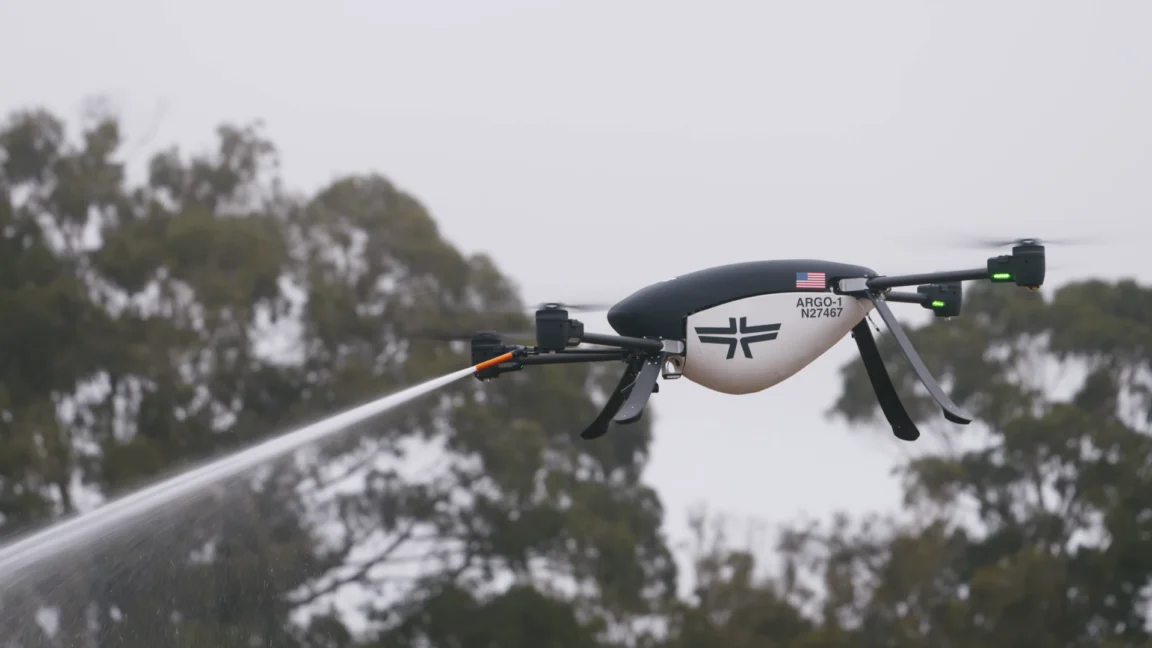
The summer of 2024 has seen a significant shift in wildfire response strategies, with advanced drone technology undergoing rigorous testing in both California and Alaska. These unmanned aerial vehicles (UAVs), equipped with the capability to spray water and fire retardants, have been actively demonstrating their potential as a rapid-response tool to combat nascent wildfires. This development comes at a critical juncture, as climate change continues to escalate the frequency and intensity of wildfires across the United States, transforming what was once a seasonal threat into a near year-round risk for many regions.
While current drone technology does not possess the payload capacity or extended flight range to replace traditional, large airtankers in tackling massive, remote infernos, their strategic value lies in their ability to intervene swiftly in the initial stages of a fire. Companies, fire agencies, and organizations like the organizers of the $11 million XPRIZE competition are collectively exploring whether these agile platforms can significantly expedite response times to smaller blazes, preventing them from escalating into catastrophic events. The potential to extinguish fires before they gain significant momentum offers a crucial new layer of defense in an increasingly volatile landscape.
CAL FIRE’s Autonomous Drone Initiative
A pivotal demonstration occurred on July 15th when the California Department of Forestry and Fire Protection, widely known as CAL FIRE, conducted its own field test involving a coordinated squadron of five autonomous drones. These UAVs successfully collaborated to deploy an estimated 500 to 1,000 gallons of fire-suppressing foam onto a simulated wildfire. This groundbreaking exercise was facilitated by the nonprofit organization FireWERX, which specializes in fostering innovation in emergency response, and Seneca, a California-based company poised to bring these advanced firefighting drones to the commercial market by 2026. The partnership signifies a concerted effort to integrate cutting-edge technology into frontline firefighting operations.
The drones utilized in the CAL FIRE demonstration, identified as Seneca’s Argo-1 model, are designed to operate collaboratively. Each drone possesses the capacity to carry approximately 100 pounds of water or fire retardant. When deployed in swarms of four to six units, their collective payload can be substantial. The autonomous nature of these drones is a key feature; once a human operator designates a GPS waypoint, the drones navigate independently towards their target. Utilizing onboard sensors, they are programmed to identify the distinct heat signature of a fire, as reported by HeliOps Magazine, a publication dedicated to aerial operations. Upon locating the fire, the drones then autonomously determine the optimal hovering altitude before executing a synchronized spray sequence, with each drone taking its turn to douse the flames.
Operational Parameters and Logistical Considerations
The current operational parameters of the Argo-1 drones present specific logistical considerations. When fully loaded, these drones are limited to a round trip range of approximately 10 miles, maintaining an average flight speed of about 30 miles per hour. This range limitation necessitates strategic deployment. Ideally, these drones would be prepositioned in areas with a high propensity for wildfires or transported to the scene via ground vehicles. However, the design emphasizes portability and accessibility. Each drone is compact enough to fit in the bed of a pickup truck with the tailgate down, and even two individuals can manually carry an empty drone. This inherent portability enhances their rapid deployment capability, especially in areas where larger aircraft might face access challenges or longer response times.
Broader Context: The Escalating Wildfire Crisis
The testing of these advanced drones occurs against a backdrop of a worsening wildfire crisis, largely attributed to the impacts of climate change. Decades of data reveal a dramatic increase in the frequency, intensity, and duration of wildfire seasons across the United States. According to the National Interagency Fire Center (NIFC), the average annual acreage burned in the U.S. has more than doubled since the 1980s. For instance, in the period between 2000 and 2020, the U.S. experienced an average of over 50,000 wildfires per year, consuming millions of acres. This trend is projected to continue, with climate models indicating hotter and drier conditions in many Western states, exacerbating the risk of ignition and rapid fire spread.
Historical Context of Aerial Firefighting
Aerial firefighting has a long history, evolving from rudimentary water drops from biplanes in the early 20th century to the sophisticated fleet of airtankers and helicopters used today. Early aerial firefighting efforts were often reactive, focused on dropping water or retardant on large, established fires. However, as the understanding of fire behavior and the effectiveness of early intervention grew, so did the desire for faster, more precise response capabilities. The development of specialized airtankers, such as the DC-10 and the C-130 Hercules, marked significant advancements in payload delivery. Yet, these large aircraft are expensive to operate, require extensive infrastructure for maintenance and refueling, and can be limited by weather conditions and the remoteness of fire locations. The emergence of drone technology represents a potential paradigm shift, offering a more agile, cost-effective, and potentially safer complement to these established methods.
The Role of Technology in Modern Firefighting
The integration of technology into firefighting has been a consistent theme in recent decades. This includes the use of sophisticated weather forecasting models, satellite imagery for fire detection and monitoring, advanced communication systems, and now, autonomous drone systems. The XPRIZE Foundation, a nonprofit organization that designs and manages challenges to inspire innovation, has played a significant role in fostering technological advancements in various fields, including disaster response. Their involvement in initiatives like the Wildfire Detection and Suppression XPRIZE highlights the growing recognition of the need for novel solutions to combat increasingly severe wildfires. The $11 million prize purse associated with such competitions incentivizes research and development, accelerating the pace at which new technologies become viable.
Seneca’s Vision and Commercialization Plans
Seneca’s commitment to commercializing its firefighting drones by 2026 underscores the industry’s confidence in the technology’s readiness. The company’s strategic approach, focusing on swarm capabilities and autonomous operation, addresses some of the key limitations of individual drone units. By enabling multiple drones to work in concert, they can achieve a greater cumulative effect, mimicking the coordinated efforts of human firefighting crews. The emphasis on onboard sensors for fire detection and autonomous navigation further reduces the reliance on constant human intervention, allowing for more efficient and potentially safer operations, especially in hazardous environments.
Expert Perspectives and Inferred Reactions
While direct quotes from all involved parties were not available for this report, the nature of these collaborative demonstrations and testing exercises typically elicits a spectrum of reactions. Fire chiefs and agency leaders are likely to express cautious optimism, recognizing the potential benefits of enhanced early detection and suppression capabilities. They will, however, also emphasize the need for rigorous testing, pilot training, and seamless integration into existing command structures. Technology developers, such as Seneca, will likely highlight the innovation and efficiency gains their systems offer, while also acknowledging the ongoing challenges of scaling production and ensuring reliability in real-world conditions. Researchers and environmental advocates may view these advancements as a necessary adaptation to the changing climate, while also stressing the importance of addressing the root causes of increased wildfire risk.
Analyzing the Implications: A New Era of Wildfire Management
The successful demonstrations of autonomous firefighting drones signal a potential new era in wildfire management. The ability to rapidly deploy a coordinated swarm of drones to a nascent fire could dramatically alter the calculus of wildfire suppression. By targeting fires when they are small and containable, the resources required for suppression could be significantly reduced, both in terms of personnel and financial expenditure. Furthermore, the use of drones can mitigate risks to human firefighters, who are often the first responders to dangerous situations.
However, the limitations of current drone technology, particularly their range and payload capacity, mean they will likely serve as a complementary tool rather than a complete replacement for traditional firefighting assets. The effectiveness of these drones will also depend on robust sensor technology capable of accurately detecting fires in diverse conditions, including smoke and low visibility. The development of advanced command and control systems to manage multiple drone swarms will be crucial for seamless integration into existing emergency response frameworks.
The long-term implications of this technological advancement are substantial. As climate change continues to amplify wildfire threats, the demand for innovative solutions will only grow. Drones, with their increasing sophistication and decreasing costs, are well-positioned to play a vital role in this evolving landscape. Their successful integration into firefighting operations could lead to more resilient communities, reduced environmental damage, and enhanced safety for those on the front lines of combating these increasingly destructive natural disasters. The ongoing testing and development in regions like California and Alaska are crucial steps in realizing this transformative potential.
