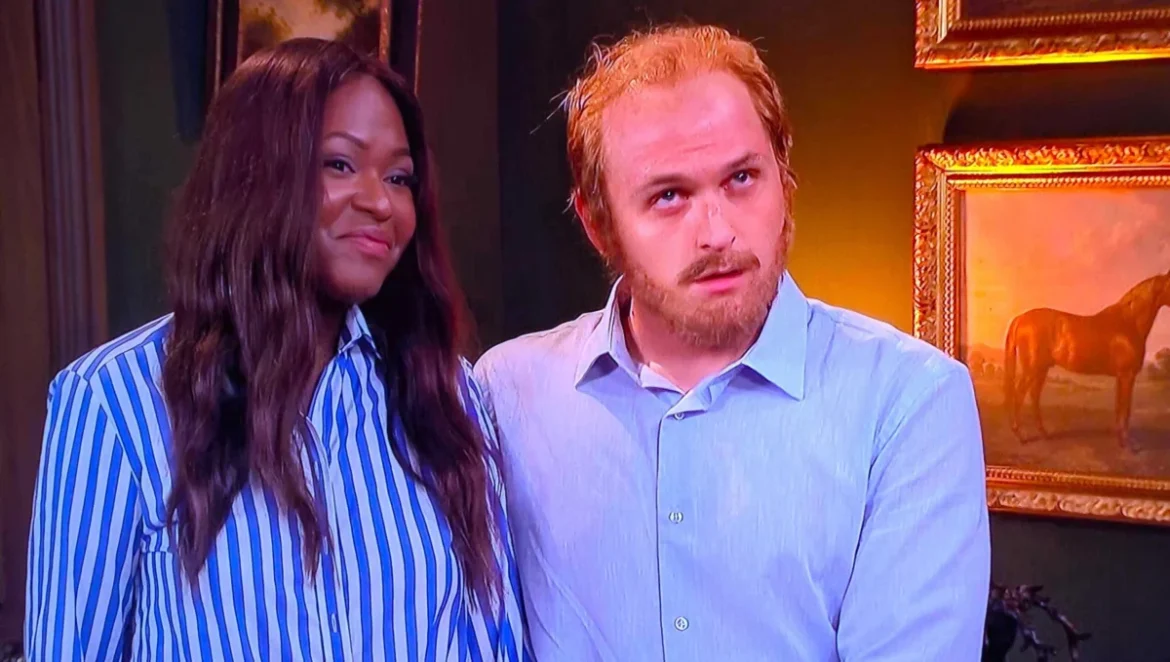
Saturday Night Live UK has officially returned for its second season, signaling a bold continuation of the sketch comedy format that seeks to mirror the high-stakes political and social landscape of the United Kingdom. The season premiere, which aired on Sky, wasted no time in centering its cold open on the Duke and Duchess of Sussex, Prince Harry and Meghan Markle, delivering a biting parody that highlights the ongoing cultural fascination with the couple’s public life and their complex relationship with the British monarchy.
The sketch, which featured actors Jack Shep and Ayoade Bamgboye as the Sussexes, depicted a fictional and highly awkward encounter at Balmoral Castle. The narrative device of a royal reunion served as a vehicle for the writers to lampoon the couple’s high-profile departure from the working monarchy and their subsequent commercial ventures. Larry Dean, portraying King Charles III, anchored the scene with a comedic sense of bewilderment, questioning whether the couple had already exhausted their lucrative financial arrangements with Netflix. The punchline—a reference to the reported $60 million deal—provided a satirical commentary on the intersection of modern celebrity, digital media production, and the traditionalist expectations of the British royal household.
The Evolution of SNL UK
The return of the program marks a significant moment for British television comedy. Produced by Universal Television Alternative Studio’s UK team in collaboration with Broadway Video, the show remains under the executive production of Lorne Michaels, the architect of the original Saturday Night Live in the United States. James Longman serves as the lead producer, ensuring that the transatlantic bridge between the American template and British sensibilities remains intact.
The casting choices for the second season reflect a stable foundation, with the entirety of the inaugural season’s ensemble returning to their roles. This includes Hammed Animashaun, Ayoade Bamgboye, Larry Dean, Celeste Dring, George Fouracres, Ania Magliano, Annabel Marlow, Al Nash, Jack Shep, Emma Sidi, and Paddy Young. The addition of new cast member Freddie Meredith suggests a desire to freshen the ensemble’s dynamic, allowing for a broader range of impressions and character work as the series progresses through its six-episode order.
Satire as Social Commentary
The premiere’s cold open did not stop at the Sussexes. Emma Sidi’s portrayal of Queen Camilla leaned into the satirical nature of the program, delivering lines that played on past controversies. Her comment regarding Meghan’s complexion was a direct, albeit stylized, allusion to the Duke and Duchess’s 2021 interview with Oprah Winfrey. In that interview, the couple claimed that an unnamed senior royal had expressed concerns regarding the skin color of their then-unborn son, Archie. By incorporating such sensitive historical allegations into a sketch-comedy format, the show underscores the extent to which these narratives have become firmly embedded in the public consciousness, making them ripe targets for parody.
The sketch further evolved into a political critique with the arrival of George Fouracres as the new UK Prime Minister, Andy Burnham. Donning his signature yellow Manchester badge, the character of the Prime Minister offered a populist, if somewhat surreal, promise to the nation. The juxtaposition of the Sussexes’ private life with the hypothetical governance of a new Prime Minister highlights the show’s intent to treat the monarchy and the government as dual pillars of British farce. The Burnham caricature, promising that "normal folk" do not necessarily have to live a "crap" life, serves as a meta-commentary on the current socio-economic anxieties facing the British electorate.
The Role of Celebrity and Media
The season opener was hosted by Jeff Goldblum, whose opening musical performance set a tone of high-energy theatricality. Goldblum’s involvement aligns with the show’s strategy of pairing internationally recognized talent with local British comedic fixtures. The upcoming schedule includes guest hosts such as Amelia Dimoldenberg, the creator of the viral hit Chicken Shop Date, and Jamie Demetriou, the writer and star behind the critically acclaimed Stath Lets Flats. These choices indicate a strategic pivot toward younger, digital-native audiences who are already familiar with the hosts’ respective brands of awkward or observational humor.
The reliance on these specific guests points to a broader trend in television production: the integration of internet-born fame into traditional broadcast formats. Dimoldenberg’s presence, in particular, suggests that SNL UK is looking to leverage her established rapport with celebrities to attract a demographic that is increasingly moving away from traditional terrestrial broadcasting in favor of on-demand streaming platforms.
Industry Context and Production Timeline
The decision to produce six episodes followed by an extended hiatus—returning in early 2027—suggests a cautious but deliberate approach by the production team. By limiting the volume of content, the producers are likely attempting to maintain a high standard of writing and performance, avoiding the pitfalls of burnout that often plague high-frequency sketch shows. This model also allows the production to better align with the unpredictable nature of the news cycle. Given that British politics has seen significant volatility in recent years, the ability to write, rehearse, and perform sketches in a timely manner is a logistical challenge that requires a flexible production schedule.
From an industry perspective, the success of SNL UK is a litmus test for the viability of American-style sketch comedy in the British market. While the format has historically been dominated by shows like The Fast Show, Little Britain, or The Catherine Tate Show, the SNL structure—which relies on a live audience and a weekly guest host—offers a different experience. It necessitates a "ripped from the headlines" approach that is inherently ephemeral.
Implications and Audience Reception
The implications of the show’s focus on the Sussexes are multi-layered. For the British public, the Royal Family remains a central point of cultural discourse. By depicting them in such a direct manner, SNL UK risks polarizing its audience. Supporters of the royal institution may view the sketches as disrespectful or overly reductive, while those critical of the monarchy or the Sussexes themselves may find the parody to be a necessary release of cultural tension.
Furthermore, the show’s decision to feature a fictionalized version of Andy Burnham as Prime Minister speaks to the show’s ambition to influence the national conversation. Satire, at its best, serves as a mirror to power. By placing the Prime Minister in the same space as the Sussexes, the writers are suggesting that in the modern era, the distinction between "royalty" and "politician" in the eyes of the public has blurred. Both are now subject to the same relentless, often cynical, scrutiny of the tabloid press and social media.
Analytical Outlook
As the series progresses, its success will likely depend on its ability to strike a balance between broad, accessible comedy and sharper, more insightful political commentary. The inclusion of figures like Jamie Demetriou suggests that the show is not afraid of the absurd, which is a vital component of the British comedic tradition. However, the challenge remains to maintain that quality across a live format, which is notoriously unforgiving.
The production team, led by Lorne Michaels, clearly understands that the longevity of such a program requires a robust bench of talent. By keeping the entire cast from Season 1, they have ensured a sense of continuity and chemistry that is essential for sketch performance. The introduction of Freddie Meredith is a low-risk, high-reward move intended to inject new energy into the ensemble.
In conclusion, the return of Saturday Night Live UK serves as a reflection of the current British zeitgeist: a mix of fascination with celebrity, deep-seated political anxiety, and a persistent need for comedic relief. Whether the program can truly cement its place as a staple of British culture remains to be seen, but the season premiere has certainly succeeded in generating conversation. By tackling the most visible figures in the country, the show has signaled that it is prepared to push the boundaries of what is acceptable in televised satire, ensuring that it will remain a focal point for both its admirers and its critics throughout its second season. The upcoming guest hosts, particularly those with strong roots in the digital space, indicate that the show is positioning itself as a modern, relevant, and daring entrant in the competitive field of UK entertainment. As the series moves toward its 2027 hiatus, the pressure to deliver consistent, high-quality content will only intensify, making the next few episodes critical in determining the show’s long-term legacy.