
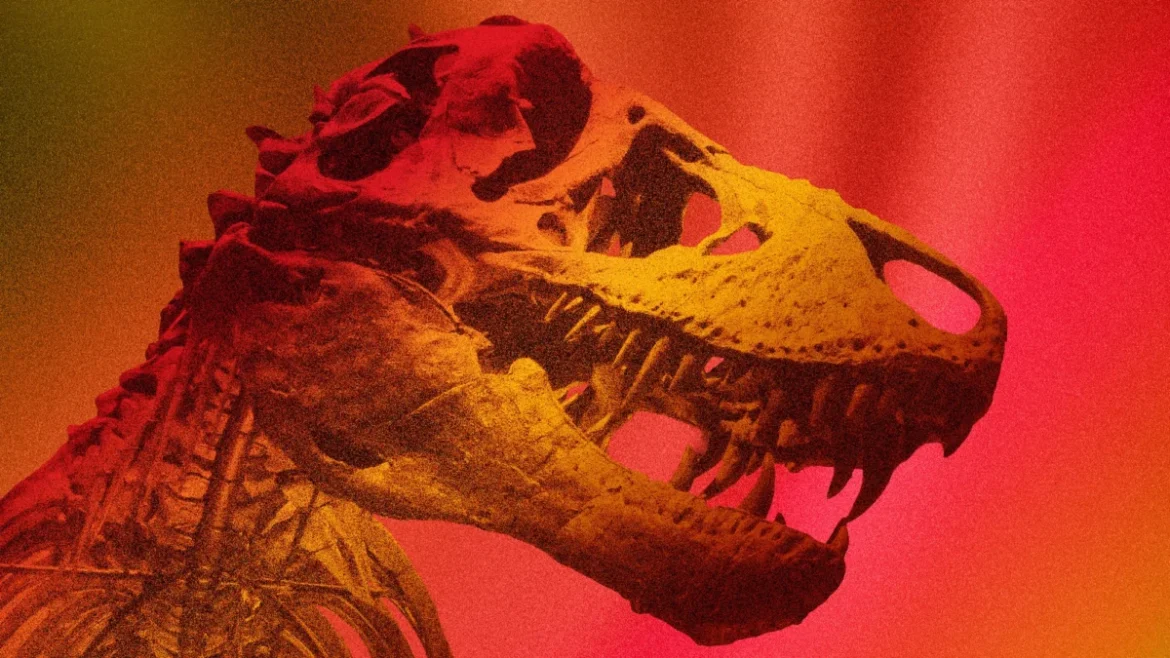
For over a century, the image of the Tyrannosaurus rex in the popular imagination and scientific discourse has undergone a radical metamorphosis. Early 20th-century paleontology frequently characterized these apex predators as sluggish, cold-blooded reptiles—massive, lumbering creatures that relied on their environment to regulate their body temperature. However, the publication of a landmark study in the journal Science Advances has officially dismantled these outdated assumptions, providing the first conclusive chemical evidence that the Tyrannosaurus rex possessed a warm-blooded metabolism with an internal body temperature of approximately 97 degrees Fahrenheit.
This discovery, led by researchers at the University of California, Los Angeles (UCLA), marks a pivotal moment in evolutionary biology. By utilizing advanced geochemical analysis on fossilized tooth enamel, the team has successfully bridged the gap between speculative theory and empirical reality. This finding not only clarifies the physiology of the "Tyrant King" but also fundamentally alters our understanding of how these dominant predators thrived across diverse ecosystems, from the sweltering lowlands of the Cretaceous period to the frigid northern reaches of the Arctic.
A Chronology of Scientific Debate
The question of dinosaur metabolism has been a central point of contention in paleontology for decades. In the early 1900s, dinosaurs were largely categorized as ectotherms—cold-blooded animals similar to modern lizards or crocodiles. This classification led to the assumption that they were restricted in their activity levels, requiring external heat sources to maintain the energy necessary for movement.
By the 1960s and 70s, the "Dinosaur Renaissance"—spearheaded by researchers like John Ostrom and Robert Bakker—began to challenge the status quo. They argued that the anatomy and behavior of dinosaurs, particularly their complex social structures and evidence of active hunting, suggested a much higher metabolic rate than previously acknowledged. Throughout the 1990s and 2000s, the discovery of proto-feathers on various theropod species further fueled the argument for endothermy, or warm-bloodedness, as these structures would have been essential for heat retention.
Despite these advances, definitive physiological proof remained elusive. It was not until the early 2010s that a groundbreaking geochemical technique was developed: "clumped isotope paleothermometry." This method allows scientists to measure the concentrations of specific carbon-13 and oxygen-18 isotopes that bond together within the mineral lattice of fossilized enamel. Because these bonds form at specific temperatures, they act as a "paleo-thermometer," recording the internal temperature of the animal at the time the tooth was mineralized.

Technological Breakthroughs in Geochemistry
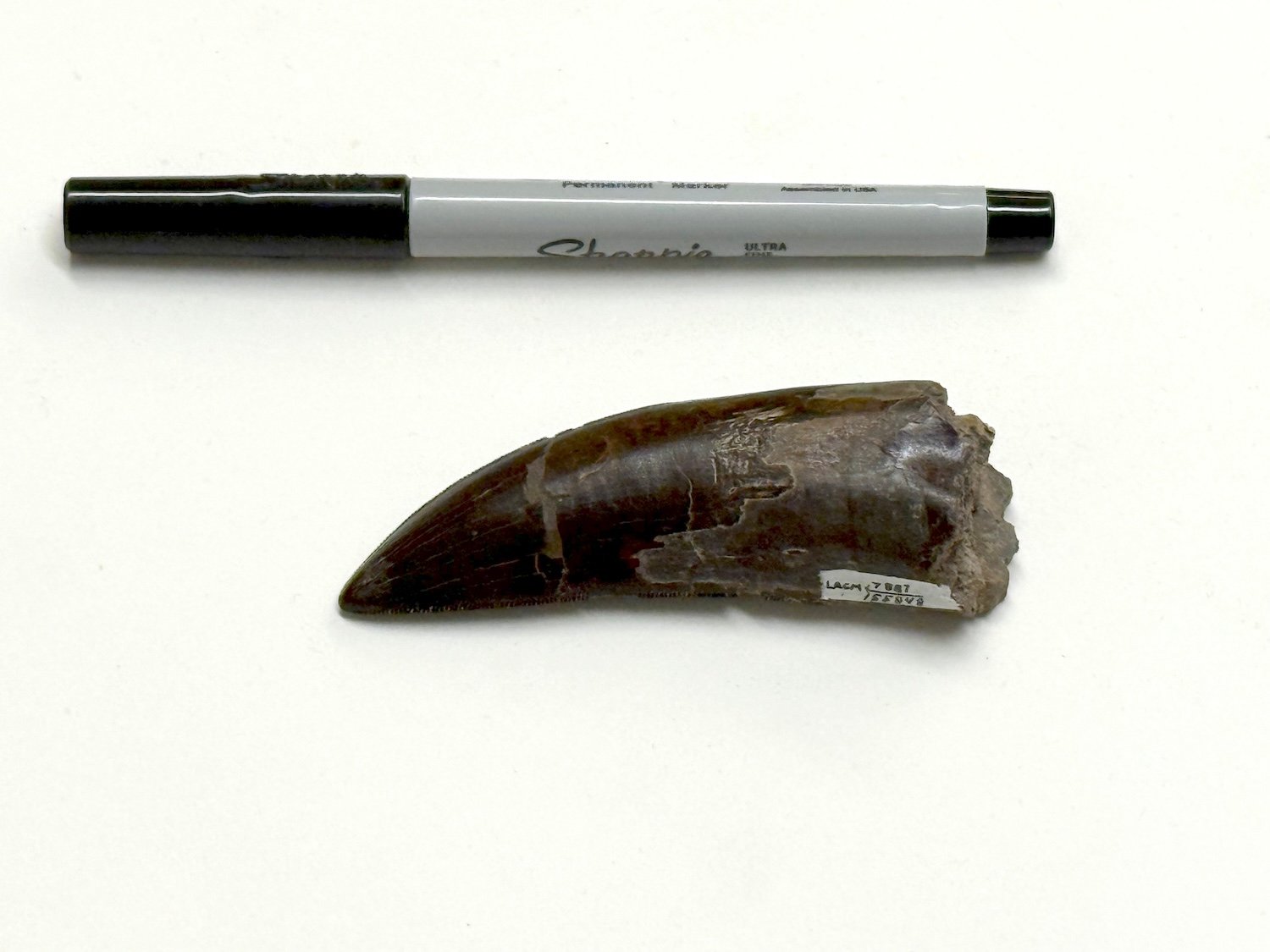
The primary hurdle for applying this technology to a T. rex was the scarcity of high-quality samples. Older iterations of the isotopic analysis required large amounts of bone or tooth material, which would have necessitated the destruction of significant portions of rare, museum-grade fossils. Because curators are rightfully protective of specimens like "Thomas the T. rex," the world-renowned fossil housed at the Los Angeles Natural History Museum, such destructive testing was previously prohibited.
Recent advancements in mass spectrometry and sample preparation have dramatically increased the sensitivity of these tests. Modern equipment can now yield precise temperature data from samples roughly 90 percent smaller than those required a decade ago. This technological leap was the catalyst for the current study. Robert Eagle, a geobiologist at UCLA and co-author of the study, noted that the ability to perform the analysis with only a few milligrams of material was the decisive factor in obtaining institutional approval.
The process involved extracting tiny fragments of enamel, which is highly resistant to geological contamination over millions of years, and dissolving them in phosphoric acid. This chemical reaction released carbon dioxide gas containing the trapped isotopic bonds. Researchers then used a mass spectrometer to measure these ratios, which provided the data points necessary to calculate the internal temperature of the living dinosaur.
Implications for T. rex Behavior and Ecology
The confirmation that T. rex maintained an internal temperature of roughly 97 degrees Fahrenheit has profound implications for how we perceive their daily lives. A warm-blooded metabolism—specifically, mesothermy or endothermy—requires a significant caloric intake to fuel constant energy expenditure. This supports the theory that T. rex was not a passive scavenger, but an active, high-energy predator capable of sustained movement and rapid bursts of speed.
Furthermore, this physiological adaptation explains the geographical distribution of the species. Paleontologists have long puzzled over the presence of T. rex fossils in high-latitude regions, such as present-day Alaska, where the climate would have been too hostile for a cold-blooded animal to survive. A warm-blooded physiology would have allowed the T. rex to maintain homeostasis despite external temperature fluctuations, effectively granting it the mobility to dominate ecosystems across the entire North American continent.
Aradhna Tripati, a UCLA geochemist and co-author of the study, emphasized the ecological freedom provided by this metabolic state. "The teeth tell us T. rex was warmer than the environment around it," Tripati explained. "A warm-blooded T. rex could go almost anywhere on the continent, including the Arctic." This ability to inhabit such a wide range of niches likely contributed to the species’ long-term success as an apex predator until the K-Pg extinction event.
Comparing T. rex to Modern Fauna
While 97 degrees Fahrenheit is remarkably close to the average human body temperature, it is distinct from the physiology of modern birds, the direct descendants of dinosaurs. Today’s birds typically maintain temperatures between 104 and 109 degrees Fahrenheit. The T. rex’s internal temperature sits between the extremes of cold-blooded reptiles and modern avian species, placing it in a unique evolutionary position.
This finding also builds on the team’s previous work. In recent years, Eagle and his colleagues successfully utilized the same isotopic technique to confirm that the prehistoric giant shark, Otodus megalodon, was also warm-blooded. By demonstrating that high-energy metabolic states were present in both apex terrestrial predators and apex marine predators, the researchers are creating a more comprehensive picture of how massive organisms evolved to sustain their size and activity levels through internal thermal regulation.
Future Directions for Paleontological Research
The success of this study opens the door for a wave of new research into other extinct species. Now that the methodology for small-sample analysis is validated, paleontologists are looking to apply it to a wider array of dinosaur species, including the massive sauropods and the smaller, bird-like maniraptorans. Determining the metabolic diversity across the dinosaur family tree will be the next frontier in understanding the history of life on Earth.
For the scientific community, the conclusion is clear: the era of the "slow-moving, cold-blooded dinosaur" is officially over. The T. rex, as a sophisticated, warm-blooded hunter, is now better understood as a creature whose biology was as dynamic and complex as its environment. As analytical techniques continue to improve, the secrets locked within the mineralized tissues of fossils will undoubtedly continue to reshape our understanding of the ancient world.
The study serves as a testament to the power of interdisciplinary science. By combining the expertise of geologists, chemists, and paleontologists, and leveraging the precision of modern mass spectrometry, researchers have successfully answered a question that has persisted since the first T. rex fossils were unearthed. The "Tyrant King" now stands revealed not just as a titan of size and strength, but as a biological marvel whose internal fire allowed it to conquer the landscapes of the Cretaceous.
