
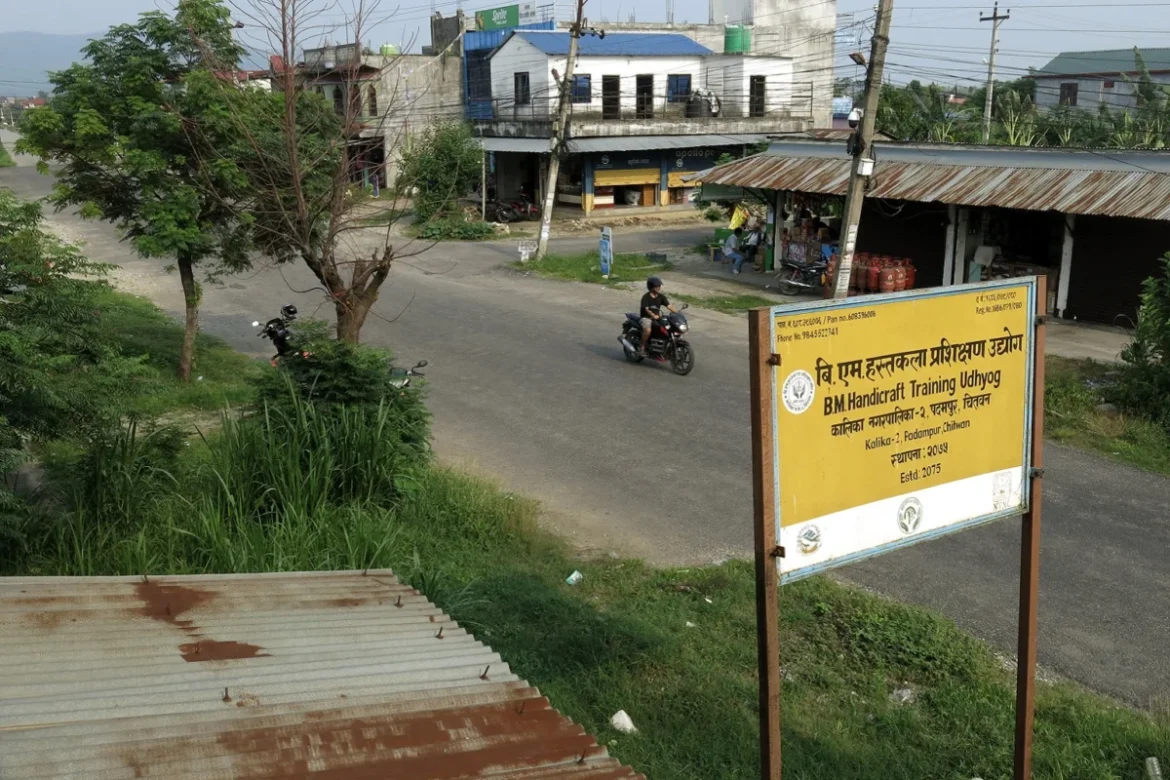
NAYA PADAMPUR, Nepal — The rhythmic, mechanical whir of a spinning wheel on a rooftop in Naya Padampur serves as a heartbeat for a quiet economic revolution. As ivory strands of wool pass through the practiced fingers of 73-year-old Bin Maya Gurung, she embodies a shift in the landscape of rural Nepal. Her work is not merely a craft; it is a critical component of a burgeoning sector of women-led microenterprises that are simultaneously restructuring household economies and alleviating the pressure on Nepal’s fragile forest ecosystems.
The transition toward entrepreneurship for rural Nepali women marks a significant departure from traditional societal norms. Historically, the burden of forest resource collection—specifically firewood and fodder—fell disproportionately on women, frequently placing them in the direct path of wildlife. Today, as these microenterprises flourish, they offer a symbiotic path forward: providing sustainable income while fostering a community-centric model of conservation.

A History of Risk and Resilience
To understand the necessity of this shift, one must look to the 1990s. The region surrounding Naya Padampur was once defined by the displacement of communities from within the boundaries of Chitwan National Park, a UNESCO World Heritage site and a critical habitat for the single-horned Asiatic rhinoceros (Rhinoceros unicornis), the Bengal tiger (Panthera tigris tigris), and the gharial (Gavialis gangeticus).
When the Nepali government mandated the relocation of residents from the former Padampur settlement to the newly established Naya Padampur, the displaced families were left with limited resources. In the absence of irrigation systems or established agricultural infrastructure, survival became a daily struggle. For women like Gurung, the most accessible source of income was the production of "raksi," a traditional Nepali spirit. However, the production process required vast quantities of firewood, necessitating daily treks into the dense forests bordering the settlement.
These daily excursions were fraught with peril. Recent data highlights the stark reality of human-wildlife conflict in these regions. A 2026 study published in the journal Ecology and Evolution revealed that while women accounted for fewer total human-wildlife incidents than men between 2010 and 2024, the fatality rate for women involved in such encounters was disproportionately high—exceeding 70% compared to less than 50% for men. This disparity is largely attributed to the nature of women’s tasks, which often require them to move through the forest at dawn or dusk, peak times for tiger activity.

The Rise of Community-Led Enterprise
The pivot toward economic autonomy for rural women was facilitated by a combination of legislative shifts and international development support. The Forest Act of 1993 was a landmark piece of legislation that decentralized forest management, allowing community forest user groups (CFUGs) to take control of state-owned lands. This empowerment provided the framework for local communities to move away from destructive resource extraction and toward sustainable management.
Concurrently, organizations such as the U.N. Development Programme (UNDP) and the National Trust for Nature Conservation (NTNC) began implementing programs focused on business literacy and technical skill training. For Gurung, the opportunity arrived through these very channels. Recognizing the danger of her daily forest treks, she mobilized a group of 25 women to engage with the NTNC, ultimately establishing a wool-spinning workshop.
This singular effort has scaled into an expansive network. Buddhimaya Ghale, whom Gurung mentored, now oversees a spinning business that supports 600 women in the Naya Padampur area and an additional 300 across the country. The financial impact is tangible: participants report monthly earnings between 8,000 and 40,000 Nepalese rupees (approximately $52 to $263). For these households, such income is transformative, enabling families to fund education, build savings, and significantly reduce their reliance on forest products.

Economic and Ecological Symbiosis
The broader implications of these microenterprises extend far beyond individual household budgets. According to a case study by the Climate and Development Knowledge Network (CDKN), these enterprises act as a bulwark against environmental degradation. By producing value-added goods such as bamboo baskets, nettle powder, and high-quality wool textiles, women are finding ways to generate income that does not require the exploitation of the timber or fuel-wood reserves within the national park.
Furthermore, the introduction of non-timber forest products (NTFPs) into the economy has proven to be a strategic conservation tool. As noted by the CDKN, the cultivation of bamboo, coffee, and broom grass on fallow land has contributed to soil stabilization, effectively preventing erosion and landslides in the hilly terrain.
Sanjay Chaudhary, co-founder of the Tharu Community Women’s Hand, emphasizes that these enterprises are essential for fostering positive attitudes toward conservation. "If the park administrations could promote or motivate women for forest-based enterprises, then that could be the biggest strength," Chaudhary says. "It could help make the mindset or narratives around conservation positive." By shifting the community’s relationship with the forest from one of extraction to one of sustainable harvest and production, the potential for human-wildlife conflict is drastically reduced.

The Persistent "Uphill Climb"
Despite these successes, the path to entrepreneurship remains fraught with structural barriers. While the 2015 Constitution of Nepal provides for equal land ownership rights, the cultural implementation lags behind. A 2026 report by the Climate Policy Initiative found that only about 20% of rural women in Nepal own land. Because land is the primary form of collateral required by financial institutions, women are often excluded from accessing formal credit.
The bureaucratic burden of formalization presents another significant hurdle. To qualify for government-subsidized loans, businesses must be registered; however, a 2026 World Bank Group report noted that for 78% of informal microenterprises, the cost of formalization outweighs the immediate benefits. Consequently, the rate of new microenterprise registrations in Nepal has plummeted by approximately 75% over the past five years.
Women also face entrenched societal skepticism. Ghale recounts that her own journey into the business world was marked by familial resistance, and many women still report being asked to provide a male guarantor or family approval when attempting to secure capital. The "masculine" nature of the traditional business environment in Nepal continues to act as a gatekeeper, one that effectively discourages many women from taking the initial steps toward independence.

Future Outlook and Policy Recommendations
The evidence suggests that microenterprises are not merely a supplemental source of income but a vital component of rural development and environmental stewardship in Nepal. For these businesses to reach their full potential, however, structural reforms are required. Experts advocate for scale-specific interventions that simplify registration processes, increase access to non-collateralized loans, and provide ongoing mentorship to help transition these enterprises from subsistence-level operations to sustainable businesses.
Furthermore, the integration of these groups into formal conservation policy could yield significant dividends. By aligning economic incentives with ecological health, park authorities and NGOs can create a "buffer zone" of economic activity that protects both the wildlife and the people living on the forest’s edge.
As for Bin Maya Gurung, her focus remains on the work at hand. Having spent two decades building a business that has allowed her to educate her grandson and secure her family’s future, she serves as a testament to the resilience of the human spirit. She rarely enters the forest anymore, her life no longer dictated by the daily necessity of survival at the edge of the wild. Her story, and the stories of the hundreds of women she has mentored, indicate that when women are given the agency to redefine their roles, they don’t just transform their own lives—they secure the future of the landscape around them.

The spinning wheels of Naya Padampur continue to turn, weaving a future where economic empowerment and environmental protection are not competing interests, but two sides of the same cloth. As these women continue to challenge conventional narratives, their impact will likely resonate across Nepal, offering a blueprint for sustainable development in the face of both social and ecological uncertainty.
