
In 2026, the Antarctic ozone hole expanded to its largest dimensions in ten years, reaching a seasonal peak that caught the attention of atmospheric scientists at NASA and the National Oceanic and Atmospheric Administration (NOAA). Despite this alarming physical growth—which saw the hole cover an average of 9.6 million square miles (25 million square kilometers) between September and October—experts remain firm in their long-term assessment: the Earth’s stratospheric protective shield is continuing its steady, decades-long recovery. The 2026 event serves as a stark reminder of the volatile interplay between human-produced chemical legacies and the complex, shifting dynamics of the Southern Hemisphere’s atmosphere.
The ozone hole, a recurring seasonal phenomenon, serves as a critical indicator of the health of the stratosphere. While the 2026 expansion was significant, ranking as the seventh-largest in 48 years of satellite record-keeping, researchers emphasize that its size was driven more by extraordinary meteorological conditions than by a resurgence of ozone-depleting substances.
Chronology of the 2026 Depletion Event
The lifecycle of the 2026 ozone hole followed a trajectory defined by the intensity of the polar vortex. By early September, as the Southern Hemisphere began its transition out of winter, satellite observations from the NASA Aura, NOAA-20, and NOAA-21 platforms began to track the rapid thinning of ozone concentrations over the Antarctic continent.
On September 18, 2026, the hole reached its maximum extent, stretching across 10.5 million square miles (27.1 million square kilometers). This footprint represented roughly 90% of the surface area observed during the historic, record-breaking ozone hole event of September 2000. Throughout the critical period between September 7 and October 13, the average area remained consistently elevated, far exceeding the size of the North American continent.
As the season progressed into mid-October, the intensity of the depletion reached its nadir. On October 17, instruments at the South Pole Baseline Atmospheric Observatory recorded ozone concentrations at just 105 Dobson units. While this level of depletion is severe, it remains well above the record-low 92 Dobson units documented in October 2006, highlighting that even in years with massive geographic expansion, the absolute chemical destruction of ozone is not reaching the catastrophic levels seen at the turn of the century.
The Role of the Polar Vortex
The primary culprit behind the 2026 expansion was an unusually robust and stable stratospheric polar vortex. This massive system of circular winds effectively isolates the air over Antarctica, preventing it from mixing with warmer, ozone-rich air from the mid-latitudes.
"The polar vortex was unusually large this year in part because planetary-scale weather systems that typically well up from the lower atmosphere and break up the vortex were especially weak in August and September," explained Amy Butler, a research scientist at the NOAA Chemical Sciences Laboratory. Under normal circumstances, these atmospheric waves, driven by topography and sea-surface temperature patterns, would destabilize the vortex, causing it to fragment and allowing for the influx of ozone-replenishing air.
In 2026, those waves were notably subdued. This allowed the vortex to remain stationary and intense, maintaining the sub-zero temperatures necessary for the formation of polar stratospheric clouds (PSCs). These clouds are the "reaction chambers" where inert chlorine and bromine—leftovers from industrial activities of the 20th century—are converted into highly reactive forms that rapidly strip ozone molecules from the atmosphere.
Historical Context and Environmental Policy
To understand the current state of the ozone layer, one must look back to the late 1980s. The 1987 Montreal Protocol remains the world’s most successful environmental treaty, leading to the phase-out of chlorofluorocarbons (CFCs) and other ozone-depleting substances (ODS).
Dr. Paul Newman, a senior scientist at the University of Maryland and a lead researcher at NASA’s Goddard Space Flight Center, notes that the chemistry of the stratosphere is fundamentally different today than it was during the peak of ODS emissions. "The 2026 ozone hole is large but could have been 1 to 2 million square miles larger if ozone-depleting substances were as prevalent in the atmosphere today as they were at their year 2000 peak," Newman stated.
The decline in atmospheric chlorine concentrations is measurable and significant. According to NOAA’s Global Monitoring Laboratory, chlorine levels in the Antarctic stratosphere have dropped by approximately one-third since the 1980s. However, because these chemicals possess extremely long atmospheric lifespans, they continue to circulate and wreak havoc whenever meteorological conditions provide the right environment for their activation.
Measurement Methodology: From Balloons to Satellites
Quantifying the ozone layer requires a multi-layered approach. The "Dobson unit" remains the gold standard for measurement. One Dobson unit represents a layer of ozone that would be 0.01 millimeters thick if compressed to sea-level pressure. A measurement of 105 Dobson units, as recorded in 2026, essentially means the "sunscreen" protecting the planet was at a fraction of its normal density, allowing increased levels of ultraviolet (UV) radiation to reach the Earth’s surface in the Antarctic region.
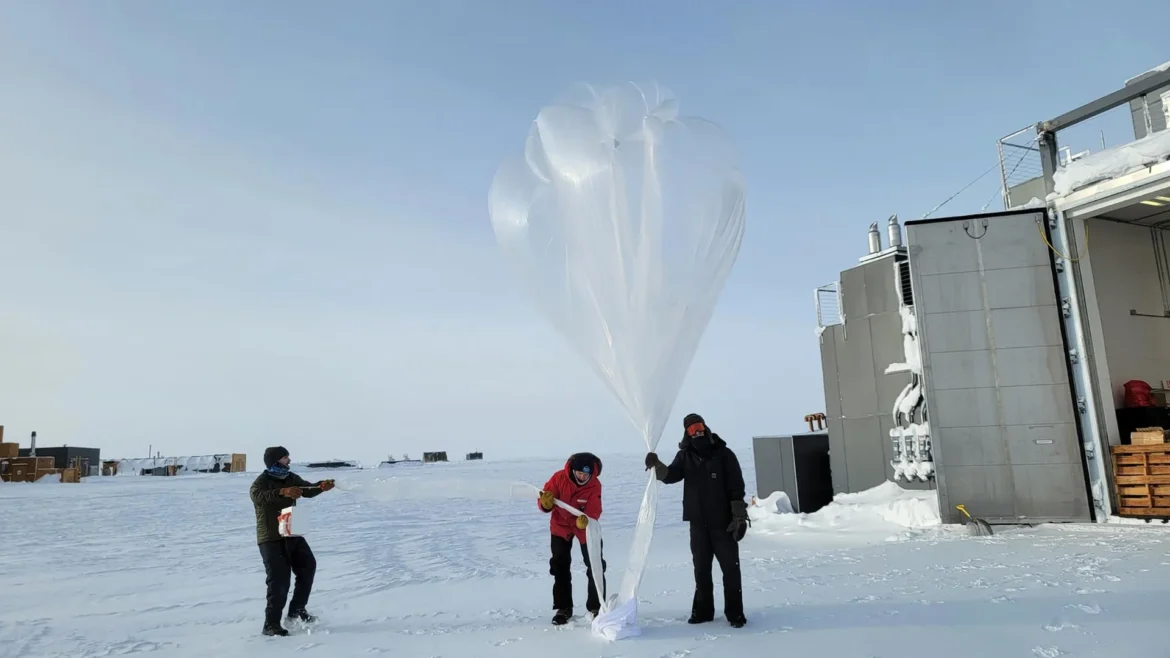
NOAA researchers utilize the Dobson Ozone Spectrophotometer, a ground-based optical instrument that has provided consistent data for decades. This is complemented by weather balloons launched from the South Pole, which provide vertical profiles of the atmosphere, allowing scientists to see exactly which altitudes are suffering the greatest ozone loss.
These ground-based measurements are tethered to a vast network of satellite data. The synergy between the Suomi National Polar-orbiting Partnership satellite, NOAA-21, and NASA’s long-standing Aura mission ensures that the scientific community can monitor the hole in near-real-time, regardless of the harsh conditions on the ground.
Implications and Future Outlook
The 2026 event serves as a critical case study in atmospheric resilience. While the geographic expansion was unexpected, it does not represent a failure of global environmental policy. Rather, it highlights that the recovery of the ozone layer is not a linear process. It is subject to the "noise" of interannual weather variability, including planetary waves, El Niño-Southern Oscillation (ENSO) events, and other climate forcing mechanisms.
The scientific consensus remains that the Antarctic ozone hole is on a trajectory toward full recovery. While individual years may see larger holes due to a stable polar vortex, the long-term trend line is downward. Current models from the World Meteorological Organization and other climate bodies predict that the Antarctic ozone layer will likely return to 1980 levels—the benchmark for "normal"—by the 2070s.
The Human Element: Ozone as a Pollutant vs. Protector
The public often confuses the stratospheric ozone hole with ground-level ozone. It is essential to distinguish between the two: the stratospheric ozone layer is a natural phenomenon that protects life by absorbing harmful UV-B radiation. Conversely, ozone at the Earth’s surface is a byproduct of combustion and chemical reactions involving pollutants from vehicles, power plants, and industrial facilities. This "bad" ozone is a respiratory irritant and a major component of smog.
The 2026 event reinforces that while humans have successfully addressed the "good" ozone depletion through the Montreal Protocol, we remain vulnerable to the climate-driven shifts in atmospheric circulation. The interaction between climate change and stratospheric chemistry is an area of intense ongoing research. As the planet warms, the cooling of the upper atmosphere might theoretically exacerbate ozone depletion, making the continued monitoring of the Antarctic region more vital than ever.
Conclusion
The 2026 ozone hole is a reminder that the environment is a complex, interconnected system. While the sheer scale of the 2026 hole was a surprise to many, the underlying data confirms that the global community’s decision to limit ozone-destroying chemicals is bearing fruit. Without those interventions, the 2026 event could have been significantly more severe, potentially altering ecosystems and increasing radiation exposure across the Southern Hemisphere.
As we move toward the 2070s, the goal of a fully healed ozone layer remains within reach. The 2026 observations, while highlighting the persistence of the Antarctic ozone hole, serve to validate the effectiveness of international cooperation and underscore the necessity of sustained, rigorous scientific observation of our planet’s vital atmospheric defenses.
